TL;DR:
- Proficiency in Korean enhances hiring prospects, workplace integration, and long-term career growth in Korean and related global markets. Cultural literacy alongside language skills is essential for effective communication, relationship-building, and advancing within Korean multinational companies. Structured, goal-oriented learning and cultural immersion enable professionals to leverage Korean proficiency meaningfully for career success.
Korean language proficiency is defined as a measurable career asset that directly expands hiring eligibility, workplace effectiveness, and long-term advancement in Korean and Korean-linked global markets. The role of Korean in professional growth goes well beyond basic communication. Professionals who combine Korean fluency with cultural literacy gain access to opportunities that monolingual candidates simply cannot reach. From Samsung and LG to Hyundai and POSCO, the companies driving Korea’s global economic footprint consistently prioritize candidates who can operate inside Korean professional culture, not just translate words.
How does Korean language proficiency influence hiring and workplace integration?
Korean language and cultural literacy function as a hiring filter at Korean multinational companies, often outweighing academic credentials alone. Speakers at the 2026 Global Talent Fair in Seoul confirmed that cultural understanding and integration eagerness rank among the top priorities recruiters use to evaluate international candidates. This means a candidate with intermediate Korean and genuine cultural awareness frequently advances further than one with a prestigious degree but no cultural fluency.
Higher language ability also reduces friction during onboarding. Korean proficiency accelerates relationship-building during probation stages, where alignment on expectations happens faster when you can participate in informal conversations, read internal memos, and respond to senior colleagues in their preferred language. Early career growth in Korea is often constrained by gaps in social and professional language layers, including honorifics and unspoken workplace norms. Closing those gaps early separates professionals who plateau from those who advance.
Resume presentation matters just as much as spoken ability. Recruiters at the 2026 Global Talent Fair actively critiqued international resumes and advised candidates to adapt to traditional Korean resume formats. A Korean-style resume follows a specific structure covering personal information, education, work history, and self-introduction in a fixed order. Submitting a Western-format resume to a Korean company signals unfamiliarity with local professional norms before the interview even begins.
Here is what Korean language proficiency directly affects in the hiring and integration process:
- Hiring eligibility: Many Korean companies list Korean proficiency as a stated or unstated requirement for roles involving internal communication, client management, or team leadership.
- Onboarding speed: Employees who understand Korean workplace hierarchies and communication styles integrate faster and receive more responsibility earlier.
- Relationship capital: Korean professional culture places high value on interpersonal trust built through shared language and social interaction, including team dinners and informal check-ins.
- Resume screening: Adapting your resume to Korean formatting conventions signals cultural awareness before you walk through the door.
Pro Tip: Before applying to any Korean company, research whether they use a standardized resume template (이력서) and a separate self-introduction letter (자기소개서). Submitting both in the correct format immediately differentiates you from candidates who submit generic applications.
What is the significance of Korean language proficiency tests for your career?
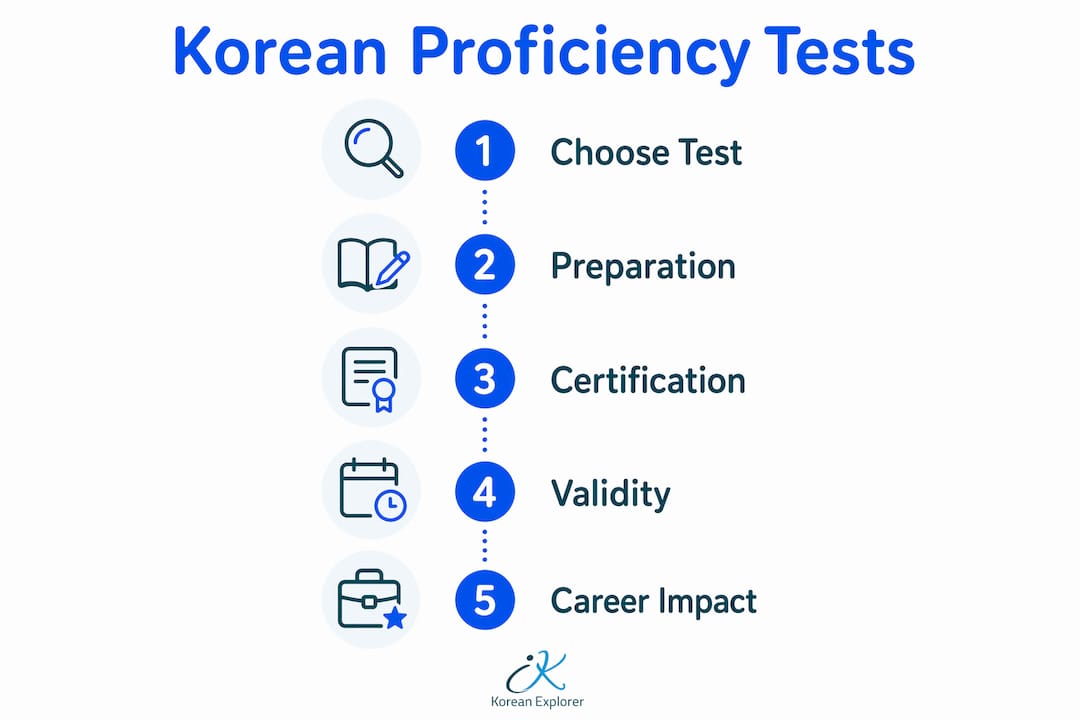
Two tests dominate the Korean language certification space for professionals: TOPIK and EPS-TOPIK. They serve entirely different career purposes, and choosing the wrong one wastes both time and money.
| Test | Purpose | Who needs it | Score validity |
|---|---|---|---|
| TOPIK II (Levels 3-6) | University admission, professional jobs, visa points, scholarships | International professionals, students, skilled workers | 2 years from score announcement |
| EPS-TOPIK | Employment Permit System for non-professional sectors | Workers in manufacturing, construction, agriculture | Score-based; higher scores improve job selection |
TOPIK II is required for university admission, professional employment, visa point systems, and scholarship applications in Korea. The certificate remains valid for two years from the date scores are announced, which means timing your exam around application windows is not optional. Missing that window forces a retake, which delays career plans by months.
For professionals targeting corporate or knowledge-economy roles, TOPIK Level 3 is the practical floor. Level 3 demonstrates the ability to handle everyday professional communication. Levels 4 and 5 signal the capacity to participate in meetings, write reports, and engage in nuanced workplace conversations. Level 6 is the benchmark for roles requiring near-native Korean communication. You can explore the career value of TOPIK in detail to understand which level aligns with your specific goals.
Selecting the appropriate test based on your career or visa goals avoids costly mistakes and maximizes the relevance of your certification. EPS-TOPIK, by contrast, is a score-based exam required for the Employment Permit System and applies specifically to non-professional employment sectors like manufacturing and construction. A higher EPS-TOPIK score improves your chances of being selected by preferred employers in those sectors. The two tests are not interchangeable, and submitting an EPS-TOPIK score for a professional corporate role will not satisfy employer requirements.
Pro Tip: Plan your TOPIK exam date at least six months before any job application or visa deadline. The two-year validity window sounds generous, but processing times for work visas and job applications can eat into that window faster than expected.
How does Korean cultural competence complement language skills for career success?
Language proficiency unlocks communication. Cultural competence unlocks effectiveness. These are not the same thing, and professionals who treat them as interchangeable consistently underperform in Korean work environments.

One Middlebury Language Schools alumnus described how learning Korean enabled career progression beyond translation roles into deeper cultural comprehension critical for policy and diplomacy work. The shift was not about vocabulary. It was about understanding the reasoning behind how Koreans frame requests, express disagreement indirectly, and signal respect through language choices. That level of comprehension cannot be achieved through language study alone. It requires deliberate cultural immersion.
Companies expanding overseas actively seek candidates who bridge Korean and target-country cultures, prioritizing cultural integration over simple translation skills. This is the distinction between a bilingual employee and a culturally competent one. The bilingual employee translates. The culturally competent employee interprets context, manages expectations across cultures, and prevents misunderstandings before they escalate.
The practical impact of Korean cultural competence shows up in three specific professional areas:
- Negotiation: Korean business culture values relationship-building before deal-making. Professionals who understand this invest time in 관계 (relationships) before pushing for outcomes, which produces better long-term results than transactional approaches.
- Teamwork: Korean workplaces operate on hierarchical structures where seniority shapes communication patterns. Knowing when to speak, when to defer, and how to express disagreement respectfully prevents career-limiting missteps.
- Leadership: Foreign professionals who demonstrate genuine respect for Korean workplace culture earn trust faster. That trust translates directly into expanded responsibilities and faster promotion timelines.
The impact of Korean values on careers is most visible in multinational roles where you serve as a bridge between Korean headquarters and regional offices. Those roles command premium compensation precisely because they require a combination of skills that is genuinely rare.
What practical steps can professionals take to leverage Korean skills for career growth?
Building Korean language skills for career advancement requires a structured approach, not casual study. The following steps reflect what actually works for professionals and students targeting Korean-linked career opportunities.
Set a TOPIK target level before you start studying. Working backward from a Level 4 or Level 5 goal shapes your study plan, vocabulary priorities, and practice format from day one. Studying without a certification target produces inconsistent results.
Study with a structured curriculum. Programs built on the Seoul National University Korean curriculum, like those offered by Korean Explorer, align directly with TOPIK standards and build the grammar and vocabulary layers that professional communication requires. Ad hoc apps and YouTube channels fill gaps but cannot replace structured progression.
Adapt your resume to Korean standards. Research the standard Korean resume format and self-introduction letter structure. Have both reviewed by a native Korean speaker or a recruiter familiar with Korean hiring practices. The resume format advantage lies in demonstrating familiarity with local professional norms before the interview stage.
Engage with Korean professional networks. Events like the Global Talent Fair, Korean Chamber of Commerce gatherings in Singapore, and Korean business associations create direct access to hiring managers and mentors. Korean networking for professional growth works best when you can hold basic professional conversations in Korean, even imperfectly.
Pursue Korean language learning at the business level. Conversational Korean gets you through social situations. Business Korean, including formal speech levels, industry vocabulary, and written communication, is what Korean employers actually evaluate. Korean Explorer’s adult courses cover both conversational and business Korean, with online and corporate training formats available for working professionals.
Immerse yourself in Korean professional media. Reading Korean business news from outlets like Korea JoongAng Daily, watching Korean business documentaries, and following Korean industry LinkedIn profiles builds the contextual vocabulary that textbooks do not cover.
Pro Tip: If you are preparing for a role at a Korean company in Singapore or regionally, prioritize learning the Korean honorific system (존댓말) early. Misusing speech levels in a professional context signals cultural unfamiliarity more clearly than any grammar mistake.
Key takeaways
Korean language proficiency combined with cultural competence is the most direct path to career advancement in Korean and Korean-linked global markets, and neither element works without the other.
| Point | Details |
|---|---|
| Language as a hiring filter | Korean cultural literacy and language skills often outweigh academic credentials in Korean company recruitment. |
| TOPIK II for professional roles | Levels 3 to 6 are required for corporate jobs, visa points, and university admission, with a two-year validity window. |
| Culture unlocks effectiveness | Language opens doors; cultural competence determines how far you advance once inside. |
| Resume adaptation matters | Formatting your resume to Korean standards signals professionalism before the interview begins. |
| Structured study produces results | Curriculum-aligned programs tied to TOPIK standards build the language layers that professional roles require. |
Why Korean proficiency is more than a line on your resume
I have watched professionals treat Korean as a checkbox. They pass a language exam, add it to their LinkedIn profile, and expect doors to open. Some do. But the professionals who see sustained career growth from Korean proficiency are the ones who treat it as a living skill, not a credential.
What I have observed consistently is that the gap between language ability and cultural fluency is where most international professionals stall. You can hold a conversation in Korean and still misread a room entirely. The honorific system alone carries layers of professional meaning that take years to internalize. A senior colleague who switches from formal to informal speech with you is signaling trust. Missing that signal means missing an opportunity to deepen a professional relationship that could shape your next promotion.
The future of Korean-linked careers is not narrowing. Korea’s technology sector, entertainment industry, and manufacturing base continue to expand globally. Singapore sits at the intersection of that expansion, with Korean companies increasingly using it as a regional hub. Professionals here who invest in genuine Korean language and cultural competence now are positioning themselves for roles that will not exist in their current form five years from now.
My honest advice: start with a structured course, set a TOPIK target, and spend as much time on cultural immersion as on grammar. The language gets you the interview. The culture gets you the career.
— Paul
Build the Korean language skills your career actually needs
Korean Explorer offers adult Korean language courses in Singapore designed specifically for conversational and business use, with online Zoom classes and corporate training programs available for working professionals.
Whether you are preparing for a role at a Korean company, building professional relationships with Korean clients, or targeting a regional position that requires cultural fluency, Korean Explorer’s structured courses provide the language foundation you need. The curriculum is developed by Seoul National University and taught by experienced native Korean instructors fluent in both Korean and English. Courses run across three convenient locations, including the center right above Tanjong Pagar MRT. Explore adult Korean courses or browse structured course options to find the right fit for your professional goals.
FAQ
How does Korean language proficiency help with career advancement?
Korean proficiency signals cultural competence to Korean employers and reduces communication friction during onboarding and early career stages. Professionals with Korean skills qualify for a broader range of roles in Korean multinationals and Korean-linked regional positions.
Which Korean language test is best for professional career goals?
TOPIK II (Levels 3 to 6) is the standard certification for professional employment, visa applications, and university admission in Korea, with certificates valid for two years. EPS-TOPIK applies specifically to non-professional employment sectors and is not a substitute for TOPIK in corporate hiring contexts.
What level of Korean do I need for a corporate job in Korea?
TOPIK Level 3 is the practical minimum for most corporate roles, while Levels 4 and 5 are expected for positions requiring regular internal communication, report writing, or client-facing responsibilities.
Does Korean cultural knowledge matter as much as language ability?
Korean cultural competence is a separate and equally important skill. Employers at the 2026 Global Talent Fair confirmed that cultural integration eagerness often outweighs academic credentials in Korean company hiring decisions.
Can I learn business Korean online?
Yes. Korean Explorer offers online Zoom classes and corporate training programs covering both conversational and business Korean, designed for working adults in Singapore and across the region.