TL;DR:
- Korean Explorer is the best direct alternative for Singapore adults seeking structured, teacher-led Korean courses.
- It offers live online classes with native bilingual instructors, a Seoul National University curriculum, and recorded lessons for review.
The strongest seoulkorean.sg alternatives for Singapore adults who need structured courses and qualified instructors are Korean Explorer, Talk To Me In Korean (TTMIK), Coursera / Yonsei First Step Korean, KoreanClass101, and the King Sejong Institute. Korean Explorer is the top pick for most adults: it offers live Zoom classes with native bilingual instructors, a Seoul National University-developed curriculum, and recorded lesson access, all from Singapore or anywhere online.
TL;DR shortlist:
- Korean Explorer — best direct replacement; structured levels, native instructors, online Zoom and in-person Singapore options
- Talk To Me In Korean (TTMIK) — best self-paced supplement with strong free content and paid structured courses
- Coursera / Yonsei First Step Korean — best for beginners who want a university-backed certificate at low cost
- KoreanClass101 — best for on-demand review and vocabulary building via subscription
- King Sejong Institute — best for US-based learners who want subsidized in-person community classes
Table of Contents
- What are the best seoulkorean.sg alternatives side by side?
- Short profiles: which alternative fits you?
- How do you choose the right Korean language school?
- Online vs. in-person: which works better for structured learning?
- Key Takeaways
- Korean Explorer is a direct replacement worth trying
- Useful sources and next steps
- FAQ
What are the best seoulkorean.sg alternatives side by side?
| Dimension | Korean Explorer | TTMIK | Coursera / Yonsei | KoreanClass101 | King Sejong Institute |
|---|---|---|---|---|---|
| Format | Online Zoom + in-person SG | Self-paced + live | Recorded MOOC | On-demand subscription | In-person (US branches) |
| Course structure | Leveled syllabus, SNU curriculum | Leveled books + courses | Beginner certificate series | Topic-based units | Structured community classes |
| Teacher qualifications | Native Korean, bilingual English | Native Korean creators | Yonsei University faculty | Native speaker hosts | Native Korean instructors |
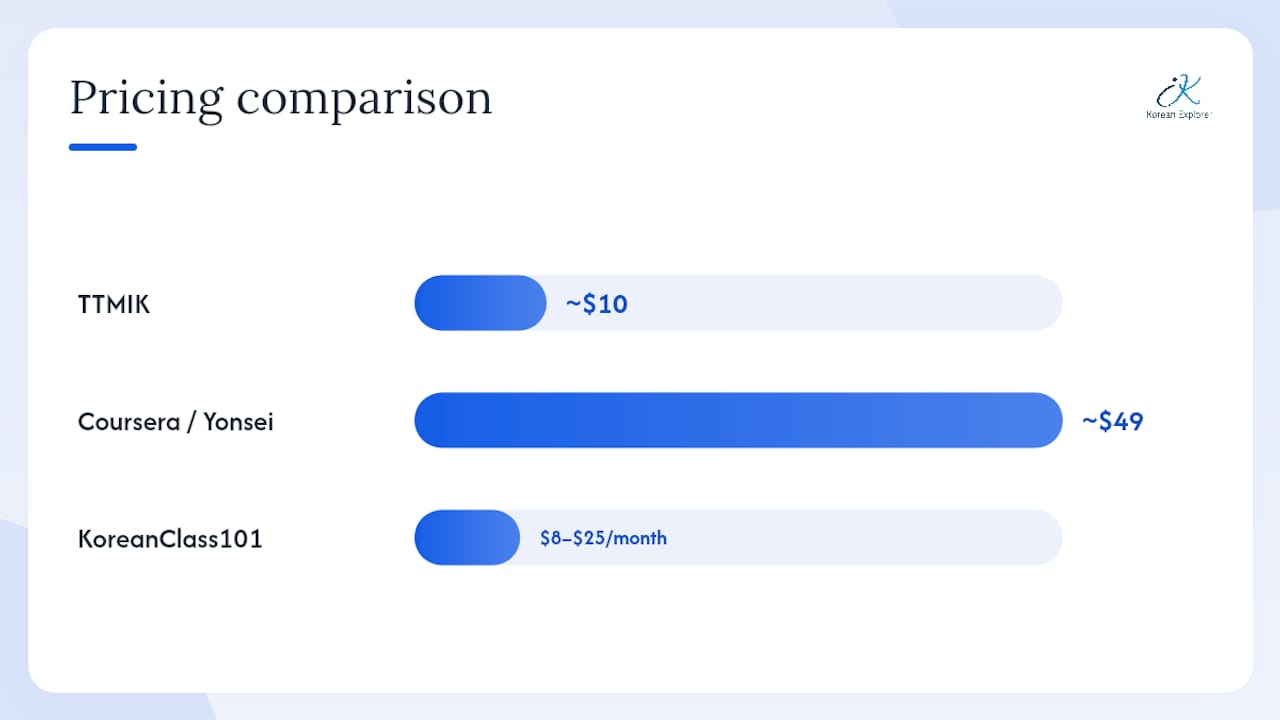
| Pricing model | Per course / private lesson | Free + paid courses from ~$10 | Free audit / ~$49 certificate | Subscription ~$8–$25/month | Free or low-cost community |
| Class size & flexibility | Small group or 1:1 private | Self-paced, no live group | Self-paced cohort | Solo, self-paced | Group classes, fixed schedule |
| Trial / recorded access | Recorded lessons included | Free content available | Free audit available | Free trial available | Varies by center |
| US availability | Fully online, any time zone | Fully online | Fully online | Fully online | US city branches |
Pro Tip: When comparing providers, weight instructor qualifications at least as heavily as curriculum design. A well-structured syllabus taught by an instructor who cannot explain grammar in your language will slow you down. Look for native Korean speakers who are also fluent in English — that bilingual ability is what lets them catch and correct your specific mistakes in real time.
Two non-obvious tradeoffs worth knowing:
- Subscription platforms like KoreanClass101 give you excellent on-demand review access, but live instructor correction is limited or absent. If speaking confidence is your goal, that gap matters more than the price difference.
- University MOOCs (Coursera / Yonsei) carry strong credibility signals, but the cohort format means you cannot ask follow-up questions the way you can in a live class.
Short profiles: which alternative fits you?
Korean Explorer
Live Zoom classes and in-person sessions at 10 Anson Road, level 22, International Plaza, Singapore 079903 (above Tanjong Pagar MRT). The curriculum follows a framework developed by Seoul National University, and every instructor is a native Korean speaker fluent in English. Recorded lessons are included, so you can review any class you attended. Group and private Korean classes are both available. Best for Singapore adults who want a structured, teacher-led course with the flexibility to attend online or in person. Check instructor bios before booking — they are publicly listed.
Talk To Me In Korean (TTMIK)
TTMIK publishes free podcast-style lessons alongside paid structured courses and textbooks. The content is created by native Korean speakers, and the leveled books map closely to a progressive syllabus. Best for learners who want to supplement a live course with self-paced review, or for motivated beginners who prefer to set their own pace. Fully online, accessible from any time zone. No live instructor feedback in the free tier; paid courses add more structure.
Coursera / Yonsei First Step Korean
Yonsei University’s “First Step Korean” course on Coursera is a recorded MOOC taught by Yonsei faculty. It covers Hangul, basic grammar, and survival phrases across a beginner series. You can audit for free or pay roughly $49 for a certificate. The Korean language has distinct pronunciation standards, and Yonsei’s faculty instruction reflects South Korean standard speech. Best for complete beginners who want a university credential at low cost. No live interaction; discussion forums are the only peer channel.
KoreanClass101
KoreanClass101 (by Innovative Language) delivers audio and video lessons organized by level, from absolute beginner to advanced. A subscription runs roughly $8–$25 per month depending on the tier. The platform’s strength is volume: hundreds of lessons, vocabulary lists, and PDF notes. Best for learners who want to build vocabulary and listening comprehension on their own schedule. Live feedback is not part of the core subscription, though premium tiers add some tutor access.
King Sejong Institute
The King Sejong Institute operates US branches and partner centers in several American cities, offering subsidized or free in-person Korean classes taught by native instructors. Class sizes vary by location, and scheduling is fixed to semester cycles. Best for US-based learners who want structured in-person instruction at low cost. Check your nearest branch for current enrollment windows, since seats fill quickly.
How do you choose the right Korean language school?
Prioritize instructor quality, a structured progressive syllabus, and the ability to trial before you pay. Then work through this checklist:
- Can you see full instructor bios, including their teaching background and language credentials?
- Is the syllabus level-based and progressive, not just a topic list?
- Are lessons recorded so you can review them after class?
- Is there a trial lesson, free audit, or money-back period before full commitment?
- Is class size capped small enough that you actually speak during each session?
- Are time zones and scheduling compatible with your work hours?
- Does the school offer both group and private options so you can switch if needed?
- Is pricing transparent and published before you contact them?
- Can you reach a real person with questions before enrolling?
- Does the curriculum align with a recognized framework (university-developed or internationally referenced)?
Five red flags to walk away from:
- No instructor bios or only first names with no credentials
- Pricing available only “on request” with no published range
- No trial lesson, sample class, or refund window of any kind
- Class size unspecified or described vaguely as “small”
- Refund policy buried in fine print or absent entirely
When you contact a school’s registration team, ask: “Who will be my instructor, and can I see their background?” and “What happens if I miss a class?” Acceptable answers name a specific instructor and confirm recorded access or a makeup option.
Online vs. in-person: which works better for structured learning?
Online live classes with native bilingual instructors give you better schedule flexibility and access to a wider pool of qualified teachers. In-person classes build speaking confidence faster because the social pressure to respond in real time is harder to avoid.
Online advantages:
- Attend from any location or time zone
- Recorded lessons available for review
- Wider instructor choice, not limited by geography
- Often lower cost per session
In-person advantages:
- Stronger immersion and speaking pressure
- Immediate non-verbal feedback from instructors
- Better for corporate training cohorts who need group dynamics
- Cultural context from the physical classroom environment
Pro Tip: A hybrid model, where you attend live Zoom classes weekly and supplement with recorded review, gives you the feedback loop of live instruction without sacrificing flexibility. Korean Explorer’s Zoom format with recorded access is built exactly for this. If you have Japanese language experience, note that Korean and Japanese share considerable syntactic similarity, so a structured grammar-focused course will feel familiar faster than you expect.
Pairing formal lessons with real-world Korean cultural exposure accelerates vocabulary retention. Local Korean restaurants and cultural venues, like Paran Korean Grill in Seattle or Danbi in Koreatown LA, give US-based learners a place to practice food and conversation vocabulary outside the classroom.
How these alternatives were selected
Every option on this list met five criteria: a structured, level-based syllabus; native or bilingual Korean instructors; some form of trial or free access; availability for US-based or online learners; and transparent pricing. Trust signals checked included published instructor rosters, curriculum partnerships, trial policies, and student reviews. Korean Explorer is included as a directly comparable, recommended option for Singapore adults and online learners.
- Structured syllabus with clear level progression
- Native or bilingual instructor roster, publicly listed
- Trial lesson, free audit, or refund window available
- Transparent pricing published before enrollment
- Accessible to US-based learners (online or US branch)
Key Takeaways
Korean Explorer is the strongest direct replacement for seoulkorean.sg: structured SNU-aligned curriculum, native bilingual instructors, recorded lessons, and both online and Singapore in-person formats.
| Point | Details |
|---|---|
| Top pick | Korean Explorer offers live Zoom and in-person classes with a Seoul National University-aligned curriculum. |
| Best self-paced option | TTMIK provides free and paid structured content for learners who want flexibility without live sessions. |
| Best low-cost start | Coursera / Yonsei First Step Korean lets beginners audit free or earn a certificate for roughly $49. |
| Key decision factor | Prioritize schools with published instructor bios, recorded lessons, and a trial class before committing. |
| Korean Explorer next step | Book a trial class or compare Korean language courses to find the right level and format. |
The case for trying before you commit
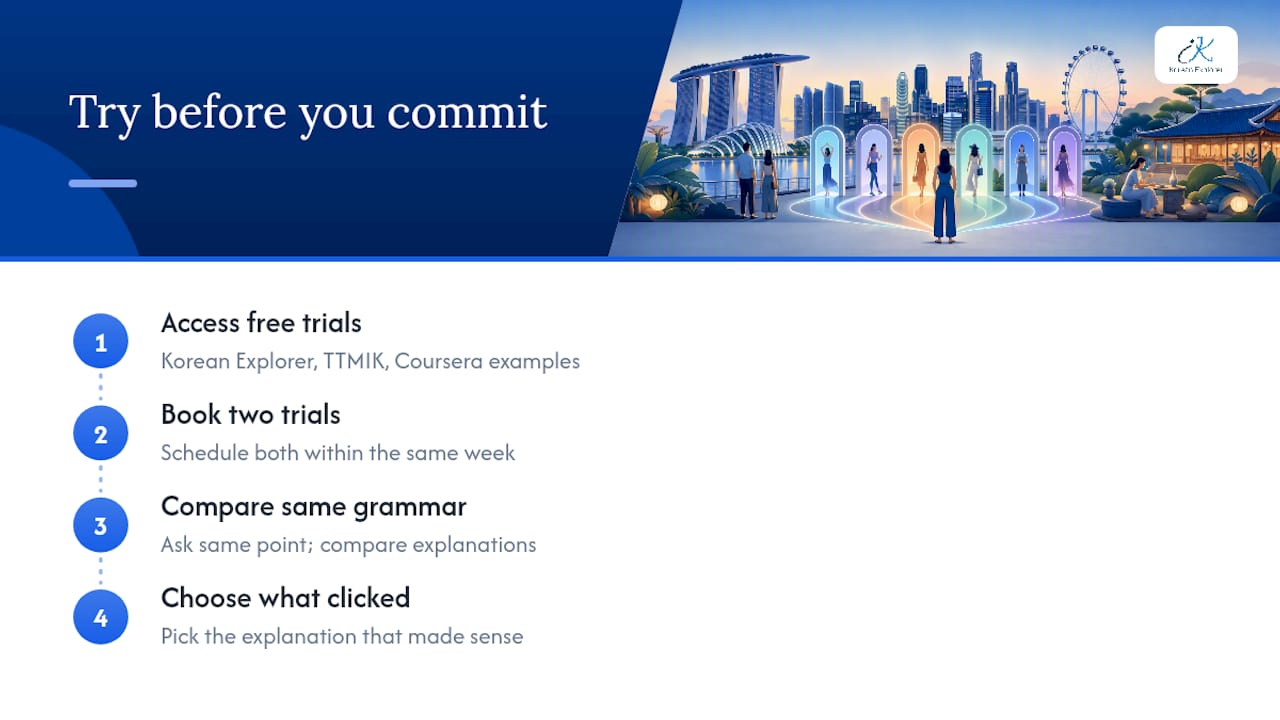
Most adults who end up unhappy with a language school made the same mistake: they enrolled in a full course based on a website, not a lesson. Every provider on this list offers some form of free access or trial, so there is no reason to skip that step. Korean Explorer’s recorded lesson access means you can review a class before deciding whether the teaching style fits. TTMIK’s free podcast library lets you sample the content depth. Coursera’s free audit removes the financial risk entirely for beginners.
My practical advice: book two trials in the same week, compare how each instructor explains the same grammar point, and pick the one whose explanation actually made sense to you. That single test tells you more than any comparison table.
Korean Explorer is a direct replacement worth trying
If you want a school that matches seoulkorean.sg on structured curriculum and instructor quality, Korean Explorer delivers it online and in person. Classes run on Zoom with experienced native Korean instructors who are fluent in English, so explanations land clearly regardless of your starting level. Every session is recorded, which means you can review a lesson the same evening or catch up if your schedule shifts.
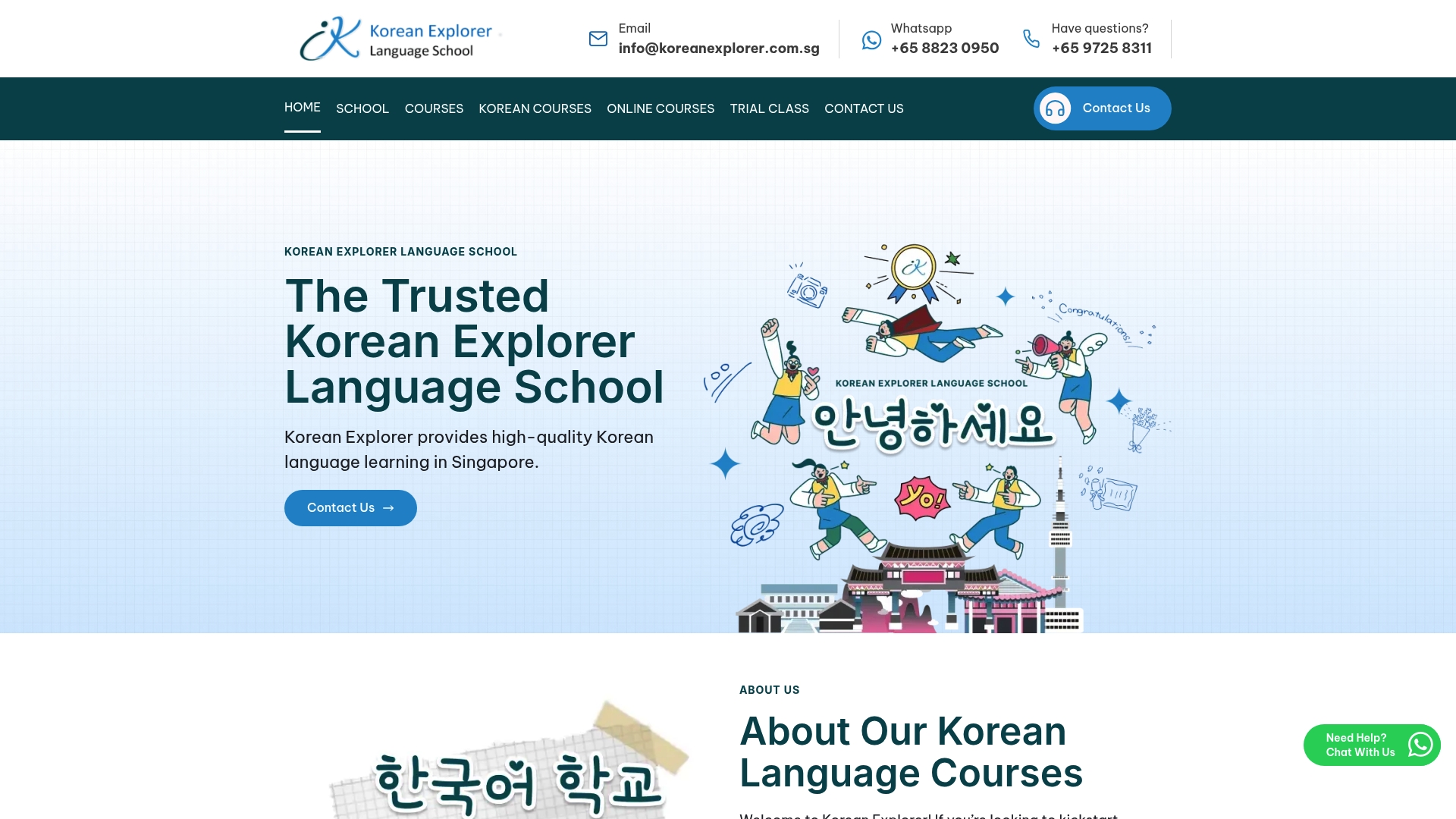
Group classes keep numbers small enough for real speaking practice. Private lessons are available for learners who want faster progress or a schedule that does not fit any group slot. The school is located at 10 Anson Road, level 22, International Plaza, Singapore 079903, directly above Tanjong Pagar MRT, for anyone who prefers in-person sessions. Before you commit to a full course, read through the common myths about Korean language learning that slow most adults down, then browse available course formats and book a trial class to see the teaching style firsthand.
Useful sources and next steps
Use these to compare formats, check instructor backgrounds, and confirm what a trial includes before booking:
- Korean language – Wikipedia
- Comparison of Japanese and Korean – Wikipedia
- Korean Food Near Me | 20 Best Korean Restaurants for Delivery | Grubhub
- Korean Food Delivery | Ship Nationwide | Goldbelly
- Paran Korean Grill | Korean Restaurant in Seattle
- Danbi 단비 · Modern Korean in Koreatown, LA
- Korean Explorer (brand signal)
One-line next step: Book two trial classes this week, compare how each instructor explains a grammar point you find confusing, and confirm that lessons are recorded before you pay for a full course.
FAQ
What is the best seoulkorean.sg alternative for Singapore adults?
Korean Explorer is the closest direct replacement: it offers a structured, university-aligned curriculum, native bilingual instructors, recorded lessons, and both online Zoom and Singapore in-person formats.
Are there free Korean language courses online?
Yes. Talk To Me In Korean offers a large free library of podcast-style lessons, and Coursera’s Yonsei First Step Korean course can be audited at no cost, with a paid certificate option.
How long does it take to reach conversational Korean?
Most structured programs bring adult learners to basic conversational ability within a moderate timeframe of consistent weekly study, depending on class frequency and self-study time.
Is Korean similar to any other language?
Korean and Japanese share significant syntactic and morphological similarities, so learners with a Japanese background often find Korean grammar patterns familiar, even though the two languages belong to different families.
Does Korean Explorer offer online classes for learners outside Singapore?
Yes. Korean Explorer’s Zoom-based classes are accessible from any time zone, making them a practical option for US-based learners who want live instruction with a Singapore-based native Korean instructor.