TL;DR:
- Korean’s rapid growth has made it one of the fastest-expanding languages globally, influencing business, diplomacy, and culture. Its unique writing system and indirect communication style present both opportunities and challenges for learners worldwide. Engaging with Korean through structured courses and cultural immersion enhances professional relationships and strategic influence.
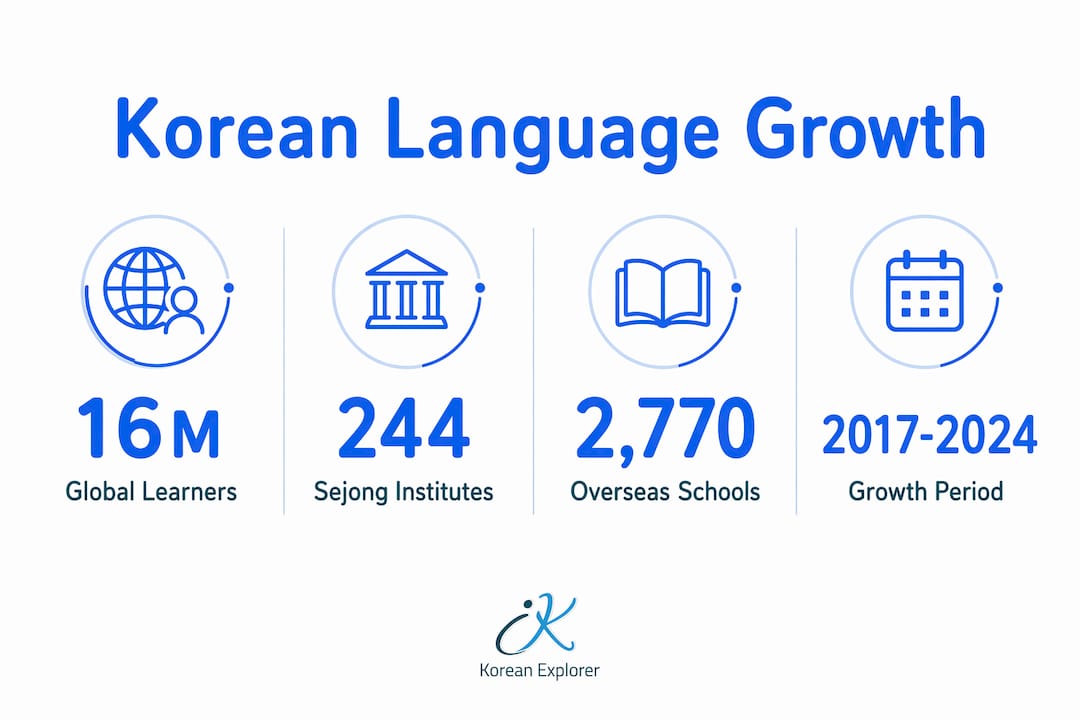
Korean is now one of the fastest-growing languages in global communication, with 16 million active learners worldwide as of 2024. That number represents a 191% increase since 2017, a growth rate no other major language has matched in the same period. The role of Korean for global communication extends well beyond K-pop and K-dramas. It now shapes international business negotiations, diplomatic relationships, and cultural exchange across six continents. For adult learners and professionals, understanding why Korean matters globally is the first step toward using it as a real career asset.
How Korean language growth is reshaping global communication
The numbers behind Korean’s rise are striking. In 2017, roughly 5.5 million people were learning Korean worldwide. By 2024, that figure had climbed to 16 million, and projections suggest 25 million learners by 2030. That trajectory puts Korean in the same conversation as Mandarin and Spanish when measuring global language momentum.
Educational infrastructure has grown just as fast. The number of overseas schools offering Korean classes surged to 2,777 by 2025, a 64% increase from 1,806 in 2021. Student enrollment in those programs climbed from 170,563 to 236,089 in the same period. Those figures show that demand is not casual curiosity. It is organized, institutional, and accelerating.
The South Korean government has backed this growth through the King Sejong Institute network, which now operates 244 centers across more than 80 countries. These centers deliver structured Korean language education as a direct instrument of cultural diplomacy. The result is a language that carries both cultural weight and geopolitical intent.
| Year | Global Learners | Overseas Schools Offering Korean |
|---|---|---|
| 2017 | ~5.5 million | Not tracked |
| 2021 | ~10 million | 1,806 |
| 2024 | 16 million | ~2,500+ |
| 2025 | Projected growth | 2,777 |
| 2030 | 25 million (projected) | Expanding |
Technology has also lowered the barrier to entry. Apps like Duolingo, platforms like Talk To Me In Korean, and AI-powered tutoring tools have made Korean accessible to learners in countries with no physical Korean language school nearby. Mass cultural exposure through Hallyu content is the single most powerful driver of this growth, surpassing economic incentives as a motivator.
Pro Tip: If you are starting Korean through media consumption, treat it as your motivation engine, not your classroom. Structured learning through a curriculum-based course will close the gap between passive recognition and active communication far faster.
What makes Korean unique and accessible for global learners?
Korean’s writing system, Hangeul, is one of the most logical and scientifically designed alphabets in the world. Most learners can read basic Korean within a few hours of study. That early win keeps motivation high and makes Korean feel approachable in a way that Mandarin or Arabic do not for most Western learners.
The real challenge comes after the alphabet. Korean grammar operates on a completely different logic from English. Verbs come at the end of sentences. Subjects are often dropped when context makes them clear. And the honorific system, which changes verb endings and vocabulary based on the social relationship between speakers, requires cultural understanding, not just memorization.
Korean communication is also indirect and highly contextual, shaped by Confucian values that prioritize harmony and respect over directness. What is left unsaid often carries as much meaning as what is spoken. Nonverbal cues, tone, and situational awareness are not optional extras. They are core to understanding what is actually being communicated.
For global learners, this creates a clear distinction between two types of Korean proficiency:
- Casual media Korean: Enough to follow dramas, understand song lyrics, and hold basic conversations. Achievable within 6–12 months of consistent study.
- Professional and business Korean: Requires command of formal speech levels, industry vocabulary, and cultural communication norms. This takes structured, sustained learning over 1–2 years or more.
- Diplomatic and negotiation Korean: The highest register, where honorifics, indirectness, and cultural sensitivity converge. Professionals in this space benefit most from native instructor-led training.
Korean learners who engage with culture report higher satisfaction and deeper language retention than those who study grammar alone. Cultural engagement is not a supplement to language learning. It is a core part of it.
How does Korean facilitate international business and diplomacy?
Korean’s role in international business is more complex than most professionals expect. South Korea is home to global giants like Samsung, Hyundai, LG, and SK hynix. These companies operate in English at the surface level, but Korean remains the language of trust, negotiation, and internal decision-making.
SK hynix has piloted an English-first policy in its AI unit, using bilingual documents to serve global partners. That approach reflects a broader tension in South Korean multinationals: English handles external communication, while Korean drives the relationships that actually close deals. Professionals who speak Korean gain access to conversations that never get translated.
| Communication Context | Language Used | Strategic Implication |
|---|---|---|
| Daily internal operations | Korean | Fluency builds team trust |
| External partner meetings | English or bilingual | Korean shows cultural respect |
| High-level negotiations | Korean preferred | Signals commitment and seriousness |
| Cultural diplomacy events | Korean | Reinforces soft power positioning |
| Technical documentation | Bilingual (English/Korean) | Reduces misinterpretation risk |
Beyond business, Korean language education functions as soft power, particularly in non-Asian regions like Turkey, where South Korea has expanded its cultural and diplomatic presence. The King Sejong Institutes in these regions are not just language schools. They are instruments of geopolitical relationship-building. Understanding this context helps professionals see Korean in foreign negotiations as a strategic skill, not just a linguistic one.
Pro Tip: If you work with Korean firms or plan to, learn the formal speech level first. Using the right honorific register in a first meeting signals cultural awareness and earns respect that no business card or LinkedIn profile can replicate.
Practical ways to engage with Korean for global communication today
The demand for Korean language skills has created a well-developed ecosystem of learning options for adults. The most effective pathways align with your specific communication goal, whether that is conversational fluency, business proficiency, or corporate training for a team.
Start with conversational Korean. Adult learners who focus on real-life dialogue from day one build confidence faster than those who begin with grammar drills. Look for courses that use conversation-first methods with native instructors.
Add business Korean once you have a foundation. Business Korean covers formal speech levels, meeting etiquette, email conventions, and industry-specific vocabulary. This layer is what separates a capable speaker from a professional communicator.
Use online learning to stay consistent. Zoom-based Korean courses remove the commute barrier and allow learners in any time zone to maintain a regular study schedule. Consistency matters more than intensity for language acquisition.
Consider corporate training if your team works with Korean partners. Group corporate training programs build shared cultural literacy across a team, not just individual language skills. That shared foundation reduces miscommunication in cross-cultural projects.
Build cultural literacy alongside language skills. Sectors like technology, entertainment, logistics, and diplomacy all benefit from Korean proficiency. But the professionals who perform best in these fields combine language ability with genuine understanding of Korean culture. The two reinforce each other.
The role of Korean in professional growth is most visible in industries where South Korean companies are dominant players. Tech professionals working with Samsung or SK hynix, entertainment executives managing K-content distribution, and diplomats stationed in Seoul all report that Korean proficiency changes the quality of their working relationships, not just their ability to communicate.
Key Takeaways
Korean’s role in global communication is defined by cultural influence, institutional support, and strategic business value that extends well beyond entertainment.
| Point | Details |
|---|---|
| Learner growth is accelerating | Korean reached 16 million learners in 2024, with 25 million projected by 2030. |
| Educational infrastructure is expanding | Overseas schools offering Korean grew 64% between 2021 and 2025. |
| Cultural exposure drives learning | Hallyu content is the top motivator, but structured courses build real communication skills. |
| Business Korean requires cultural depth | Honorifics and indirect communication are as important as vocabulary in professional settings. |
| Korean is a soft power instrument | South Korea uses language education through King Sejong Institutes to build diplomatic relationships globally. |
Why Korean is more than a trend worth watching
I have spent years watching language trends come and go. Korean is different. The growth is not driven by a single event or a government mandate. It is driven by genuine cultural pull, the kind that turns casual fans into committed learners and learners into long-term cultural ambassadors.
What surprises most professionals I speak with is how quickly Korean language skills change the dynamic in business settings. You do not need to be fluent to make an impression. Knowing the right formal greeting, understanding when silence is respectful rather than awkward, and recognizing the hierarchy in a room, these things signal cultural intelligence. Korean companies notice that, and they respond to it.
The long-term case for learning Korean is not about K-pop. It is about positioning yourself in a world where South Korean companies, content, and culture are embedded in global supply chains, entertainment markets, and diplomatic networks. The professionals who invest in Korean now are building a skill that compounds in value as South Korea’s global footprint grows.
My honest advice: do not wait until Korean feels “necessary.” By the time it feels necessary, you are already behind. Start with conversational skills, add business context, and let cultural immersion do the rest.
— Paul
Start learning Korean for real-world communication
Korean Explorer offers adult Korean courses in Singapore designed for exactly the kind of learner this article describes: someone who wants to communicate, not just study. Courses cover conversational Korean, business Korean, online Zoom learning, and corporate training programs for teams working with Korean partners.
The curriculum is built on Seoul National University materials, taught by native Korean instructors fluent in both Korean and English. Classes run at the International Plaza center above Tanjong Pagar MRT, with additional locations in Jurong and Tampines. Whether you are starting from zero or building toward professional fluency, Korean Explorer has a course format that fits your schedule and goals. Explore adult Korean courses and take the first step toward communicating with confidence in one of the world’s most strategically valuable languages.
FAQ
Why is Korean becoming a global language?
Korean’s global rise is driven by Hallyu cultural exports including K-pop, K-dramas, and Korean film, which have created 16 million active learners worldwide as of 2024. Institutional support through 244 King Sejong Institutes across 80+ countries has reinforced that cultural momentum with structured education.
How does Korean language help in international business?
Korean proficiency gives professionals access to high-level negotiations and relationship-building conversations that South Korean companies conduct in Korean, even when their external communications use English. Companies like SK hynix operate bilingually, but Korean remains the language of trust in key decisions.
Is Korean difficult to learn for English speakers?
The Hangeul alphabet is learnable in hours, making early progress fast. The main challenge is mastering Korean’s honorific system and indirect communication style, which require cultural understanding alongside grammar study.
What sectors benefit most from Korean language skills?
Technology, entertainment, logistics, and diplomacy are the sectors where Korean proficiency delivers the clearest professional advantage, particularly for professionals working with South Korean multinationals or government-linked organizations.
How is Korean used as a soft power tool?
South Korea promotes Korean language education through King Sejong Institutes as a diplomatic strategy, particularly in regions like Turkey, where cultural and geopolitical relationships are being built alongside language programs.