TL;DR:
- Research shows bilingual instructors lead to better reading, math, and cognitive development outcomes for students.
- They foster inclusive classrooms by validating home languages and creating psychological safety that promotes participation.
Bilingual instructors are educators who teach content or language using two languages, and research consistently shows they produce stronger student outcomes than single-language approaches. The benefits of bilingual instructors extend well beyond simple translation. They include measurable gains in reading and math, sharper cognitive development, and classrooms where students from diverse backgrounds feel genuinely included. For educators and administrators evaluating program design, the evidence from 2026 research is clear: bilingual instruction is not a supplementary option. It is a high-impact teaching model worth building around.
What are the core benefits of bilingual instructors?
Bilingual instruction, the formal term for teaching content through two languages, delivers academic results that monolingual models consistently fail to match. A Rice University study found that sustained dual-language programs led students to score 4 percentile points higher in reading and math compared to transitional English-only instruction. Four percentile points may sound modest, but across a full student cohort, that gap represents a meaningful shift in proficiency distribution.

The cognitive advantages are equally well documented. Bilingual exposure enhances executive function with an effect size of d=0.39 and improves metalinguistic awareness, including 16% better phonological segmentation accuracy. Executive function covers skills like attention control, task switching, and working memory. These are the same skills that predict academic success across every subject, not just language learning.

One honest caveat: bilingual learners sometimes show smaller vocabulary sizes in each individual language during early stages. Quality instruction mitigates this. When bilingual instructors explicitly build vocabulary in both languages and connect concepts across them, the short-term gap closes and long-term gains follow. Cognitive benefits in bilingual learners depend largely on input quality and the sociocultural environment the instructor creates.
| Outcome | Bilingual instruction | Monolingual instruction |
|---|---|---|
| Reading achievement | Higher by 4 percentile points | Baseline |
| Executive function | Effect size d=0.39 improvement | No comparable gain |
| Phonological accuracy | 16% better segmentation | Baseline |
| Vocabulary breadth | Temporarily smaller per language | Larger per single language |
| Long-term fluency | Stronger with quality input | Dependent on immersion outside class |
Pro Tip: When evaluating bilingual programs, track vocabulary growth in both languages separately. A dip in single-language vocabulary during the first year is normal and not a signal that the program is failing.
How do bilingual instructors foster inclusive classrooms?
Bilingual educators act as emotional bridges in classrooms, creating a culture that values linguistic diversity rather than treating it as an obstacle. This matters because students who fear judgment for their language mistakes disengage. When an instructor validates a student’s home language, that student is far more likely to take communicative risks, which is exactly how language acquisition accelerates.
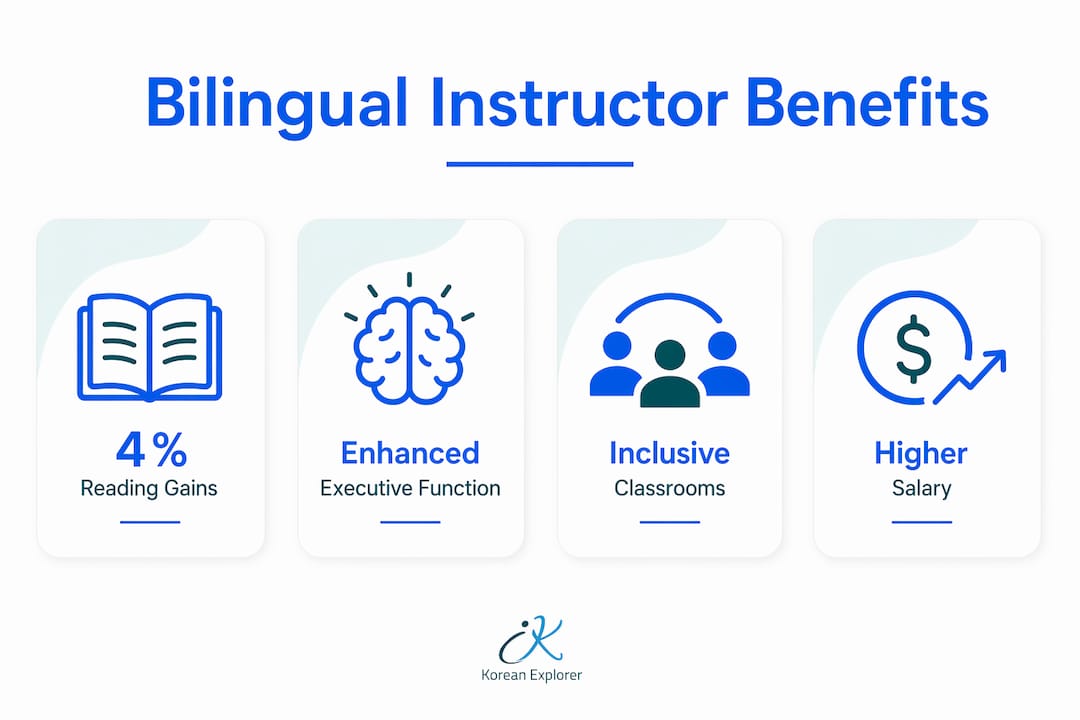
Psychological safety directly connects bilingual instruction to student success. Instructors who address cultural misunderstandings proactively and validate student emotions encourage the kind of risk-taking that produces real language growth. A student who knows their instructor understands their cultural reference points participates more freely. That participation compounds over time.
The sociocultural benefits of multilingualism, as highlighted by the U.S. Department of Education, include improved attentional control, creativity, empathy, and global awareness, alongside reduced discrimination and stronger self-esteem. These are not soft outcomes. They shape how students interact with peers, handle conflict, and engage with content across subjects. Bilingual instructors model these qualities by living them in the classroom every day.
Practical strategies that bilingual educators use to build inclusive environments include:
- Affirming home languages publicly. Calling on students to share words or phrases from their first language signals that their linguistic background is an asset, not a barrier.
- Pairing students across language backgrounds. Structured peer work between students with different first languages builds empathy and forces genuine communication.
- Addressing cultural mismatches directly. When a cultural reference causes confusion, a bilingual instructor names it, explains it, and uses it as a teaching moment rather than moving past it.
- Communicating with families in their home language. Native language use by bilingual instructors strengthens parental engagement and reinforces learning at home.
Pro Tip: Build a short “language moment” into each class where students teach the group one word from their first language. It takes three minutes and shifts the entire classroom dynamic toward inclusion.
The connection between diversity in schools and student engagement is well established. Bilingual instructors are one of the most direct tools administrators have for making that connection real inside the classroom.
What professional advantages do bilingual instructors have?
The demand for bilingual educators is high and growing. Bilingual instructors are in high demand and often receive financial incentives above base salaries, including stipends tied directly to bilingual certification. For educators weighing whether to pursue bilingual credentials, the financial case is straightforward: certification pays more.
Beyond salary, bilingual certification opens doors that standard teaching credentials do not. Certified bilingual instructors qualify for specialized roles in dual-language programs, international schools, corporate language training, and government-funded language initiatives. That breadth of opportunity makes bilingual credentials one of the most transferable qualifications in education.
| Career benefit | What it means in practice |
|---|---|
| Higher base compensation | Financial stipends above standard salary in many districts |
| Broader job market | Eligible for dual-language, international, and corporate roles |
| Program leadership | Positioned to lead bilingual curriculum design and teacher training |
| Professional credibility | Recognized specialization that distinguishes candidates in competitive markets |
| Cross-sector mobility | Skills transfer to corporate training, government, and nonprofit sectors |
Administrators benefit too. Schools with certified bilingual instructors attract a wider student population, satisfy community demand for inclusive programs, and build a stronger case for program funding. Hiring bilingual educators is not just a staffing decision. It is a program investment with measurable returns.
Which instructional strategies make bilingual instructors most effective?
The most effective bilingual instructors do not rigidly separate their two languages during instruction. They use translanguaging, a technique that allows students to draw on their full linguistic repertoire to process and express concepts. Translanguaging enhances cognitive engagement by letting students use whichever language gives them the clearest access to an idea, then build the equivalent expression in the target language. This is not code-switching for convenience. It is a deliberate pedagogical tool.
The following strategies define high-performing bilingual instruction:
- Use translanguaging intentionally. Allow students to think through a concept in their stronger language, then guide them to express it in the target language. This reduces cognitive overload and accelerates comprehension.
- Address cultural misunderstandings before they become barriers. When a cultural reference or idiom causes confusion, pause and explain it. Unaddressed confusion compounds into disengagement.
- Create structured opportunities for communicative risk-taking. Low-stakes activities like pair discussions, quick writes, and role plays give students practice without the pressure of formal assessment.
- Involve school leadership actively. School leadership that communicates the value of students’ home languages as assets is critical to program success. Administrators who frame bilingualism as a strength, not a remediation need, change the culture around the program.
- Maintain consistent family communication. Bilingual instructors who reach out to families in their home language build trust that extends the learning environment beyond the classroom.
The role of curriculum design in supporting these strategies cannot be overstated. Instructors need structured materials that support both languages equally, not curricula that treat one language as primary and the other as a scaffold to be discarded. When curriculum and instructor approach align, the results compound. The emotional intelligence dimension of bilingual teaching, including how instructors manage anxiety and validate student experience, is what separates good bilingual programs from great ones.
Key Takeaways
Bilingual instructors improve academic outcomes, build inclusive classrooms, and advance their own careers precisely because they operate at the intersection of language, culture, and cognitive development.
| Point | Details |
|---|---|
| Academic gains are measurable | Dual-language programs produce 4 percentile point gains in reading and math over English-only models. |
| Cognitive benefits are real | Bilingual exposure improves executive function (d=0.39) and phonological accuracy by 16%. |
| Inclusion drives engagement | Bilingual educators reduce language anxiety and build psychological safety, which increases student participation. |
| Career demand is strong | Bilingual certification brings financial stipends and access to a broader range of teaching and training roles. |
| Translanguaging is the key strategy | Allowing students to use their full linguistic repertoire accelerates comprehension and reduces cognitive overload. |
Why bilingual instruction is the most undervalued tool in education
I have spent years watching schools debate whether bilingual programs are “worth the complexity.” The question itself reveals the problem. Administrators who frame bilingual instruction as complex are usually comparing it to the wrong baseline. Monolingual instruction is not simpler. It is just more familiar.
What I have seen consistently is that bilingual instructors do something no curriculum document can replicate. They make students feel seen at the level of identity, not just language. A student who hears their first language treated as an asset in a classroom does not just learn faster. They show up differently. They take more risks. They help their peers more. That shift in classroom culture is the real return on investment for any administrator willing to look past the staffing logistics.
The research on bilingual advantages in Singapore and similar multilingual environments confirms what experienced educators already know: the benefits compound over time. The schools that commit to bilingual instruction early build programs that are genuinely hard to replicate. The schools that wait keep asking whether it is worth the complexity.
My honest recommendation to any administrator reading this: hire for bilingual certification, train your existing staff in translanguaging, and make sure your school’s messaging treats every student’s home language as a strength. The outcomes will follow.
— Paul
Korean Explorer: where bilingual instruction meets structured learning
Korean Explorer staffs every class with experienced native Korean instructors who are fluent in both Korean and English. That bilingual fluency is not incidental. It is the foundation of how the school explains grammar, corrects pronunciation, and connects Korean language concepts to what adult learners already know.
Whether you are an educator building your own language skills or a professional preparing for business use, Korean Explorer offers group, private, and online Korean classes that apply the same evidence-based principles this article covers. The school’s curriculum follows a framework developed by Seoul National University, taught by instructors who understand how bilingual learners think. If you are ready to experience what structured bilingual instruction actually feels like, explore Korean courses in Singapore at Korean Explorer’s central location above Tanjong Pagar MRT.
FAQ
What are the main benefits of bilingual instructors?
Bilingual instructors improve reading and math scores, strengthen executive function, and create inclusive classrooms where students take more communicative risks. Research shows dual-language programs produce measurable academic gains over English-only instruction.
Why do bilingual instructors matter for student engagement?
Bilingual educators reduce language anxiety by validating students’ home languages and cultural backgrounds, which builds psychological safety. Students in psychologically safe classrooms participate more actively and learn faster.
What is translanguaging and why do bilingual instructors use it?
Translanguaging is a teaching technique that allows students to use their full linguistic repertoire, both languages, to process and express ideas. Bilingual instructors use it to reduce cognitive overload and accelerate comprehension of new concepts.
Do bilingual instructors have better career prospects?
Bilingual certification is in high demand and often comes with financial stipends above standard teacher salaries. Certified bilingual educators also qualify for a broader range of roles, including dual-language programs, corporate training, and international schools.
How does school leadership affect bilingual instruction outcomes?
School leadership that frames students’ home languages as assets, rather than barriers, is critical to program success. When administrators communicate this value to families and staff, bilingual programs produce stronger results across the board.