TL;DR:
- Effective online Korean learning requires a structured approach combining resource sequencing and goal setting.
- Using a mix of websites, apps, and live practice enhances fluency and prevents stagnation.
- Singaporean learners benefit from local programs and formal courses to achieve lasting proficiency.
Trying to learn Korean online in Singapore can feel like standing in front of a buffet with no plate. There are hundreds of apps, websites, YouTube channels, and podcasts competing for your attention, and most of them promise fluency in weeks. The reality? Without a clear strategy, you end up dabbling in five tools at once and mastering none. This guide cuts through the noise. You’ll get a practical, sequenced approach to online Korean study built around resources that actually work, with strategies tailored to the way Singaporean learners think, schedule, and progress.
Table of Contents
- Preparing for online Korean study: What you need
- Step-by-step approach: Structured sites, apps, and platforms
- Engaging with Korean: Practice speaking, listening, and real communication
- Tracking progress and troubleshooting: Staying motivated over time
- Why most online Korean learners in Singapore plateau — and how to break through
- Your next step: Connect with Korean learning in Singapore
- Frequently asked questions
Key Takeaways
| Point | Details |
|---|---|
| Prepare with the right tools | Start your online study journey with reliable resources, a stable internet connection, and clear goals. |
| Combine structured sites and apps | Mix grammar-focused websites with engaging apps to build habits and deepen your knowledge. |
| Practice real communication | Speaking and listening with native speakers or peers is essential for making meaningful progress. |
| Track progress and troubleshoot | Regularly review achievements, address learning plateaus, and adjust your study routine to keep moving forward. |
| Bridge self-study with certification | Connect with local classes or test options in Singapore to validate your skills and advance your career. |
Preparing for online Korean study: What you need
Having outlined why effective online resources matter, let’s start by assembling everything you need for a smooth learning experience. Before you open a single app, a little preparation goes a long way. Many learners skip this step and end up frustrated two weeks in because they chose the wrong tools for their level or schedule.
Here’s what you need to get started:
- A reliable device and internet connection. A smartphone works for apps, but a laptop or tablet is better for grammar-heavy websites.
- A dedicated study block. Even 20 to 30 minutes daily beats a three-hour weekend cram session.
- A clear motivation. Whether it’s K-dramas, career growth, or travel to Seoul, knowing why you’re learning keeps you going when it gets hard.
- A notebook or digital journal. Writing things down by hand strengthens memory retention significantly.
- An honest self-assessment. Are you a complete beginner, or do you already know Hangul? Start at the right level.
Once you’re set up, you’ll find that the best ways to learn Korean combine multiple resource types rather than relying on one. Free platforms cover a surprising amount of ground. HowToStudyKorean.com, Talk To Me In Korean, and KoreanClass101.com offer beginner to advanced lessons at no cost, covering grammar, vocabulary, and listening.
Here’s a quick overview of the top free tools available:
| Resource | Type | Level coverage | Best for |
|---|---|---|---|
| HowToStudyKorean.com | Website | Beginner to advanced | Grammar structure |
| Talk To Me In Korean | Website + podcast | Beginner to intermediate | Listening + grammar |
| KoreanClass101.com | Video + audio | Beginner to advanced | Vocabulary + culture |
| Duolingo | App | Beginner | Daily habit building |
| LingoDeer | App | Beginner to intermediate | Grammar accuracy |
Pro Tip: Use the tips for studying Korean to set a weekly goal, such as learning 10 new vocabulary words or completing one grammar unit. Vague goals like “study more” rarely stick.
One mistake beginners make is jumping straight into speaking practice before they understand basic sentence structure. Korean grammar is quite different from English, with verbs at the end of sentences and honorific levels that change how you address people. Spend your first two to three weeks on Hangul and basic grammar before attempting conversation.
Step-by-step approach: Structured sites, apps, and platforms
With your essentials ready, it’s time to choose the right mix of structured sites and engaging apps for a balanced approach. The secret to real progress is sequencing your tools so they build on each other rather than overlap.
Follow this step-by-step sequence:
- Week 1 to 2: Learn Hangul first. Use HowToStudyKorean.com or a YouTube tutorial. Hangul takes most learners just a few days to read.
- Week 3 to 4: Start grammar fundamentals. LingoDeer is excellent here because it explains why grammar rules work, not just what they are.
- Month 2: Add vocabulary drilling. Memrise uses native speaker video clips to make words stick faster than flashcards alone.
- Month 2 onward: Layer in daily app habits. Use Duolingo for your morning routine, but treat it as a warm-up, not your main study.
- Month 3: Introduce structured listening. Talk To Me In Korean podcasts are graded by level and genuinely entertaining.
- Month 4 onward: Add speaking practice. Teuida and HelloTalk connect you with real speakers for live feedback.
Here’s how sites and apps compare when you’re choosing where to invest your time:
| Feature | Structured sites | Apps |
|—|—|—|
| Grammar depth | High | Low to medium |
| Vocabulary range | Medium | High |
| Gamification | None | High |
| Speaking practice | Limited | Medium |
| Cost | Mostly free | Free or freemium |
| Consistency support | Low | High |
According to app reviews, top apps for Korean include LingoDeer for grammar, Memrise for vocabulary with native clips, Teuida for speaking practice, and HelloTalk or Tandem for language exchange. Serious learners should avoid relying solely on Duolingo.

Pro Tip: Explore the top Korean apps that pair well with structured study. Use Duolingo for daily habit formation, then switch to LingoDeer or Talk To Me In Korean when you want to go deeper on a grammar point.
The biggest mistake at this stage is platform hopping. Picking three apps and rotating between them feels productive but actually slows you down. Choose one grammar resource and one vocabulary app, then stick with both for at least a month before evaluating. Understanding learning with technology means knowing when to use it and when to put it down. If you want quick Korean learning methods, consistency beats intensity every time.
Engaging with Korean: Practice speaking, listening, and real communication
After laying a foundation with grammar and vocabulary, the next step is to immerse yourself in active, practical communication. Passive study, reading grammar notes and reviewing flashcards, builds knowledge. But speaking and listening build skill. These are not the same thing.
Here are your best options for active practice:
- Speaking: Teuida and HelloTalk/Tandem connect you with native Korean speakers for real conversation practice and language exchange.
- Listening: KoreanClass101 audio lessons and Talk To Me In Korean podcasts offer graded content from beginner to advanced.
- Community interaction: Reddit’s r/Korean community, online tutors on iTalki, and structured courses with instructor feedback give you real-time corrections.
- Verbal exercises: Shadowing Korean TV dialogue or repeating podcast phrases out loud trains your ear and mouth simultaneously.
- Speaking practice apps: Many free tools now include AI-powered pronunciation feedback, which is useful when a human partner isn’t available.
“Apps gamify but lack depth. Combine them with structured courses for grammar and nuance, or you’ll hit a ceiling fast.”
Pro Tip: Join an online Korean language exchange group and commit to at least two sessions per week. Accountability partners dramatically increase how long learners stick with a study plan.
Measuring your speaking progress is harder than measuring vocabulary scores, but it matters more. Track your confidence in specific situations: Can you order food in Korean? Can you describe your weekend? Set small, concrete speaking targets rather than vague fluency goals. One common mistake is spending months on grammar and vocabulary before attempting a single real conversation. The discomfort of early speaking practice is exactly what accelerates your progress.
Tracking progress and troubleshooting: Staying motivated over time
With active practice underway, it’s just as important to monitor your growth and address challenges along the way. Most learners start strong and then quietly fade out around month two or three. The fix is building a simple tracking system from day one.
Follow these steps to stay on track:
- Keep a weekly review journal. Note what you studied, what confused you, and one thing you did well.
- Take short weekly quizzes. Most apps have built-in tests. Use them. Don’t skip the ones you find hard.
- Check your app analytics. Streak counts and lesson completion rates are motivating, but also look at accuracy scores.
- Schedule monthly speaking check-ins. Record yourself speaking for two minutes on a topic, then compare recordings month to month.
- Review mistakes with a teacher or partner. This is the fastest route to fixing recurring errors.
Here’s a sobering reality: over 70% of app users plateau without structured challenges. Habit-building apps like Duolingo are great for consistency, but structured platforms are what drive real progress beyond the basics.
Pro Tip: Use the tips for learning Korean to build a monthly milestone system. For example, month one is Hangul mastery, month two is basic sentence construction, month three is simple conversation.
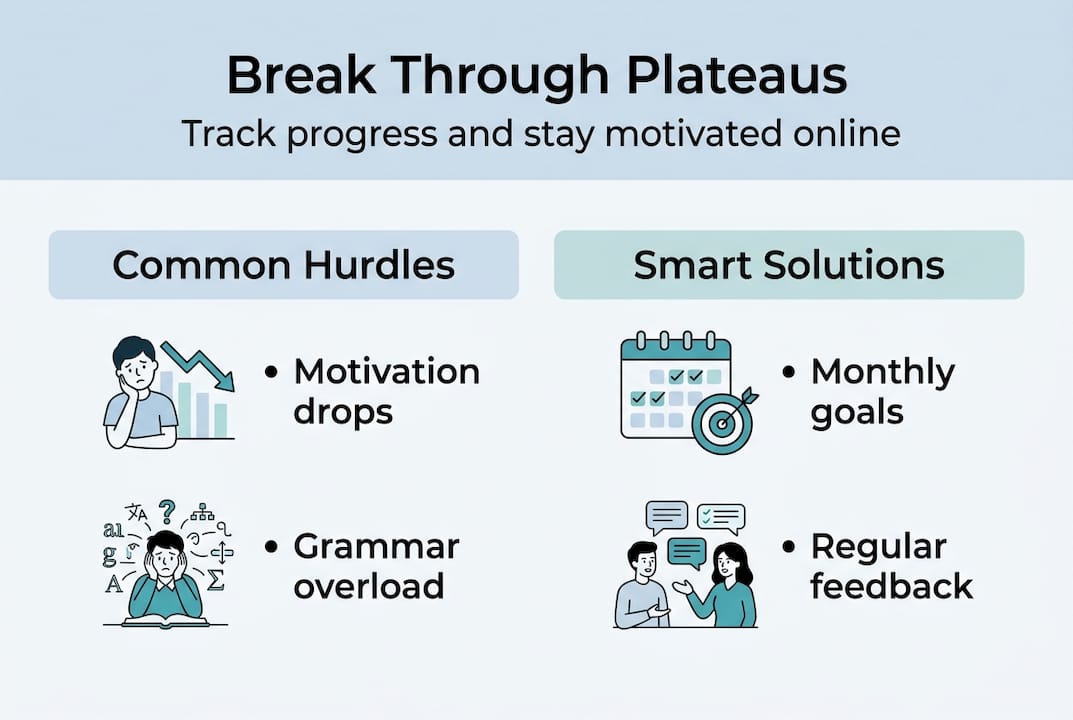
Common troubleshooting scenarios include motivation drops, grammar overload, and lack of feedback. For motivation, reconnect with your original reason for learning. For grammar overload, slow down and spend a full week on one grammar point before moving on. For feedback gaps, consider structured classes or an online tutor. If you’re preparing for a formal assessment, reviewing Korean language test tips early gives you a clear target to study toward.
Why most online Korean learners in Singapore plateau — and how to break through
Now that you know how to track progress and troubleshoot, let’s confront one of the biggest challenges for Singapore learners: stagnation. Here’s the uncomfortable truth. Most people who plateau aren’t studying too little. They’re studying the wrong way for too long.
The pattern is predictable. A learner discovers Duolingo, builds a 60-day streak, feels great, and then realizes they still can’t hold a basic conversation. The app rewarded consistency but didn’t push them into genuinely difficult territory. Progress isn’t just about hours logged. It’s about regularly doing things that feel slightly too hard.
Singapore learners have a real advantage here that most online guides overlook. Local access to SkillsFuture-accredited Korean programs means you can combine self-study with structured, certified learning. That combination, app habits plus real instruction, is what separates learners who break through from those who stay stuck at beginner level for years. Integrating spoken practice with local communities or formal courses isn’t just helpful. It’s often the missing piece.
Your next step: Connect with Korean learning in Singapore
After learning what really works, you’re ready to take action and connect with programs that suit your goals.
Self-study gets you started, but pairing it with structured learning is what takes you to real fluency. If you’re in Singapore, you have access to some excellent options that go beyond apps and websites.
Korean Explorer offers flexible group, private, and online classes built on a Seoul National University curriculum and aligned with TOPIK standards. Whether you want to explore Korean language test options through SkillsFuture or simply want a structured path to conversation confidence, the school’s native Korean instructors can guide you. Find out where to take Korean classes in Singapore and take the next step toward real, lasting fluency. Visit Korean Explorer to explore all available programs.
Frequently asked questions
Which online resource is best for Korean grammar?
HowToStudyKorean.com and Talk To Me In Korean both offer structured, beginner to advanced grammar lessons that build logically from one unit to the next.
Can I achieve fluency in Korean using apps alone?
Apps build habits and vocabulary, but apps lack the depth needed for grammar nuance and real conversation, so combining them with structured websites and speaking practice is essential.
What’s the best way to practice speaking Korean online?
Use Teuida and HelloTalk/Tandem to connect with native speakers for real conversation and language exchange practice.
How do I measure progress and avoid stagnation?
Track app analytics, keep a review journal, and schedule regular speaking check-ins. Remember that 70% of app users plateau without structured challenges, so mixing in formal study is key.
Are there online resources tailored for Singaporean learners?
Most platforms work globally, but local options like Korean Explorer provide SkillsFuture-accredited courses and TOPIK-aligned instruction designed specifically for learners in Singapore.