TL;DR:
- Saying “let’s eat” in Korean is expressed as 먹자 (meokja), a casual invitation to share a meal. Knowing common phrases and cultural etiquette helps foreigners dine respectfully and confidently in Korea.
Saying “let’s eat” in Korean is expressed as 먹자 (meokja), a casual and enthusiastic invitation to share a meal. This single phrase opens the door to a much richer world of Korean dining expressions, cultural customs, and social rituals that shape every meal in Korea. Whether you are visiting Seoul, dining at a Korean restaurant in Singapore, or bonding with Korean colleagues, knowing the right phrases and etiquette makes a real difference. This guide covers the core vocabulary, the cultural rules, and a step-by-step ordering sequence so you can eat confidently and respectfully.
What are the key Korean phrases for “let’s eat” and ordering food?
Meokja (먹자) is the propositive form of the verb 먹다 (meokda), meaning “to eat.” It translates directly as “let’s eat” and carries a warm, social energy. You will hear it constantly in K-dramas and everyday Korean conversation when someone enthusiastically suggests sitting down for a meal together.
Beyond meokja, a handful of phrases cover the full arc of a Korean meal. Learning these as a set gives you a complete toolkit for dining in Korean.
- 먹자 (Meokja): “Let’s eat.” Use this with friends or people your age in casual settings.
- [Item] 주세요 ([Item] juseyo): “Please give me [item].” This is the single most useful ordering phrase in any Korean restaurant. Point to the menu item and say the name followed by juseyo.
- 두 명이에요 (Du myeongieeyo): “We are two people.” State your party size when you enter and are asked for seating.
- 여기요! (Yeogiyo!): “Excuse me!” or “Over here!” Say this once, clearly, to get your server’s attention.
- 잘 먹겠습니다 (Jal meokgesseumnida): Said before eating. It means “I will eat well” and expresses gratitude to whoever prepared or provided the meal.
- 잘 먹었습니다 (Jal meogeosseumnida): Said after eating. It means “I ate well” and closes the meal with thanks.
These two bookend phrases are not optional pleasantries. They signal respect and appreciation to the host or restaurant, and Koreans notice when they are used correctly.
Pro Tip: If you forget the full phrase before eating, even a simple “잘 먹겠습니다” said quietly to yourself or the table is recognized and appreciated. It shows cultural awareness, not just language skill.
For learners who want to build on these basics, Korean Explorer’s guide to key Korean phrases covers foundational expressions that extend well beyond the dining table.
How to navigate cultural dining etiquette when eating in Korea
Korean dining etiquette is built on two core values: respect for age and harmony within the group. These values show up in specific behaviors that every diner at a Korean table is expected to follow.
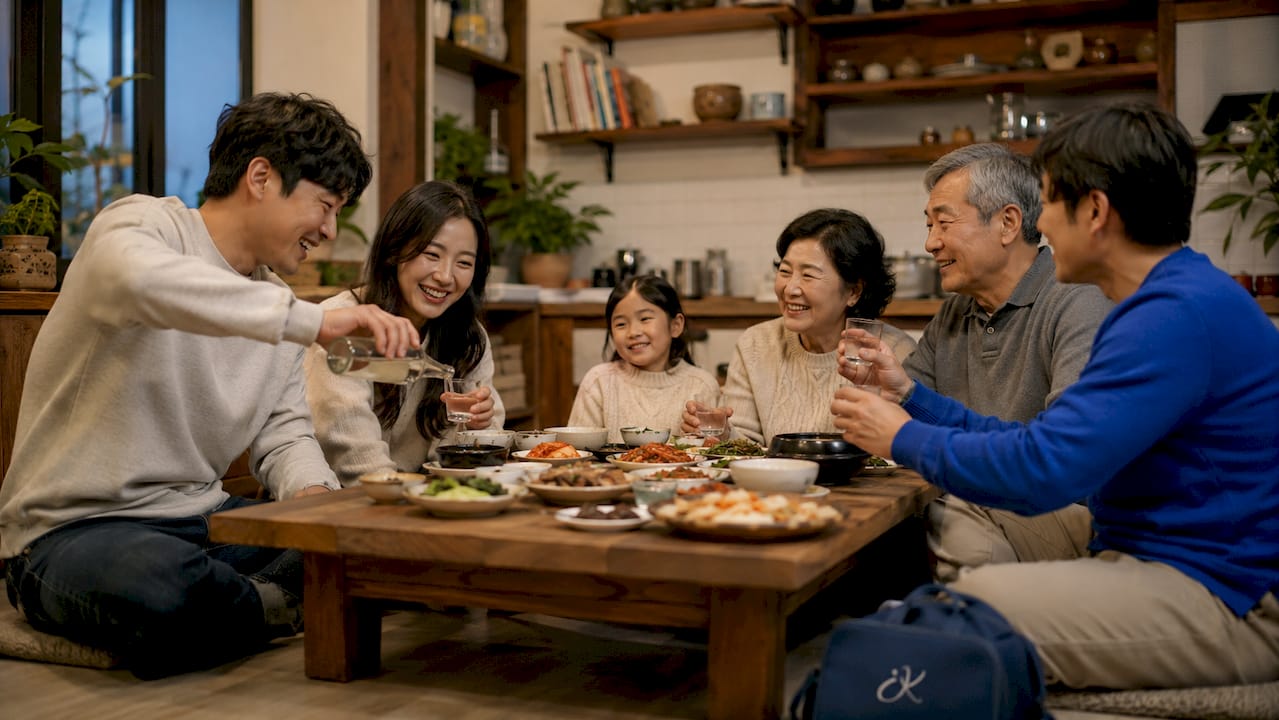
Korean food culture is deeply communal. Meals center on shared side dishes called banchan, small plates of kimchi, vegetables, and other accompaniments placed in the middle of the table for everyone. Each person has their own bowl of rice or soup, but the banchan belongs to the whole table. Taking from shared dishes with your own chopsticks is normal and expected.
The most important etiquette rule at a formal meal is waiting. In Korean dining, you wait for the oldest person at the table to begin eating before you pick up your chopsticks. This applies at family dinners, work meals, and any gathering where age differences are present. Skipping this step reads as disrespectful, even if unintentional.
Key etiquette points to remember:
- Wait for the eldest person to lift their chopsticks before you start.
- Say 잘 먹겠습니다 before the meal and 잘 먹었습니다 after.
- Use 여기요 once to call the server. Do not wave repeatedly or raise your voice.
- Tipping is not standard in Korea. Verbal gratitude replaces monetary tips entirely.
- Pour drinks for others at the table before pouring for yourself.
Pro Tip: At a Korean restaurant with a call bell on the table, always use the bell instead of calling out. It is the preferred and quieter method, and most Korean restaurants provide one specifically for this purpose.
Understanding these customs alongside the language gives you the full picture. Korean Explorer’s guide to Korean culture goes deeper into the social norms that shape everyday interactions.
Step-by-step guide to ordering food at a Korean restaurant
A typical Korean restaurant visit follows a predictable sequence. Knowing this sequence removes the guesswork and lets you focus on enjoying the meal.
- Enter and state your party size. When greeted, say “두 명이에요” (we are two) or the relevant number. The host will seat you accordingly.
- Review the menu. Most Korean restaurants use picture menus, which makes ordering straightforward even without fluent Korean.
- Order by pointing and using juseyo. Point to the item and say “Item] 주세요.” For example, “비빔밥 주세요” means “Please give me bibimbap.” This method works in [tourist and local restaurants alike.
- Call the server when needed. Say “여기요!” once to request refills, extra banchan, or anything else during the meal.
- Begin eating with the right phrase. Say “잘 먹겠습니다” before your first bite.
- Close the meal with gratitude. Say “잘 먹었습니다” when you finish.
- Ask for the bill. Say “계산해 주세요” (Gyesanhae juseyo), which means “Please give me the check.”
The table below shows the full restaurant sequence with the Korean phrase and its pronunciation for each step.
| Situation | Korean Phrase | Pronunciation | Meaning |
|---|---|---|---|
| Stating party size | 두 명이에요 | Du myeongieeyo | We are two people |
| Ordering food | [Item] 주세요 | [Item] juseyo | Please give me [item] |
| Calling the server | 여기요! | Yeogiyo | Excuse me / Over here |
| Before eating | 잘 먹겠습니다 | Jal meokgesseumnida | I will eat well |
| After eating | 잘 먹었습니다 | Jal meogeosseumnida | I ate well |
| Asking for the bill | 계산해 주세요 | Gyesanhae juseyo | Please give me the check |
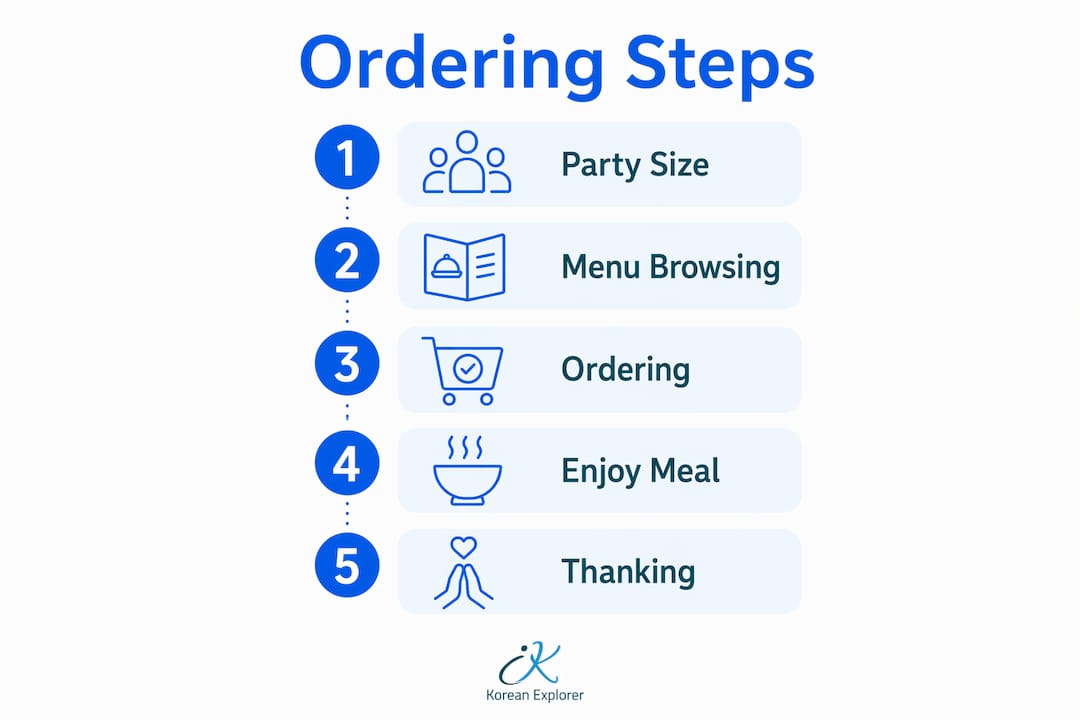
This sequence covers every stage of a Korean restaurant visit. Practice the pronunciation of each phrase before you go, and the interaction becomes natural quickly.
Common mistakes and tips when using Korean food phrases
The most common mistake foreigners make in Korean restaurants is calling the server incorrectly. Saying 여기요 once is the right approach. Repeating it loudly or waving across the room disrupts the atmosphere and draws unwanted attention. If the restaurant has a call bell, use it every time.
The second most common mistake is tipping. Leaving money on the table after a meal in Korea causes confusion. Verbal gratitude through 잘 먹었습니다 is the culturally correct way to express appreciation. No monetary tip is expected or required.
A few more practical points:
- Use polite speech forms. The phrases listed in this guide use formal or standard polite endings. Avoid casual speech with restaurant staff or people you have just met.
- Do not rush the eldest person. In formal settings, starting your meal before the oldest person at the table is a clear breach of etiquette.
- Respond correctly to social greetings. 밥 먹었어? (Bap meogeosseo?) literally means “Have you eaten?” but functions as a casual greeting showing care, not a literal question about your last meal. Respond warmly rather than with a detailed answer.
- Learn numbers. Ordering quantities and stating party sizes requires basic Korean numbers. Even knowing one through ten removes significant friction.
Pro Tip: Before your first Korean restaurant visit, practice the full sequence out loud at home. Saying 잘 먹겠습니다 and 잘 먹었습니다 aloud several times builds the muscle memory to use them naturally at the table.
For learners who want a structured path to building these skills, Korean Explorer’s article on mastering Korean language offers practical techniques that apply directly to real-life situations like dining.
Key Takeaways
Knowing how to say “let’s eat” in Korean, along with the phrases and customs that surround a Korean meal, gives you the confidence to dine respectfully and connect genuinely with Korean culture.
| Point | Details |
|---|---|
| Core phrase for “let’s eat” | 먹자 (Meokja) is the casual, everyday invitation to share a meal in Korean. |
| Ordering made simple | Point to the menu item and say “[Item] 주세요” to order politely in any Korean restaurant. |
| Bookend phrases matter | Say 잘 먹겠습니다 before eating and 잘 먹었습니다 after to show genuine respect. |
| No tipping in Korea | Verbal gratitude replaces monetary tips; leaving money on the table causes confusion. |
| Age and order at the table | Always wait for the eldest person to begin eating before you pick up your chopsticks. |
Why the phrases matter more than you think
People often treat dining phrases as a nice-to-have, something to pull out once and impress the table. My experience tells a different story. The first time I used 잘 먹겠습니다 correctly at a Korean home dinner, the reaction from the host was immediate and genuine. It was not about the language. It was about the signal the phrase sent: that I understood what the meal meant to them.
Korean meals are not just about food. They are about showing up for the people around you. The phrase 밥 먹었어? exists because asking “have you eaten?” is a way of saying “I care about you.” That context changes how you use the language entirely. You stop treating phrases as scripts and start treating them as real communication.
My honest advice is this: learn the cultural reason behind each phrase before you memorize the pronunciation. When you know that 잘 먹겠습니다 is an expression of gratitude to the person who provided your meal, you will never forget to say it. The meaning makes the phrase stick far better than repetition alone.
— Paul
Learn Korean the way it is actually spoken
Korean Explorer offers adult conversational Korean courses built for real-life situations, including dining, travel, and workplace communication. Courses run in group, private, and online formats, so you can fit structured learning around your schedule.
The curriculum follows a framework developed by Seoul National University, which means the phrases you learn in class are the ones Koreans actually use. If you are ready to move from memorizing individual words to speaking with confidence, learn Korean in Singapore with Korean Explorer’s structured adult courses. Classes are available at the Tanjong Pagar center at 10 Anson Road, Level 22, International Plaza. Confirm the campus for your preferred class on the current timetable, with online options available for learners across Singapore.
FAQ
What does 먹자 (meokja) mean in Korean?
먹자 (Meokja) means “let’s eat” in Korean. It is the propositive form of the verb 먹다 (to eat) and is used casually to invite someone to share a meal.
How do I politely order food in a Korean restaurant?
Point to the menu item and say “[Item] 주세요” (juseyo), which means “please give me [item].” This phrase works in both tourist-friendly and local Korean restaurants.
Is tipping expected at Korean restaurants?
Tipping is not standard in Korea and can cause confusion. Verbal gratitude, specifically saying 잘 먹었습니다 after the meal, is the culturally preferred way to express appreciation.
What does 밥 먹었어? mean and when is it used?
밥 먹었어? (Bap meogeosseo?) literally means “Have you eaten?” but functions as a casual Korean greeting expressing care and social connection, not a factual question about your last meal.
When should I say 잘 먹겠습니다?
Say 잘 먹겠습니다 (Jal meokgesseumnida) immediately before you begin eating. It expresses gratitude to the host or provider and is a standard part of Korean dining etiquette in both homes and restaurants.