TL;DR:
- Advanced Korean involves mastering sophisticated grammar structures, Sino-Korean vocabulary, and cultural nuances essential for professional communication. It requires active pattern recognition and cultural intuition to navigate social registers, indirect speech, and social context effectively. Achieving proficiency typically demands around 1,000 hours of consistent practice, integrating immersive media and culturally grounded learning strategies.
Advanced Korean is defined as the stage of language proficiency where learners command sophisticated grammar structures, a broad vocabulary rooted in Sino-Korean origins, and the cultural intuition needed for authentic, professional communication. This level goes far beyond ordering food or exchanging pleasantries. It means reading academic texts, navigating formal business settings, and understanding the unspoken social rules that shape every Korean conversation. Resources like My Korean Grammar III by Hollym International Corp., the Routledge Comprehensive Korean Grammar, and platforms like Nincha are built specifically for this stage. Learners who reach TOPIK II levels 5 and 6 demonstrate this level of fluency, capable of processing academic papers and professional documents without strain.
What is advanced Korean grammar and why it matters
Advanced Korean grammar is not simply more rules stacked on top of beginner ones. It is a system of speech levels, honorifics, complex verb endings, and idiomatic forms that reflect the social relationships between speakers. Get the grammar wrong at this level, and you do not just sound foreign. You signal disrespect or confusion about your social role.
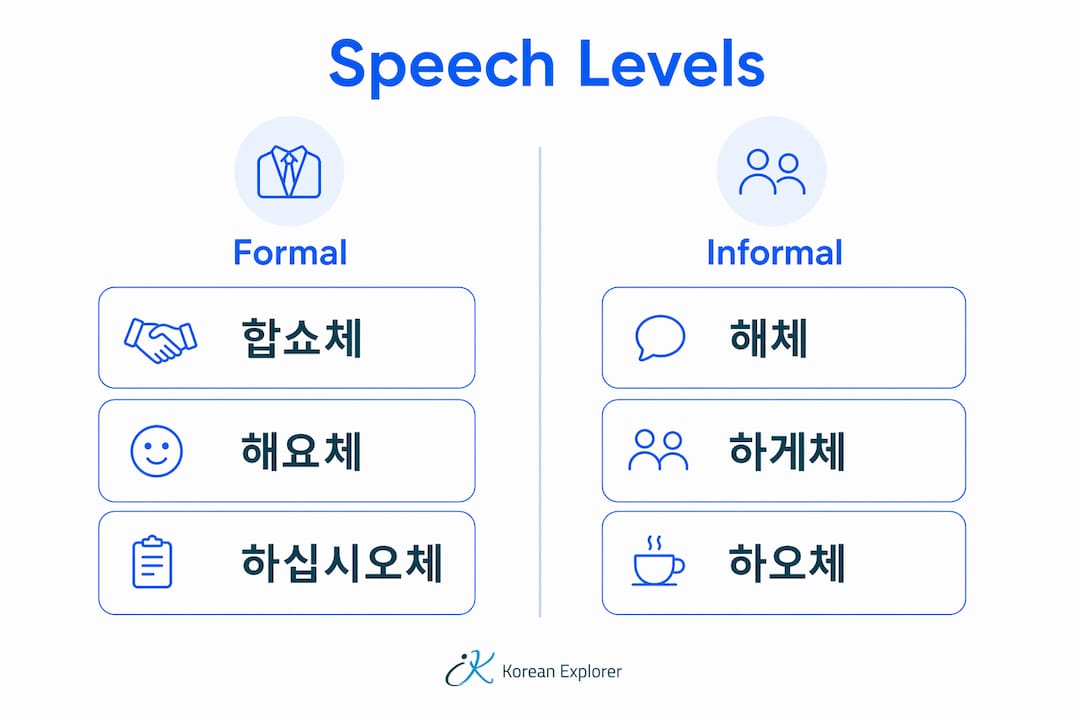
The 75 essential grammar items that form the foundation of advanced Korean courses include structures like the formal polite speech level (합쇼체, hapshoche), the intimate speech level (해체, haechae), and conditional or causal connectors that carry nuance no dictionary can fully capture. My Korean Grammar III from Hollym International Corp. offers approximately 2,500 interactive practice exercises to drill these structures, which is significant because passive reading of grammar rules produces far slower results than active, repeated production.
The table below shows how key advanced grammatical forms function in real communication:
| Grammar form | Function | Example context |
|---|---|---|
| 합쇼체 (Formal polite) | Maximum formality and respect | Business presentations, official speeches |
| 해요체 (Informal polite) | Everyday polite conversation | Colleagues, strangers, service settings |
| 해체 (Intimate) | Close friends, younger people | Casual conversation with peers |
| -(으)ㄹ 뿐만 아니라 | “Not only… but also” connector | Academic writing, formal arguments |
| -는 바람에 | Causal connector implying negative result | Explaining mishaps or unexpected outcomes |
Pro Tip: Instead of memorizing grammar tables in isolation, study each form inside a full sentence from a drama or news article. Pattern recognition built through real context transfers to speaking far faster than rote drills alone.
Understanding speech levels is not just a grammar exercise. It is a social skill. Korean speakers switch registers mid-conversation depending on who enters the room, and advanced learners need to do the same without pausing to calculate.
How advanced vocabulary and Sino-Korean roots expand language proficiency
Sino-Korean vocabulary constitutes about 60% of the Korean language. This single fact changes how you should approach advanced Korean vocabulary entirely. Rather than memorizing individual words in isolation, learning the Chinese-origin roots that underpin thousands of Korean terms lets you decode unfamiliar academic and professional words on sight.
Consider the root 학 (學), meaning “study” or “learning.” It appears in 학교 (school), 학생 (student), 대학 (university), 과학 (science), and 철학 (philosophy). Mastering one root unlocks a semantic family of dozens of words. Studying Sino-Korean roots is the single most efficient vocabulary strategy available to advanced learners, minimizing the rote memorization of isolated words that slows progress at this stage.
Cultural context matters as much as etymology. A word like 눈치 (nunchi) does not translate cleanly into English, but understanding it as “the ability to read a room” gives you access to a whole register of social commentary in Korean. Learning vocabulary through cultural context, rather than bilingual word lists, produces the kind of retention that survives outside the classroom.
Vocabulary categories that advanced learners must prioritize include:
- Academic and formal terms rooted in Sino-Korean, used in written reports, news, and professional documents
- Idiomatic expressions that carry emotional or social meaning beyond their literal translation
- Honorific vocabulary where entirely different words replace standard ones depending on who you are addressing (e.g., 드시다 instead of 먹다 for “to eat”)
- Connective and discourse markers that signal logical relationships in formal speech and writing
- Emotion and nuance vocabulary used in literature, media, and interpersonal communication
Pro Tip: Build thematic word decks organized by Sino-Korean root rather than topic. A deck built around 경 (經, meaning “to pass through” or “to manage”) will give you 경제 (economy), 경험 (experience), 경영 (management), and 경로 (route) in one session, all with a shared memory anchor.
Tools like Nincha support this approach through spaced repetition modes that improve active vocabulary recall rather than passive recognition. The difference matters. Passive recognition means you understand a word when you see it. Active recall means you produce it under pressure in conversation.
What role does cultural nuance play in mastering advanced Korean?
Cultural concepts like nunchi profoundly influence language use at the advanced level. Nunchi (눈치) is the Korean social awareness that tells you when to speak, when to stay silent, and how to phrase a request so it lands correctly. Without it, even grammatically perfect Korean can feel blunt, awkward, or socially tone-deaf.
Indirect communication is the default in many Korean social contexts. A phrase like jom eotteolkkayo? (좀 어떨까요?) translates literally as “How would it be a little?” but functions as a polite suggestion or soft objection in professional settings. Advanced learners who translate this literally miss the social signal entirely. The ability to decode and produce this kind of indirect speech is what separates a high-intermediate learner from a genuinely advanced one.
The table below maps key cultural expressions to their actual usage contexts:
| Expression | Literal meaning | Actual social function |
|---|---|---|
| 좀 어떨까요? | “How would it be a little?” | Polite suggestion or soft disagreement |
| 밥 먹었어요? | “Have you eaten?” | Casual greeting, shows care |
| 괜찮아요 | “It’s okay / fine” | Can mean refusal, acceptance, or deflection depending on tone |
| 수고하셨습니다 | “You’ve worked hard” | Formal acknowledgment and farewell in professional settings |
| 어떻게 생각하세요? | “What do you think?” | Invitation for input, often used to build consensus |
Korean also uses multiple words for “you” depending on social context. 당신 (dangsin) sounds formal and can feel cold or confrontational in casual speech. 선생님 (seonsaengnim, “teacher”) is used to address someone respectfully even when they are not a teacher. Advanced learners must internalize these distinctions rather than defaulting to a single translation.
Mastering indirect communication and cultural nuance leads to authentic fluency because it shifts language use from mechanical to intuitive. You stop translating and start responding.
Pro Tip: Use Nincha’s contextualized speech exercises to practice phrases inside social scenarios rather than in isolation. Hearing how intonation shifts the meaning of 괜찮아요 across five different situations trains your ear faster than any vocabulary list.
Effective learning strategies to achieve advanced Korean
Advanced learning success depends on shifting from memorization to internal absorption and pattern recognition. This is not a subtle distinction. Learners who plateau at intermediate level almost always do so because they are still translating in their heads rather than thinking in Korean structures.
A practical daily schedule for advanced learners should combine active recall, listening, speaking, and contextual reading. Thirty minutes of spaced repetition vocabulary work in the morning, followed by thirty minutes of native media (Korean news, podcasts, or dramas without subtitles), followed by a short writing or speaking exercise in the evening produces compounding gains. Native media exposure enhances grammar acquisition by forcing the brain to process real-world patterns rather than textbook examples.
Common pitfalls that stall advanced learners include:
- Relying on translation instead of building Korean-to-Korean mental associations
- Avoiding formal speech levels because they feel uncomfortable, which limits professional communication ability
- Studying vocabulary in isolation rather than inside sentences and cultural contexts
- Neglecting listening practice at native speed, which leaves learners unable to follow fast or informal speech
- Skipping production practice by reading and listening without speaking or writing regularly
For structured advancement, the Korean Placement Test at Korean Explorer helps learners identify exactly where their gaps are before committing to a study plan. Knowing whether your weakness is grammar, vocabulary, or cultural pragmatics lets you allocate study time with precision rather than guessing.
Reaching TOPIK II levels 5 and 6 requires approximately 1,000 total study hours for most learners. That number is not discouraging. It is a planning tool. Spread across two years of consistent daily practice, it is entirely achievable for a motivated adult learner.
Pro Tip: Balance active study with immersive, real-world application by scheduling one “Korean-only” activity per week, whether that is watching a Korean film without subtitles, reading a Korean news article, or holding a conversation with a native speaker. Immersion accelerates the internalization that drills alone cannot produce.
Key takeaways
Advanced Korean requires mastery of grammar, vocabulary, cultural nuance, and pragmatic communication working together, not as separate skills.
| Point | Details |
|---|---|
| Grammar reflects social hierarchy | Mastering speech levels and honorifics is non-negotiable for authentic advanced communication. |
| Sino-Korean roots unlock vocabulary | Learning roots rather than isolated words lets you decode thousands of academic and professional terms efficiently. |
| Cultural nuance defines fluency | Concepts like nunchi and indirect speech separate high-intermediate learners from genuinely advanced speakers. |
| Pattern recognition beats memorization | Thinking in Korean structures, not translating from English, is the defining shift at the advanced level. |
| Consistent practice builds fluency | Around 1,000 study hours, structured with active recall and immersive media, is the realistic path to advanced proficiency. |
Why cultural intuition is the real test of advanced Korean
I have worked with hundreds of Korean learners over the years, and the ones who break through to genuine advanced fluency share one trait. They stopped treating Korean as a code to crack and started treating it as a culture to inhabit.
The grammar and vocabulary are learnable by anyone with enough time and the right resources. What trips people up is the invisible layer: knowing when not to say something, understanding why a Korean colleague responds to your direct question with a vague affirmative, or recognizing that the phrase 밥 먹었어요? is warmth, not an inquiry about lunch. These are not things you find in a textbook. They come from sustained exposure, genuine curiosity, and the willingness to sit with ambiguity while your intuition catches up.
I have seen learners with near-perfect grammar scores struggle in real conversations because they defaulted to English social logic. And I have seen learners with messier grammar thrive because they had absorbed the rhythm and social texture of Korean interaction. The lesson is clear: advanced Korean language skills are as much about cultural intelligence as linguistic precision.
The plateau most learners hit around intermediate level is not a grammar problem. It is a mindset problem. The shift from “translating” to “thinking in Korean” is uncomfortable, and it requires you to tolerate sounding imperfect for longer than feels productive. Push through that discomfort. The fluency on the other side is worth every awkward conversation.
— Paul
Take your Korean further with Korean Explorer
Korean Explorer offers structured adult courses in conversational and business Korean, designed specifically for learners ready to move beyond the basics. Whether you prefer group classes, private sessions, or online Zoom learning, the curriculum is built on Seoul National University materials and aligned with recognized proficiency standards.
If you are serious about developing advanced Korean language skills for professional or personal use, Korean Explorer’s adult Korean courses provide the guided structure that self-study alone rarely delivers. Corporate training options are also available for teams working with Korean partners or clients. The school is located at 10 Anson Road, Level 22, International Plaza, Singapore 079903, right above Tanjong Pagar MRT, with additional centers in Jurong and Tampines. Explore the full range of course offerings and find the format that fits your schedule and goals.
FAQ
What is advanced Korean proficiency?
Advanced Korean proficiency means the ability to understand and produce complex grammar, formal speech levels, and culturally nuanced communication across academic and professional contexts. TOPIK II levels 5 and 6 are the recognized benchmarks for this stage.
How long does it take to reach advanced Korean?
Most learners require approximately 1,000 total study hours to reach advanced fluency, depending on their starting level and consistency of practice.
What should I study for advanced Korean grammar?
Advanced Korean grammar study focuses on honorifics, multiple speech levels, complex verb conjugations, and idiomatic connectors. Resources like My Korean Grammar III from Hollym International Corp. cover the 75 core grammar items with over 2,500 practice exercises.
Why is Sino-Korean vocabulary important at the advanced level?
Sino-Korean words make up about 60% of the Korean language, and learning their shared roots lets you decode thousands of academic and professional terms without memorizing each word individually.
How does cultural nuance affect advanced Korean communication?
Cultural concepts like nunchi and indirect speech patterns shape how meaning is conveyed in Korean. Advanced learners who understand these patterns communicate with authenticity that grammar knowledge alone cannot produce.