TL;DR:
- Structured Korean learning offers systematic, goal-oriented instruction with native teachers and real-time feedback.
- Small class sizes and cultural immersion accelerate progress faster than self-study or large groups.
- Comparing programs based on curriculum, class size, and instructor quality ensures effective language mastery.
Many Singaporeans start their Korean journey the same way: binge-watching K-dramas, picking up a few phrases, and hoping it all clicks. It rarely does. The gap between passive exposure and actual fluency is wide, and most casual learners hit a wall within months. Structured Korean learning closes that gap by giving you a clear roadmap, expert feedback, and real accountability. This article breaks down exactly what structured learning means, how Singapore’s course landscape looks, why it outperforms self-study, and how you can choose the right program to reach your goals faster.
Table of Contents
- What is structured Korean learning?
- Key features of structured Korean courses in Singapore
- Why structured learning beats informal methods
- How to choose the right structured Korean program in Singapore
- Why real results happen in small, structured environments
- Take your next step with Korean language courses in Singapore
- Frequently asked questions
Key Takeaways
| Point | Details |
|---|---|
| Structured learning defined | Structured Korean learning blends native instruction, cultural immersion, and interactive practice for fast progress. |
| Small classes accelerate mastery | Empirical data shows twice as fast level completion in small, structured Korean courses. |
| Course selection matters | Choosing the right program means aligning goals, methods, and support for best results. |
| Culture and context | Authentic cultural integration boosts language confidence and usability. |
| Actionable next steps | Singaporeans can access varied, structured Korean learning options for academic, personal, or professional goals. |
What is structured Korean learning?
Structured Korean learning is not just attending a class once a week. It is a systematic, goal-oriented approach where every lesson builds on the last, milestones are tracked, and progress is measurable. Think of it as the difference between following a recipe and guessing ingredients as you go. One gets you a consistent result; the other is hit or miss.
At its core, structured learning involves:
- Organized curriculum with defined levels (beginner through advanced) aligned to recognized standards like TOPIK
- Certified, native-speaking teachers who provide real-time feedback and cultural context
- Clear learning milestones so you always know where you stand and what comes next
- Interactive class formats including role-plays, group discussions, and scenario-based exercises
- Cultural immersion elements woven into every lesson, not treated as an afterthought
The methodology matters enormously. Contextual learning and real-life scenarios with role-plays, native teachers, interactive small-group practice, cultural immersion, and blending with media like K-dramas produce faster, deeper results than passive study alone. You are not just memorizing vocabulary. You are learning how Koreans actually speak, what phrases fit which situations, and how to respond naturally under pressure.
Many learners underestimate how much faster you progress when a teacher corrects your pronunciation in real time versus when you replay a drama scene five times and still get it wrong. That immediate feedback loop is one of the biggest advantages of structured programs. It also builds confidence. Knowing you have a teacher and classmates to practice with removes the fear of speaking, which is the single biggest blocker for most adult learners.
If you have been relying on learning Korean from K-dramas as your primary method, you already have a foundation. Structured learning takes that raw exposure and turns it into usable, accurate language skills. And if you are starting from zero, working with a professional Korean teacher in Singapore from day one sets the right habits before bad ones form.
Pro Tip: Do not skip the role-play exercises in class. They feel awkward at first, but simulating real conversations in a safe environment is exactly how your brain wires new language patterns for actual use.
Key features of structured Korean courses in Singapore
Singapore has a rich range of Korean learning options, but not all of them qualify as truly structured. Understanding what separates a well-designed course from a casual meetup group will save you time and money.
Here are the core features that define a structured Korean course:
- Small class sizes that allow teachers to give individual attention and correct errors on the spot
- Interactive cultural immersion built into lessons, covering everything from honorifics to social etiquette
- Blended media learning that incorporates authentic Korean content alongside classroom instruction
When comparing your options, the format and cost vary considerably:
| Provider type | Class size | Duration | Cost per term | Exam alignment |
|---|---|---|---|---|
| Language schools | 8 to 15 students | 10 to 12 weeks | $300 to $360 | TOPIK aligned |
| University programs | 20 to 30 students | Semester-based | Credit-bearing | Academic credit |
| Private tutors | 1 student | Flexible | Higher per hour | Varies |
Courses running 10 to 12 weeks at $300 to $360 per term represent the typical language school model in Singapore, while NTU and NUS offer credit-bearing university programs for enrolled students. Private tutors offer flexibility but often lack the structured curriculum and peer interaction that accelerate learning.
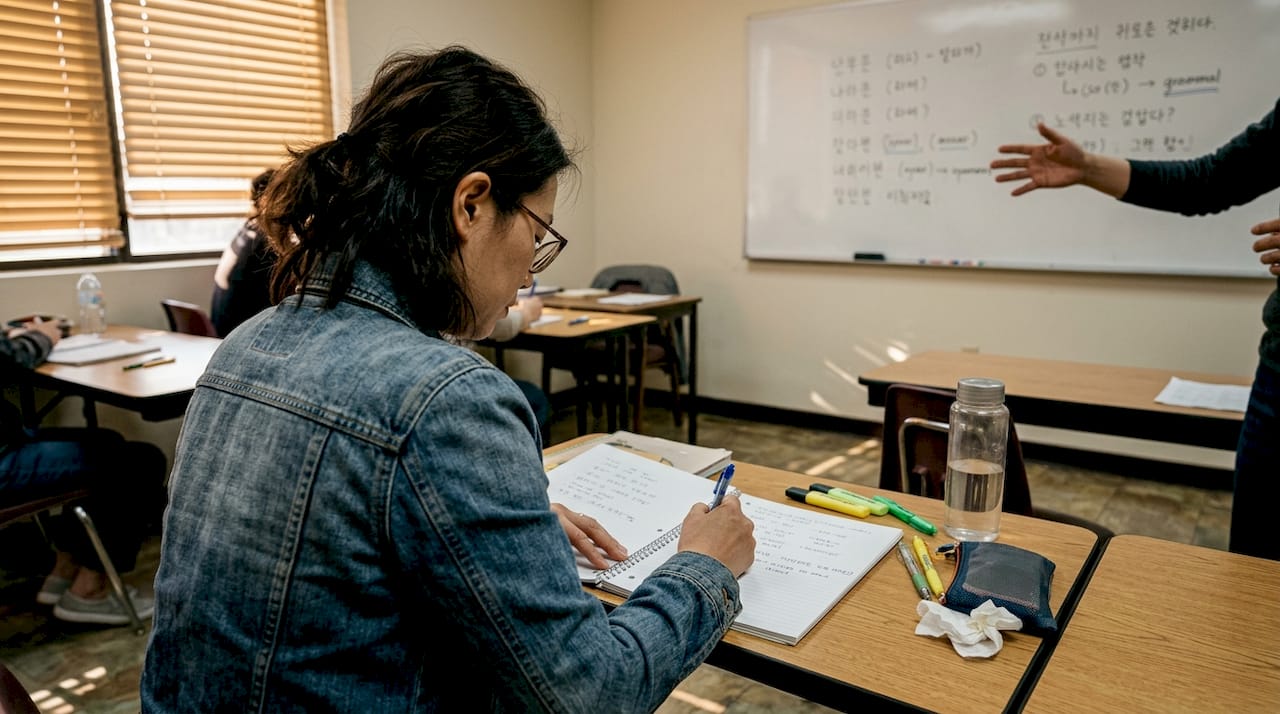
The small class size advantage is not just a marketing claim. Small classes enable twice as fast completion of proficiency levels compared to larger groups. When a teacher can hear every student speak and correct mistakes immediately, the learning curve shortens dramatically.
For learners in Singapore, exploring Korean classes in Singapore that combine structured curriculum with small groups gives you the best of both worlds. Pairing that with consistent verbal exercises for Korean learning outside of class compounds your progress significantly. If speed matters to you, these tips to achieve Korean fluency can help you map out a realistic timeline.
Why structured learning beats informal methods
Let’s be direct. Self-study has real limits. Apps, YouTube channels, and drama marathons can supplement learning, but they cannot replace the accountability, feedback, and structure of a formal program.
Here is how the two approaches compare on key outcomes:
| Factor | Structured learning | Informal self-study |
|---|---|---|
| Progress speed | Twice as fast in small classes | Slow and inconsistent |
| Accountability | Built into class schedule | Relies entirely on self-discipline |
| Error correction | Immediate, from native teachers | Rare or nonexistent |
| Exam readiness | TOPIK-aligned curriculum | Unpredictable |
| Cultural fluency | Integrated into every lesson | Often missed entirely |
Why does structure accelerate learning so reliably? Several reasons:
- Clarity of path: You always know your current level and what you need to master next
- Regular feedback: Native teachers catch errors before they become habits
- Milestone tracking: Completing each level gives you a tangible sense of progress
- Peer interaction: Practicing with classmates builds real conversational reflexes
- Cultural immersion: Understanding context makes vocabulary stick faster
Contextual learning with native teachers and interactive small-group practice consistently outperforms passive methods because language is fundamentally social. You learn to speak by speaking, not by watching others speak.
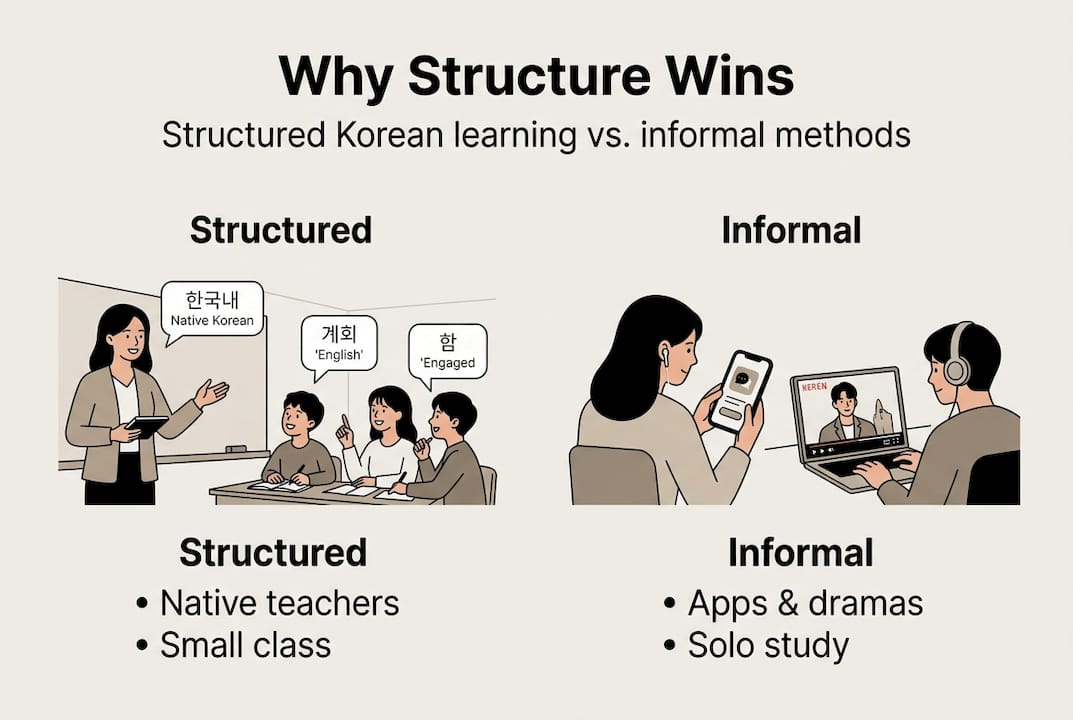
The twice-as-fast level completion in small structured classes is a concrete result, not an abstract claim. Learners who commit to a structured program move through TOPIK levels faster, retain more, and feel more confident in real conversations.
If you have been debating K-dramas vs structured courses, the answer is not either/or. Use dramas to stay motivated and expose yourself to natural speech. But use structured classes to build the grammar, pronunciation, and conversational accuracy that dramas alone cannot teach. And when you consider the benefits of Korean fluency for travel, career, and culture, the investment in a proper course pays off quickly.
Pro Tip: Ask your teacher to focus feedback sessions on your most frequent errors, not just new material. Fixing recurring mistakes early prevents them from becoming permanent habits.
How to choose the right structured Korean program in Singapore
Not every structured course is the right fit for every learner. Here is a step-by-step guide to finding the program that matches your goals.
- Define your learning goal: Are you aiming for conversational fluency, TOPIK certification, travel confidence, or professional use? Your goal shapes which curriculum and pace work best.
- Compare curriculum design: Look for programs built on recognized frameworks like Seoul National University’s curriculum or TOPIK standards. Avoid courses with no clear level progression.
- Evaluate class size and teaching methods: Prioritize small groups with native teachers. Ask specifically how much speaking time each student gets per session.
- Check accreditation and track record: Established schools with experienced instructors and verifiable student outcomes are worth the investment.
Before enrolling, ask these questions:
- How many students are in each class?
- Are teachers native Korean speakers with formal teaching qualifications?
- Does the curriculum align with TOPIK levels?
- What is the school’s policy on makeup classes or level reassessment?
- Are cultural components actively integrated into lessons?
“Small classes produce faster language mastery.”
This is not just a preference. Small classes completing levels twice as fast is backed by real data from Singapore’s own Korean learning community.
Two common mistakes to avoid: jumping into an intermediate or advanced level without a proper placement assessment, and choosing a course based on price alone without checking the teaching methodology. A cheaper course that lacks structure will cost you more time in the long run.
Start your search by exploring learning Korean in Singapore options and comparing structured Korean schools side by side. When you are ready to commit, reviewing available Korean courses in Singapore will help you match a program to your schedule and goals.
Why real results happen in small, structured environments
Here is something most language learning guides will not tell you: the size of your class matters more than the brand of the school. We have seen learners switch from large group classes to small structured ones and jump an entire TOPIK level within a single term. That is not luck. That is what happens when a teacher can actually hear you speak and tell you exactly what to fix.
Structure also creates a psychological safety net. When you know the class follows a clear path and your teacher expects you to participate, you show up. Accountability is underrated in language learning. Most self-study plans collapse not because the learner lacks intelligence, but because there is no external pressure to keep going.
Cultural immersion is the piece that surprises people most. Learning honorifics in a textbook is one thing. Practicing them in a role-play where your teacher corrects your tone and word choice is something else entirely. That kind of feedback is what makes your Korean sound natural rather than textbook-stiff.
Building verbal exercises in small classes into your weekly routine, alongside your structured course, accelerates the process even further. Real results come from real practice, and small environments make that practice possible.
Take your next step with Korean language courses in Singapore
You now have a clear picture of what structured Korean learning looks like, why it works, and how to choose the right program. The next move is yours.
At Korean Explorer, we offer structured Korean courses built on a Seoul National University curriculum, taught by native instructors in small, interactive classes across Tanjong Pagar, Jurong, and Tampines. Whether you are a complete beginner or working toward TOPIK certification, there is a program designed for your level and schedule. Explore where to take Korean classes and find the format that fits your life. When you are ready to commit, browse our full range of Korean language courses and take the first real step toward fluency.
Frequently asked questions
What does ‘structured Korean learning’ mean?
It refers to organized, systematic programs with clear objectives, native teachers, and interactive lessons that accelerate mastery. Contextual learning with role-plays and cultural immersion is central to this approach.
How long does it take to finish a course in Singapore?
Structured Korean courses typically run 10 to 12 weeks per term, with faster progress in small class formats compared to larger groups or self-study.
Is it possible to learn Korean from K-dramas alone?
Popular media supports vocabulary and listening exposure, but structured classes provide the depth, feedback, and real-world skills that blending media with formal instruction delivers more effectively.
Do Singapore universities offer credit-bearing Korean courses?
Yes, NTU and NUS both offer structured, credit-bearing Korean language programs available to enrolled students.
What are the biggest advantages of structured learning?
Structured methods deliver accountability, interaction, native feedback, and measurable progress. Small classes completing levels twice as fast make the investment in formal study well worth it.