TL;DR:
- Learning Hangul in Singapore is feasible with minimal cost, dedicated tools, and consistent practice.
- A structured two-step approach—first mastering literacy, then engaging in conversation—accelerates progress and confidence.
Staring at a page of Korean characters and feeling completely lost is something nearly every new learner in Singapore experiences. The Korean writing system, known as Hangul, looks complex at first glance, but it is actually one of the most logically designed alphabets in the world. The real challenge is not the script itself. It is finding the right structured path so you build genuine reading and writing skills instead of just memorizing random characters. This guide draws from proven local course models and practical strategies to give you a clear, confidence-boosting roadmap from your very first stroke to fluid reading.
Table of Contents
- Why learn Hangul in Singapore?
- What you need before getting started
- Step-by-step: Mastering Hangul with Singapore’s course model
- Common mistakes and how to avoid them
- How to measure your Hangul learning progress
- Why a two-step Hangul approach works best in Singapore
- Take your Hangul skills further with local experts
- Frequently asked questions
Key Takeaways
| Point | Details |
|---|---|
| Foundational first step | Starting with a Hangul literacy course sets the stage for effective Korean learning in Singapore. |
| Combine reading and conversation | Pairing a Hangul-focused class with a conversation course helps cement both literacy and real-world speaking skills. |
| Short, structured courses work | Singapore’s 8–10 hour adult courses efficiently deliver rapid Hangul progress for busy learners. |
| Avoid common pitfalls | Don’t skip mastering the alphabet and practice consistently to accelerate your results. |
| Track your progress | Regular quizzes, placement tests, and conversational practice reliably measure your Hangul proficiency. |
Why learn Hangul in Singapore?
Singapore is one of the most Korea-connected cities in Southeast Asia. Korean culture is everywhere, from the K-pop concerts at indoor stadiums to Korean restaurants lining every major food street. That cultural presence has made learning Korean, and specifically Hangul, a genuinely practical goal for thousands of Singaporeans every year.
People come to Korean language learning in Singapore for different reasons, and all of them are valid. The most common motivations include:
- Personal enjoyment: Understanding K-dramas, K-pop lyrics, and Korean variety shows without relying on subtitles
- Travel: Reading menus, signs, and transport information while visiting Seoul, Busan, or Jeju
- Academic goals: Qualifying for Korean university exchange programs or earning language certifications
- Professional opportunities: Engaging with Korean business partners, clients, or employers who value bilingual staff
- Community connection: Building friendships within Singapore’s growing Korean expat community
The professional angle is worth pausing on. South Korea is Singapore’s seventh-largest trading partner, and the bilateral relationship continues to grow. Workers in logistics, finance, technology, and consumer goods increasingly find that even basic Korean literacy sets them apart during hiring. It signals cultural awareness and commitment, qualities every employer respects.
On the educational side, ITE offers an adult-friendly short course focused specifically on learning to read and write in Hangul, which shows just how mainstream this demand has become in Singapore’s continuing education landscape.
With the value of learning Hangul clear, it is time to move into what you will need to begin your journey.
What you need before getting started
Good news: the barrier to entry for learning Hangul in Singapore is very low. You do not need expensive textbooks or specialized hardware. What you do need is the right combination of tools, a realistic time commitment, and an honest decision about whether self-study or a structured class suits you better.
Here is a quick checklist of essentials:
- A dedicated notebook for handwriting practice (muscle memory matters for Hangul strokes)
- A smartphone with a Korean keyboard installed (available free on both iOS and Android)
- A reliable app for flashcard drills, such as Anki or Naver’s Korean dictionary
- Access to Korean audio, whether through YouTube, podcasts, or streaming services
- A clear learning schedule of at least 20 to 30 minutes per day
Self-study vs. joining a class: Self-study works for highly disciplined learners, but most people benefit enormously from structured instruction. A class provides corrected pronunciation from day one, prevents bad habits from taking root, and creates social accountability that keeps you showing up. If you are unsure where to take Korean classes in Singapore, there are options across multiple neighborhoods and learning formats to suit different schedules.
The table below shows what a beginner needs at each stage:
| Stage | Key tools | Time investment |
|---|---|---|
| Hangul basics | Notebook, Korean keyboard, flashcard app | 8 to 10 hours |
| Pronunciation drills | Audio resources, recording yourself | 2 to 3 hours per week |
| Vocabulary building | Anki decks, Korean dictionary app | 15 to 20 minutes daily |
| Conversational use | Class setting, K-drama clips | Ongoing |
An 8-hour short course covering Hangul introduction, writing, pronunciation, numbers, and letter combinations is a realistic and efficient starting point for most adult learners. That is a single weekend of focused effort.
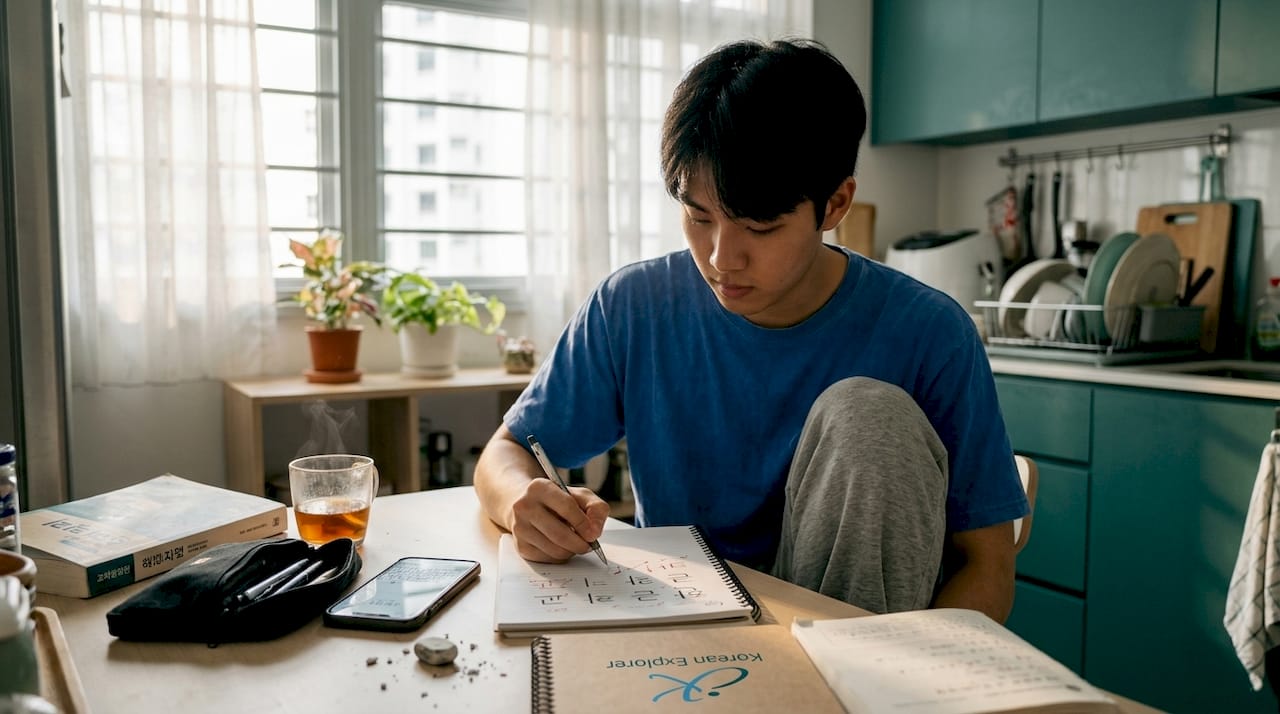
Pro Tip: Set up your phone’s keyboard in Korean before your first lesson. Typing each character you learn reinforces recognition far faster than writing alone, because you engage both visual and motor memory simultaneously.
When you explore Korean classes in Singapore, look for programs that specify Hangul literacy as a separate learning objective from conversational Korean. This distinction matters more than most beginners realize, and the next section explains exactly why.
Armed with the right tools and prerequisites, you are ready to begin the hands-on Hangul learning process.
Step-by-step: Mastering Hangul with Singapore’s course model
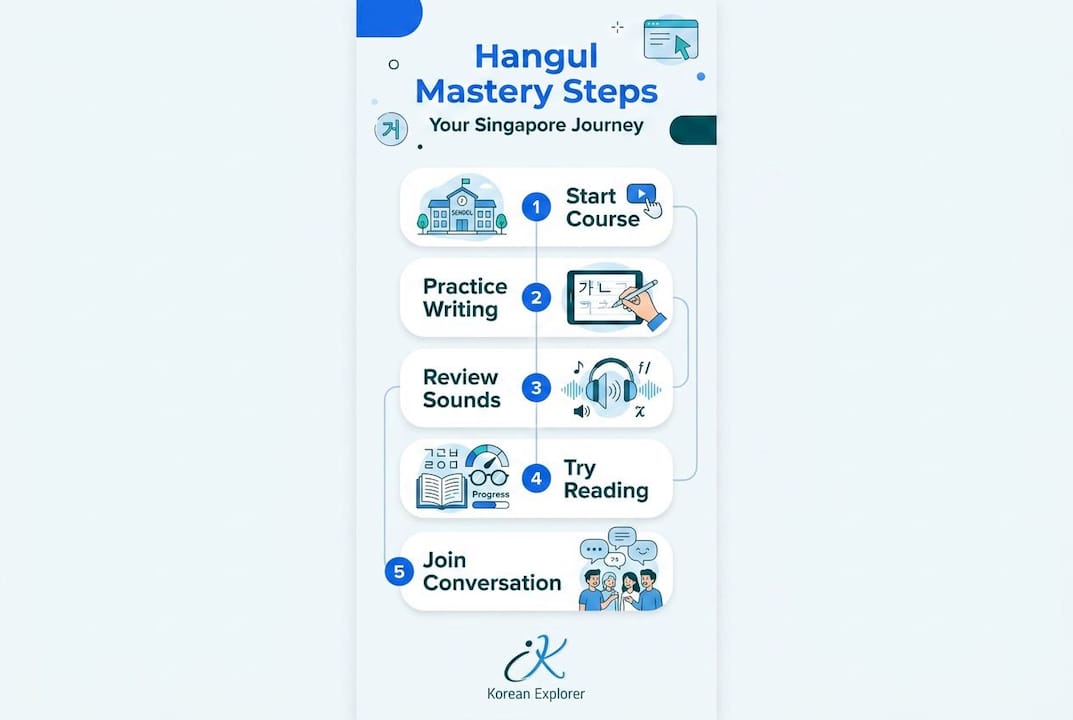
The most effective approach proven for Singapore adult learners separates Hangul literacy from spoken communication, at least at the start. Think of it like learning to type before you write essays. The mechanics come first, then the expression.
Here is a step-by-step breakdown based on the local course model:
- Enroll in a dedicated Hangul literacy course. This is your foundation. Focus entirely on the 14 basic consonants, 10 basic vowels, and the syllable-block structure that makes Hangul unique.
- Master consonant and vowel combinations. Hangul blocks follow strict positional rules. A consonant always leads, a vowel follows, and a final consonant (called a batchim) may sit underneath. Practicing these combinations until they feel automatic is the critical step most self-learners skip.
- Train pronunciation alongside writing. Korean has sounds that do not exist in English, including aspirated consonants and tense consonants. Getting these right early prevents a persistent accent that is very hard to fix later.
- Transition to a conversation-focused course. Once you can read and write comfortably, pair that skill with spoken practice. ITE’s “Everyday Korean Conversations for Beginners” is a 10-hour short course that integrates K-drama clips and teaches practical spoken expressions, which is exactly the kind of follow-up course that puts your Hangul literacy to work.
- Apply Hangul in real contexts daily. Read Korean food labels, menu boards, or social media captions. Write short sentences in your notebook. The goal is to make Hangul feel as natural as reading English does now.
- Review and reinforce with structured resources. A structured Korean learning guide can help you map out what comes after Hangul basics, including grammar patterns, vocabulary tiers, and TOPIK preparation.
For learners asking how to learn Korean in Singapore from absolute zero, this two-course sequence is the most recommended path. The reason it works is that your brain is not trying to process new sounds, new meanings, and new scripts all at once. Each phase builds cleanly on the last.
Here is a quick comparison of the two course types:
| Feature | Hangul literacy course | Conversation course |
|---|---|---|
| Primary focus | Reading and writing | Speaking and listening |
| Duration (typical) | 8 hours | 10 hours |
| Prerequisite | None | Basic Hangul literacy |
| Outcome | Can read and write Korean | Can use spoken expressions confidently |
Pro Tip: After completing step two, try reading a simple Korean children’s book or song lyrics out loud. If you can sound out every syllable, even without knowing the meaning, your Hangul foundation is solid. Meaning comes later. Accuracy comes first.
Singapore adult learners benefit significantly from pairing a Hangul-first literacy class with a follow-up conversation class. This paired course approach is reflected in local course listings and has proven to lower frustration and accelerate progress. For a broader overview of your options, a complete guide to Korean classes can walk you through every format available in Singapore.
Once you are on your learning path, recognizing and avoiding common pitfalls will accelerate your progress.
Common mistakes and how to avoid them
Most people who stall during Hangul learning make the same handful of mistakes. Knowing them in advance is your biggest advantage.
Rushing through the basics without mastering the rules. Hangul has 40 letters plus combination rules and batchim patterns. Skimming through these in a day and jumping straight to vocabulary is the single fastest way to build a shaky foundation. Every word you try to read later will feel like a guessing game instead of a system.
Learning vocabulary before grasping pronunciation. Memorizing Korean words using romanization, like “annyeonghaseyo” written in English letters, trains your brain to hear Korean through an English filter. That filter is very difficult to remove. Start with the actual Hangul characters and their sounds from the beginning.
Neglecting consistent daily practice. A two-hour study session on Saturday does far less for retention than 20 minutes every single day. Korean script recognition builds through repetition over time, not through marathon cramming sessions.
Ignoring conversational context. Hangul is a writing system, not a language in isolation. If you only drill characters without connecting them to real words and sentences, the knowledge fades quickly. As soon as you recognize letters reliably, start pairing them with audio.
“Skipping early alphabet focus is one of the most common mistakes beginners make. ITE’s approach separates Hangul literacy from practical conversation for exactly this reason, ensuring learners build a solid script foundation before moving on.”
For a practical guide to learning Korean that covers these pitfalls in more detail, including what learners in Singapore specifically find challenging, it helps to read about what it takes to learn Korean from the perspective of someone who understands the local learner context.
After you have taken steps to avoid these common missteps, let us highlight what progress looks like and how to verify your success.
How to measure your Hangul learning progress
Progress in Hangul is concrete and measurable. Unlike general language fluency, which is fuzzy and gradual, literacy skills have clear checkpoints. Use these to stay motivated and honest about where you actually stand.
- The name test. Can you write your full name in Hangul from memory, with correct consonant and vowel placement inside each syllable block? If yes, you have grasped the core structure.
- The sign test. Next time you see Korean text on a restaurant sign, food label, or social media post, try to sound it out. Can you read it aloud even without knowing the meaning? That is functional Hangul literacy.
- The greetings test. Can you read and write basic expressions like greetings, numbers, time, and directions? These categories, which include essential conversation topics covered in ITE’s beginner conversation course, are excellent self-test benchmarks.
- Online Hangul quizzes. Numerous free platforms let you test letter recognition speed and accuracy. Aim to identify any consonant or vowel in under two seconds without guessing.
- Placement tests. If you want a formal assessment, consider taking a Korean placement test to see where your current skills sit on an established proficiency scale. This is especially useful if you are considering enrolling in a structured language program.
Pro Tip: Record yourself reading a short Korean passage once a week. Listening back over several weeks gives you clear, undeniable evidence of improvement in both fluency and pronunciation accuracy. It is also one of the most motivating things you can do when progress feels invisible.
With your learning progress on track, it is time to reflect on what sets the Singaporean Hangul learning journey apart.
Why a two-step Hangul approach works best in Singapore
Most learners and many online resources treat Hangul as something you learn in a day and then move past. That attitude creates more problems than it solves. In our experience working with Singapore learners across age groups and backgrounds, the single biggest predictor of long-term progress is whether someone built a solid Hangul foundation before trying to speak.
Here is why mixing literacy and conversation too early backfires. When a learner is simultaneously trying to recognize characters, produce unfamiliar sounds, recall vocabulary, and construct grammar, the cognitive load is enormous. Something gets sacrificed. Almost always, it is pronunciation accuracy. And imprecise pronunciation in Korean causes actual comprehension breakdowns because the language relies on sound distinctions that English ignores completely.
The practical benchmark for Singapore adult learners is this: choose, first, a Hangul-focused literacy course and then, second, a course that applies expressions and conversation in a structured setting. This sequence, which mirrors the pairing visible in local short course offerings, is not slow. It is actually faster. Learners who do this consistently report that vocabulary sticks better, listening comprehension improves more quickly, and they feel confident rather than overwhelmed when they enter a conversation class.
Singapore learners have an additional advantage that learners in other countries often lack: genuine immersion opportunities without traveling anywhere. Korean food courts, beauty stores, community groups, and entertainment events are accessible across the island. Once you can read Hangul, these environments become active classrooms. A product label becomes a vocabulary lesson. A song becomes a pronunciation drill.
If you want to read more about Korean language in Singapore and how local learners approach fluency, the resources available in Singapore’s Korean learning community are genuinely world-class. Do not underestimate what is available right here.
Take your Hangul skills further with local experts
Once you have your Hangul foundation in place, the natural next step is finding the right structured program to take your skills from literacy to genuine fluency.
Korean Explorer offers Korean language courses built on a curriculum developed by Seoul National University, aligned with internationally recognized TOPIK standards. Whether you are starting fresh or ready to move beyond the basics, our native Korean instructors guide you through every level with clear explanations in both Korean and English. Not sure where you stand? You can take a placement test to find your exact starting point. For those with professional or academic goals, our resources on the Korean language proficiency test will help you prepare for formal certification. Flexible group, private, and online class options mean you can learn on your own schedule, wherever you are in Singapore.
Frequently asked questions
How long does it typically take to learn Hangul in Singapore?
Most learners master Hangul reading and writing basics in 8 to 10 hours with a focused short course, such as the 8-hour ITE course dedicated entirely to Hangul. Daily practice between sessions accelerates retention significantly.
Do I need to know any Korean before taking a Hangul class in Singapore?
No prior Korean knowledge is required. ITE’s Hangul course is designed for complete beginners, and most structured Korean programs in Singapore start from absolute zero.
What is the best way to practice Hangul outside of class?
Combine daily handwriting drills with listening to Korean media and taking short online quizzes. Typing in Korean on your phone throughout the day is a surprisingly effective habit for reinforcing letter recognition without requiring dedicated study time.
Can I apply what I learn in Hangul classes directly to Korean conversation?
Yes, and the transition is smoother than most beginners expect. Mastering Hangul first makes conversational courses far more effective because you can read along with dialogue, and ITE’s conversation course for beginners builds directly on that Hangul foundation using K-drama clips to make the jump feel natural and enjoyable.
Recommended
- Beginner Korean lessons: Your step-by-step guide in Singapore
- 6 Efficient Hangul Tips to Learn Korean in Singapore | Korean Explorer
- Step-by-step guide to studying Korean at home fast
- Achieve fluency: A practical guide to learning Korean in Singapore
- Step-by-step tutorial: booking language lessons made easy