TL;DR:
- Dedicated language apps, tutor marketplaces, exchange platforms, and structured schools each serve different learner needs. Combining these tools offers the best chance for building long-term fluency in Korean.
The strongest alternatives to forum.flexiclasses.com fall into four categories: dedicated language-learning apps, tutor-matching marketplaces, language exchange apps, and structured conversation-focused schools. Each serves a different kind of learner, and picking the wrong one wastes both time and money.
Here is a quick breakdown of what each category offers:
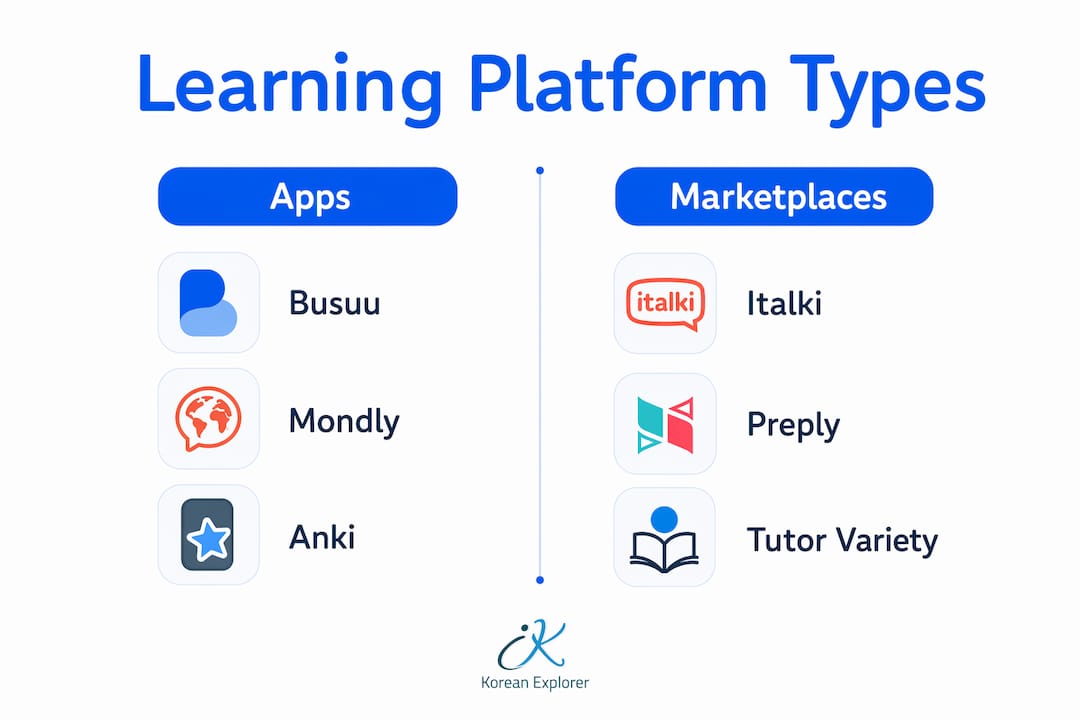
- Dedicated apps (Busuu, Mondly): self-paced lessons, subscription pricing, good for daily practice
- Tutor marketplaces (Preply, italki): one-on-one sessions with native speakers, flexible scheduling, variable pricing
- Language exchange apps (HelloTalk): peer-to-peer conversation practice, free or low-cost, community-driven
- Structured schools (Korean Explorer): curriculum-based instruction, native instructors, group and private formats
The right choice depends on whether you want convenience, personalization, community, or depth. Most serious learners end up using more than one.
What are the best FlexiClasses alternatives for language apps?
App-based platforms are the easiest entry point for anyone switching away from Flexi Classes. Busuu and Mondly both offer structured lesson paths covering vocabulary, grammar, and listening, and you can work through them at your own pace without booking a class in advance.
Busuu organizes content by proficiency level and includes writing exercises reviewed by native speakers in its community. Mondly leans more heavily on gamified repetition and short daily sessions, which suits learners who struggle to carve out long study blocks. Both platforms run on monthly or annual subscriptions, with annual plans typically cutting the per-month cost significantly.
The tradeoff is real, though. App-based learning offers convenience but lacks the pedagogical continuity you get from a structured program with a consistent instructor. You progress through content, but nobody is tracking whether you are actually retaining it or developing bad pronunciation habits.
Key things to know about language apps:
- Interfaces are designed for beginners through intermediate learners, with clear level indicators
- Most apps include audio exercises, quizzes, and short reading passages
- Korean content quality varies; check whether the app covers Hangul script from the start
- Spaced-repetition tools like Anki work well alongside app lessons to reinforce vocabulary retention
Pro Tip: Pair a language app with a dedicated flashcard system like Anki for vocabulary. Apps teach patterns; spaced repetition locks in the words.
How do tutor-matching marketplaces compare to Flexi Classes?
Preply and italki are the two platforms most often compared to Flexi Classes when learners want live instruction without committing to a fixed school schedule. Both let you browse tutor profiles, read reviews, and book sessions directly, which gives you more control than a forum-based booking system.

Pricing on these marketplaces varies widely depending on the tutor’s experience and location. A community tutor on italki typically charges less per session than a professional teacher, while Preply’s pricing tends to reflect more vetted instructor profiles. For Korean specifically, both platforms have a solid pool of native speakers offering conversational and business-focused lessons.
The flexibility is genuine. You can schedule a session at 10 PM on a Tuesday if that is when you are free. What you give up is continuity. As flexi booking models show, switching between tutors session to session means no one is tracking your long-term progress or adjusting the curriculum to your gaps.
What tutor marketplaces do well:
- Native Korean speakers available for conversational and business Korean practice
- Ratings and reviews help you filter for tutors who specialize in your level
- Trial lessons at reduced rates let you test fit before committing
- Scheduling tools integrate with most calendar apps for easy booking
For learners focused on spoken Korean development, a marketplace tutor can accelerate conversational confidence quickly, especially when you book the same instructor consistently.
Can language exchange apps replace a structured platform?
Not really, but they fill a gap that apps and tutors often miss: unscripted, real-time conversation with native speakers. HelloTalk is the most widely used option in this category, offering text, audio, and video messaging with language partners around the world.
The forum.flexiclasses.com community itself has discussed HelloTalk extensively, with multiple users recommending it for finding native Mandarin and Korean speakers. The platform lets you correct each other’s messages, which creates a low-pressure feedback loop that formal classes rarely replicate. That said, the experience depends entirely on finding a motivated partner, and many exchanges fizzle out after a few sessions.
Combining live teaching with language exchange apps produces better conversational outcomes for adult learners than either approach alone. Think of HelloTalk as practice time, not instruction time.
What to expect from language exchange apps:
- HelloTalk supports text, voice notes, and video calls with built-in correction tools
- Community size is large, but finding a consistent Korean partner takes effort
- Free tiers are functional; paid tiers unlock unlimited corrections and translation features
- Best used after you have enough Korean to hold a basic conversation, not as a starting point
You can also explore Korean learning resources that work well alongside exchange apps to keep your grammar on track while your speaking practice grows.
Why structured Korean schools outperform flexible platforms long-term
Convenience is not the same as progress. Adult learners who choose platforms based on price or flexibility alone often plateau faster than those who follow a structured curriculum with consistent instruction. A school with a defined syllabus, experienced instructors, and regular assessment catches gaps that self-directed learners miss entirely.
Korean Explorer is built around exactly this model. The curriculum draws from Seoul National University’s Korean language framework, which means lessons follow a logical progression rather than jumping between topics based on what you happened to book that week. Instructors are native Korean speakers who are also fluent in English, so explanations land clearly without losing nuance.
The teaching method centers on conversation. Every lesson is designed to build practical speaking confidence, not just textbook knowledge. You practice the kind of Korean you would actually use at work, with friends, or while traveling, not just grammar drills.
Flexible formats mean you are not locked into one mode:
- Group classes for structured learning with peer interaction
- Private classes for focused, personalized instruction
- Online Zoom classes for learners outside Singapore or with tight schedules
- Corporate training programs for teams with business Korean needs
Pro Tip: If you are serious about reaching conversational fluency, choose a school with a fixed curriculum over a flexible booking platform. The structure does the work that willpower alone cannot sustain.
How to choose the right alternative to forum.flexiclasses.com
Start with your actual goal, not the platform’s marketing. Someone who wants to pass a business Korean interview needs something different from someone who wants to watch K-dramas without subtitles.
Key factors to weigh:
- Learning goal: conversational fluency, business Korean, reading, or general proficiency
- Instructional style: self-directed app, live tutor, peer exchange, or classroom curriculum
- Budget: apps run cheapest, marketplaces vary by tutor, schools charge per course
- Schedule: apps are fully async, marketplaces flex around your calendar, schools have fixed cohorts
- Community: exchange apps offer the most peer interaction; apps and schools offer the least
The convenience-versus-structure tradeoff is the most important one. Flexible platforms let you learn on your terms, but they rarely push you past your comfort zone. Structured programs move slower at first but compound faster over six months. For tips on achieving Korean fluency faster, the consistent finding is that regular, structured practice beats sporadic intensive sessions.
Also check whether the platform you are considering has native Korean speakers available, not just general language tutors. For Korean specifically, pronunciation and intonation require a native ear to correct properly. And if you use other tools like Anki or a Korean AI content generator for vocabulary practice, confirm the platform integrates or at least complements those tools rather than duplicating them.
Korean Explorer: structured learning for serious Korean learners
If the apps and marketplaces you have tried have not moved the needle, Korean Explorer offers a different approach entirely.
Korean Explorer’s courses are built on a Seoul National University curriculum, taught by native Korean instructors who are equally fluent in English. Classes run as group sessions, private lessons, or live online Zoom classes, so you can fit structured learning around a full schedule. The school is based at 10 Anson Road, Level 22, International Plaza, Singapore 079903, right above Tanjong Pagar MRT, with additional centers in Jurong and Tampines.
For adult learners focused on conversational or business Korean, the school’s emphasis on real-life communication practice means you are speaking from day one, not waiting until you have memorized enough grammar to feel ready. Explore Korean language courses to find the format and level that fits where you are now.
Key Takeaways
The most effective approach to replacing forum.flexiclasses.com is matching your platform choice to your specific learning goal, budget, and need for structure versus flexibility.
| Point | Details |
|---|---|
| Four main categories | Apps, tutor marketplaces, language exchange apps, and structured schools each serve different learner priorities. |
| Apps suit casual learners | Busuu and Mondly offer structured self-paced lessons but lack the continuity of instructor-led programs. |
| Marketplaces offer flexibility | Preply and italki connect you with native Korean tutors, but progress tracking depends on booking the same instructor consistently. |
| Structure drives long-term fluency | Adult learners who rely only on convenience often plateau faster than those following a defined curriculum. |
| Korean Explorer’s approach | Korean Explorer combines a Seoul National University curriculum, native instructors, and flexible formats including online Zoom classes. |
FAQ
What are the top alternatives to forum.flexiclasses.com for Korean?
The main alternatives are dedicated apps like Busuu and Mondly, tutor marketplaces like Preply and italki, language exchange apps like HelloTalk, and structured schools like Korean Explorer.
Is HelloTalk good enough for learning Korean on its own?
HelloTalk works well as a conversation practice tool but not as a standalone learning method. It is most effective when combined with structured lessons that build your grammar and vocabulary first.
How do tutor marketplaces differ from structured Korean schools?
Tutor marketplaces like italki offer flexible one-on-one sessions with varied pricing, while structured schools follow a fixed curriculum with consistent instructors, which tends to produce more measurable progress over time.
Which option suits adult learners focused on business Korean?
A structured school with native instructors and a defined curriculum is the strongest fit for business Korean. Korean Explorer offers corporate training and private classes specifically designed for professional use.
Can I combine multiple platforms for better results?
Yes. Combining live instruction with a language exchange app and a spaced-repetition vocabulary tool like Anki covers speaking, listening, and retention in ways no single platform does alone.