Most adult learners in Singapore do best with a structured local school or an experienced private tutor, not a random freelancer found through a Facebook post. The fastest, most reliable path pairs a bilingual native instructor with a format that fits your calendar, whether that’s a fixed weekly class or online sessions squeezed around work. Book a trial lesson first, then run it against the checklist below before you commit to a package.
TL;DR:
- Using a structured curriculum based on university materials and native Korean instructors is essential for progress beyond basic greetings.
- Most private lessons in Singapore cost between S$30 and S$90 per hour, with group classes ranging from S$250 to S$450 monthly, depending on size and format.
- A weekly private lesson plus daily practice can reach conversational Korean in three to six months, while group classes generally take six to twelve months.
- Confirm that any tutor offers clear syllabus, recorded lessons, and targeted goals during trial lessons to avoid wasting time and money.
- Hybrid learning arrangements, combining online and in-person classes with recorded materials, often provide the best balance for busy professionals.
Table of Contents
- Why Korean Explorer Works for Adult Learners in Singapore
- What Should You Check Before Hiring a Korean Tutor?
- How Much Do Korean Lessons Cost in Singapore?
- How Long Does It Take to Learn Conversational Korean?
- Where Can You Find and Trial a Korean Tutor in Singapore?
- How to Prepare for Your First Korean Lesson
- What Actually Matters When Picking a Tutor?
- Ready to Book a Trial Korean Lesson?
- Sources
- FAQ
Why Korean Explorer Works for Adult Learners in Singapore
The biggest problem with picking a tutor blind is that you can’t tell whether a syllabus exists until you’ve already paid for four lessons. Korean Explorer builds its courses around a curriculum developed with Seoul National University materials, which gives adult learners a sequence to follow instead of ad hoc conversation practice. That structure matters more once you’ve moved past basic greetings and need grammar to actually stick.
Every instructor is a native Korean speaker fluent in English, which keeps explanations clear when a grammar point doesn’t translate cleanly. Classes come in group, private, and online formats so a shift worker and a 9-to-5 professional can both find a schedule that works.
- Curriculum built on university course materials
- Instructors who are native Korean speakers and fluent in English
- Lessons recorded for review between sessions
- Various class formats including group, private, and online options to fit schedules
- Central location at 10 Anson Road, Level 22, International Plaza, directly above Tanjong Pagar MRT
Statistic Callout: Local review platforms note that Korean Explorer’s central location and recorded lesson access come up repeatedly in student feedback, particularly among learners juggling work schedules who need to revisit material later.
What Should You Check Before Hiring a Korean Tutor?
Picking a tutor without a checklist is how people end up paying for six months of lessons that never move past “annyeonghaseyo.” Run through these seven points before you sign up for anything longer than a single trial.
- Goal match. Decide if you need conversational fluency, business Korean, or corporate training, and ask the tutor how their lessons target that specific outcome.
- Teacher fit. Confirm the instructor is a native Korean speaker with genuine experience teaching adults, not just a fluent bilingual friend.
- Format and schedule. Check whether private, small-group, or online lessons actually fit your week, and how long each session runs.
- Materials and revision support. Ask if lessons come with recorded video, worksheets, or a written syllabus you can revisit.
- Transparent pricing. Get the full package cost upfront, including registration or material fees, before booking multiple sessions.
- Logistics. For in-person classes, location near an MRT line matters more than it sounds; for online classes, confirm the platform and backup plan for connection issues.
- Trial lesson behavior. Use the first session to spot red flags: vague answers about curriculum, no example materials, or pressure to buy a large package immediately.
Pro Tip: Ask any tutor or school to show you a sample lesson plan before paying for a package. If they can’t produce one, that tells you more than any sales pitch will.
How Much Do Korean Lessons Cost in Singapore?
Format drives price more than anything else. Private one-to-one lessons in Singapore commonly run S$30 to S$90 per hour, depending on the tutor’s experience and whether sessions happen in person or online. Group classes at language schools typically cost S$250 to S$450 per month, with the range shaped by class size and lesson intensity.
- Private 1:1: Highest cost per hour, fastest personalized progress, best for tight timelines
- Small group (2 to 6 learners): Mid-range monthly cost, useful for practicing conversation with peers
- Larger group classes: Lower cost per session, slower individual attention
- Online Zoom classes: Comparable pricing to in-person, minus commute time
- Corporate training: Custom quotes based on team size and business focus
Statistic Callout: Market guides also note that niche languages like Korean carry a premium compared to heavily taught languages such as Mandarin, since fewer qualified native instructors are available locally.
What pushes price up within these bands? Teacher seniority, smaller class sizes, longer session lengths, and multi-session package discounts. If your goal is workplace-ready Korean rather than travel phrases, a structured course with a written syllabus and recorded lessons is usually worth the higher end of that range.
How Long Does It Take to Learn Conversational Korean?
Your timeline depends almost entirely on weekly hours, not talent. Someone doing weekly private lessons plus daily self-practice typically reaches basic conversational ability in three to six months. A once-weekly group class covering the same ground usually takes six to twelve months to hit that same level, simply because contact hours and personalized correction are lower.
- Fast track: 2 to 3 hours per week of private lessons plus 20 minutes of daily practice, targeting conversational Korean in 3 to 6 months.
- Steady pace: 2 hours per week in a group class, targeting the same milestone in 6 to 12 months.
- Intensive burst: Short, concentrated courses or corporate training blocks for professionals who need workplace Korean fast, often compressing timelines when paired with daily review.
If your deadline is a relocation or a new client account rather than a vague “someday,” intensive private lessons or a dedicated corporate program will get you there faster than a casual group class ever will.
Where Can You Find and Trial a Korean Tutor in Singapore?
Start with dedicated language school landing pages rather than generic freelancer directories. Marketplace listings can show you hourly rates and availability quickly, but tutor-matching services and language schools generally offer more structured syllabi and better revision support than a one-off freelancer arrangement.
- Check for sample lesson materials or a visible course outline before booking
- Confirm bilingual support so grammar explanations don’t get lost in translation
- Ask whether lessons are recorded for later review
- Set one specific goal for the trial, such as ordering food or introducing yourself at work
- Use a 30 to 60 minute trial to sample a real conversation exercise, not just small talk
- Ask directly about the syllabus structure and how progress gets tracked
Request permission to keep a recording or sample homework from the trial. That single request tells you fast whether a tutor is organized enough to support real progress.
How to Prepare for Your First Korean Lesson
Walking into a trial with no goal wastes both your time and the tutor’s. A few minutes of prep beforehand make the difference between a vague first session and one that actually shows you whether this tutor is worth hiring.
- Set one measurable goal, like handling a five-minute introduction or ordering a meal in Korean.
- Bring your real use case, whether that’s travel phrases, workplace vocabulary, or business email openers.
- Note your schedule constraints upfront so the tutor can propose a realistic format.
- For Zoom lessons, test your camera and microphone beforehand and keep a notebook or the Korean Explorer online class page open for reference.
- Ask for a small homework task after the trial so you can gauge how the tutor structures between-lesson practice.
Pro Tip: Write your one goal down before the lesson starts and hand it to the tutor at the start. It forces the session to stay focused instead of drifting into generic small talk.
What Actually Matters When Picking a Tutor?

Cheapest hourly rate is the worst filter you can use. A tutor charging S$40 an hour with no syllabus and no way to track what you’ve covered will cost you more in wasted months than a S$70 tutor who tracks progress and assigns real homework. Teacher fit and structure beat price almost every time once you’re past the first few lessons.
Hybrid arrangements deserve more credit than they get. Busy professionals often do best pairing occasional in-person sessions with regular online lessons, keeping momentum without demanding a fixed commute every week. What tends to separate a good local school from a mediocre one isn’t marketing. It’s whether lessons are recorded, whether a real curriculum exists, and whether the instructor can explain a grammar point in both languages without losing you halfway through.
— Paul
Ready to Book a Trial Korean Lesson?
If the checklist above left you with a shortlist rather than a decision, the fastest way forward is booking a trial and testing it yourself. This language school offers adult programs using a structured curriculum, native Korean-speaking instructors fluent in English, and recorded lessons you can revisit between sessions.
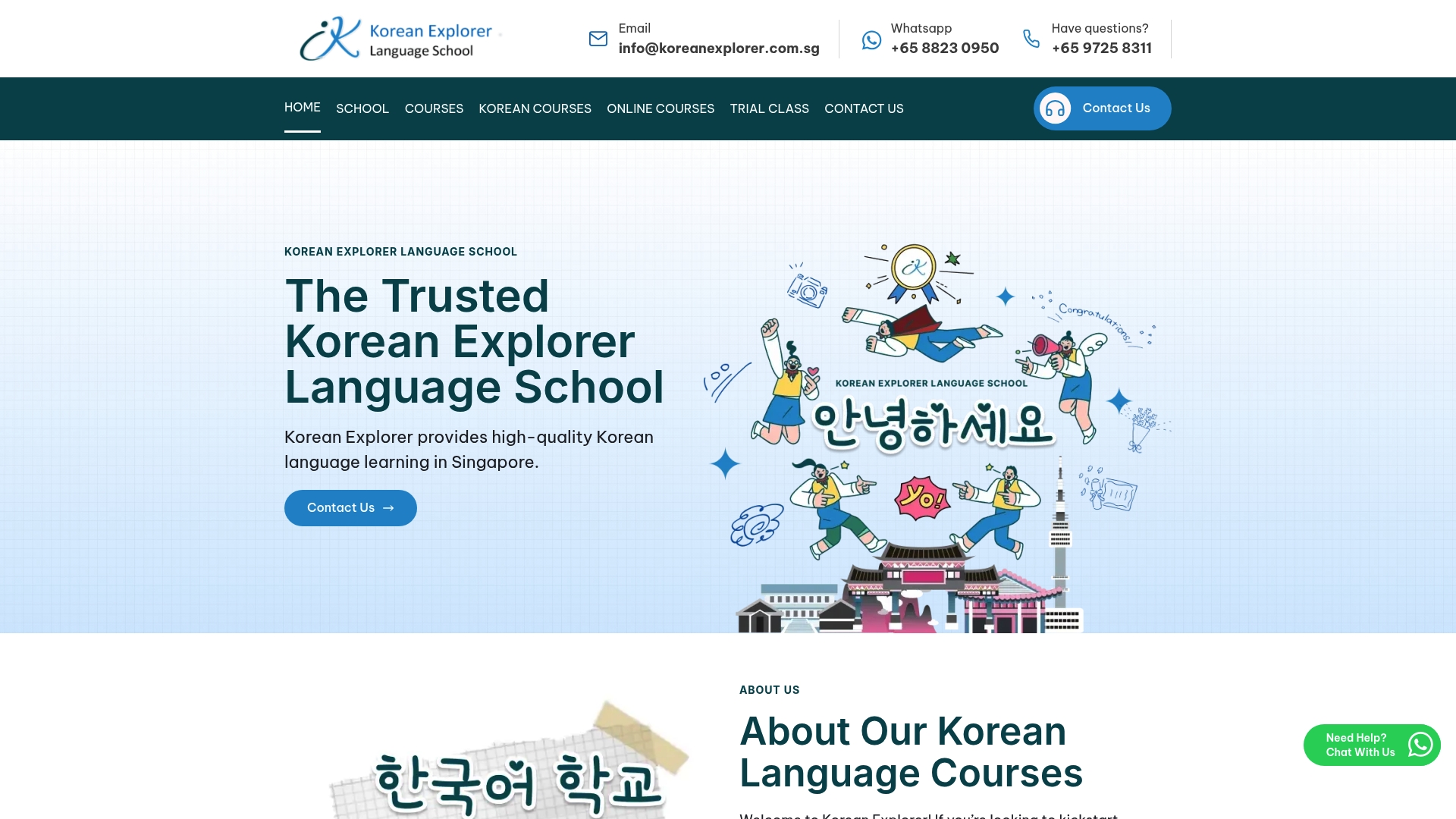
For conversational learners, the Conversational Korean Beginner group class is a straightforward entry point at a fixed one-off price. If your schedule only works remotely, the online class packages cover both private and group formats over eight sessions. Professionals who need workplace-specific Korean can also ask about private classes built around business vocabulary and corporate training needs.
Classes run from 10 Anson Road, Level 22, International Plaza, directly above Tanjong Pagar MRT, with online Zoom options for learners anywhere in Singapore. Reach out through the main course page to book a trial lesson and get a straight answer on pricing for your goals before you commit to a full package.
Sources
- Language Schools Cost in Singapore (2026) — Complete Price Guide | KakiList
- Learn Korean with Monica – Singapore: Specialized in Korean Ed…
- Korean Language Course Singapore | Eduprime Singapore
FAQ
How Much Do Korean Tutors Cost in Singapore?
Private one-to-one tutors typically charge between S$30 and S$90 per hour, depending on experience and whether lessons are in person or online. Group classes at language schools usually run S$250 to S$450 per month.
How Much Does It Cost to Learn Korean in Singapore Overall?
Total cost depends on format and pace: a structured group class package like the Conversational Korean Beginner 1 course runs 350 SGD one-off, while an 8-session private online package runs from 1280 SGD to 1480 SGD. Group online packages of the same length run 480 SGD.
What Is the Best Way to Find a Korean Tutor in Singapore?
Language school landing pages and tutor-matching services tend to offer more structure than open marketplace listings, since they typically provide a written syllabus and recorded lessons for review. Always request a trial lesson and check for sample materials before committing to a package.
How Long Does It Realistically Take to Learn Korean?
Weekly private lessons combined with daily practice usually get adult learners to basic conversational ability in three to six months. A once-weekly group class covering similar ground typically takes six to twelve months to reach the same point, since contact hours are lower.