TL;DR:
- Choose a Korean course by your starting level, learning goal and available class times.
- Korean Explorer publishes Beginner 1 and Beginner 2 group packages at S$350 each, with eight sessions of two hours. Confirm the intake and full fee before enrolling.
- Use the school placement route to discuss a starting class. For an official examination goal, ask about TOPIK preparation and check the examination requirements separately.
To learn Korean in Singapore, start by deciding whether you need everyday conversation, an individual learning plan or preparation for TOPIK. At Korean Explorer, a complete beginner can start with Basic Korean classes. Learners with prior study can use the placement test to ask about an appropriate level. Compare the published timetable with the hours you can attend, then confirm the course format and fee with the school.
Table of Contents
- Understanding the Korean language
- Korean courses: options, costs and formats
- What to ask about a lesson
- Levels, placement and TOPIK
- Planning your learning
- Choosing your next step
- Frequently asked questions
Key Takeaways
| Decision | What to check |
|---|---|
| Starting level | Start with the beginner syllabus, or discuss placement if you have studied Korean before. |
| Timetable | Check the actual intake dates, lesson frequency and campus for the chosen batch. |
| Course fee | Compare the number of sessions and hours, and confirm any registration or material charges. |
| Learning goal | Choose between general language learning and targeted TOPIK preparation. |
Understanding the Korean language
Hangul is the Korean writing system. The National Institute of Korean Language explains how consonant and vowel letters combine into syllable blocks. Learning to recognise letters is one part of learning Korean; reading words, understanding speech and using them in conversation also require practice.
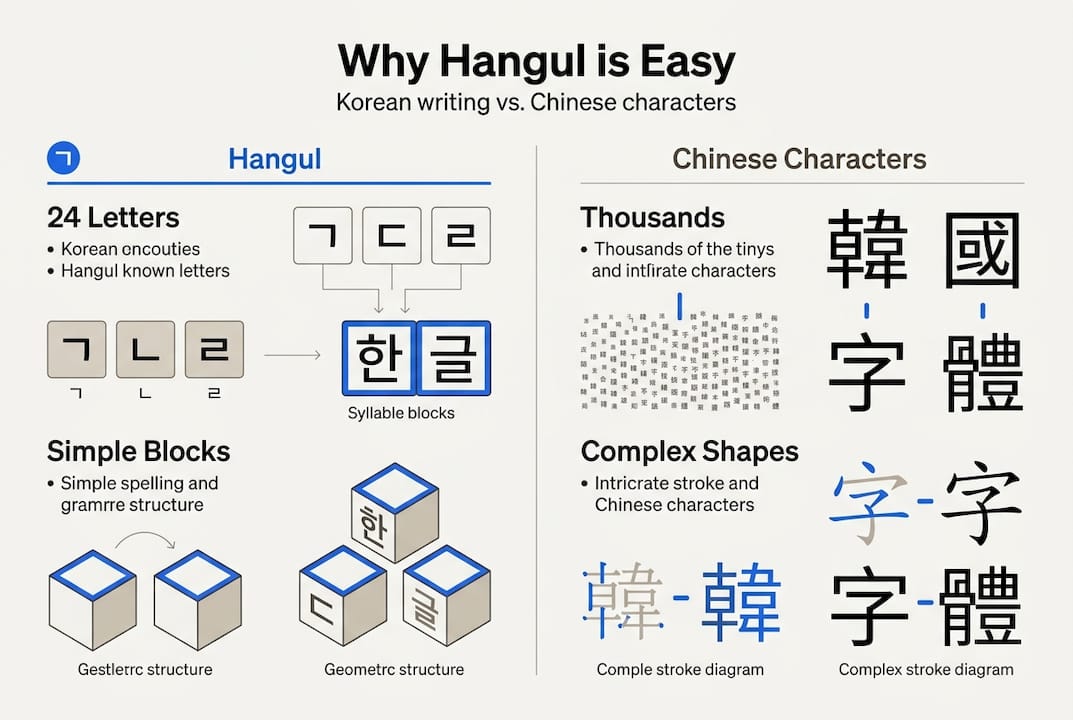
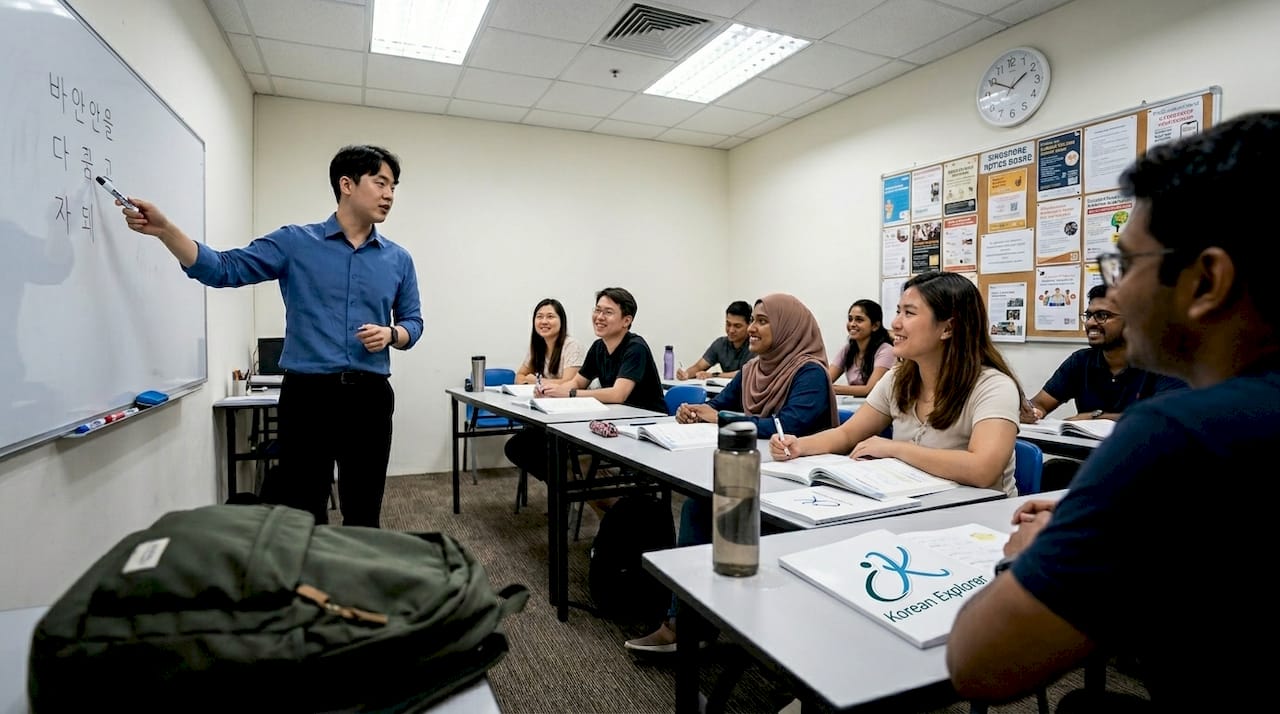
Korean Explorer’s beginner course starts with Hangul, pronunciation and everyday conversation. Look at the course outline before choosing a level, especially if your earlier learning was through apps, videos or self-study.
- Reading and writing: check where the course introduces Hangul and written exercises.
- Speaking and listening: ask how these are practised during the class.
- Vocabulary and grammar: compare the syllabus with situations you want to handle.
- Culture and context: ask how the course introduces expressions and their use.
- Examination goal: tell the school if you are preparing for TOPIK.
Korean courses: options, costs and formats
Compare the actual package for the course you want. A stated number of teaching hours describes the package; it does not guarantee a particular proficiency level by the end.
| Course option | Starting point | Package | Fee | Format | Next step |
|---|---|---|---|---|---|
| Beginner group | Beginner 1 or Beginner 2 | Eight two-hour sessions per published package | S$350 per package | Check the batch | See beginner details |
| Intermediate | Prior Korean study | Check the selected level | Confirm the course fee | Check the batch | Discuss the level |
| Private | Discuss your individual goal | Confirm the lesson arrangement | Confirm the quotation | Check the available arrangement | Ask about private lessons |
| Online | Confirm the appropriate level | Scheduled live lessons | Confirm the selected course fee | Live online | See online classes |
| TOPIK preparation | Confirm the examination level | Check the preparation syllabus | Confirm the preparation fee | Check the intake | Ask about TOPIK preparation |
The beginner schedule publishes weekday evening and weekend batches. Check the current dates, frequency, campus and remaining availability for the batch you want. Ask whether the quoted total includes registration and materials, and read any replacement-class or cancellation terms before paying.
If you want to use SkillsFuture Credit, check your eligibility and the exact course listing on MySkillsFuture. Eligibility for a training course and eligibility to use SkillsFuture Credit are separate questions. Do not assume a school or course accepts credit from its name alone.
What to ask about a lesson
Korean Explorer publishes an SNU-based curriculum and teaching materials. To choose a course, ask which syllabus and activities apply to the level you are considering. The questions below help you compare an actual class with your learning goal.
| Lesson element | Question to ask | Why it helps your choice |
|---|---|---|
| Speaking practice | How do learners practise and receive feedback? | Clarifies the activities used for conversation. |
| Listening | What listening materials are used? | Shows the type of listening practice in the course. |
| Reading and writing | What does this level cover? | Helps you compare the starting point with prior study. |
| Materials and practice | What is included, and what practice is suggested between classes? | Clarifies the package and work outside lessons. |
| Online participation | Which lessons are live, and what are the attendance arrangements? | Helps you judge whether the format fits your schedule. |
Levels, placement and TOPIK
A school placement assessment helps discuss which class to join. Korean Explorer offers beginner and intermediate routes as well as TOPIK preparation. Explain what you have studied and ask which level fits; an earlier app course or school label is not automatically equivalent to a TOPIK result.
The National Institute for International Education’s official TOPIK overview distinguishes TOPIK I, covering levels 1 and 2, from TOPIK II, covering levels 3 to 6. TOPIK I assesses listening and reading; TOPIK II also assesses writing. Speaking is a separate TOPIK assessment. Check the current format and local examination arrangements before registering.
If you need a result for a particular university, employer or application, check that organisation’s own requirement. The school can discuss preparation, while the examination organiser sets the test rules. A preparation course does not guarantee a score or acceptance.
Planning your learning
Plan around the class times you can attend and the practice you can sustain. Before enrolling, write down the situations in which you want to use Korean: everyday conversation, travel, work or an examination. Use that goal when asking about a level and format.
Check the course outline and ask about practice between lessons. Progress varies with prior study, attendance, practice and the skill you are developing. There is no single number of weeks that guarantees conversational fluency for every learner.
Choosing your next step
Compare the Korean course options, check the beginner timetable, or ask about placement if you have studied before. The published City campus is at 10 Anson Road, Level 22, International Plaza, above Tanjong Pagar MRT. Some published beginner batches list Jurong; confirm the campus for the chosen batch. Use the trial-class route to ask about its current fee, timing and availability.
Frequently asked questions
How long does it take to learn basic Korean in Singapore?
Korean Explorer publishes Beginner 1 and Beginner 2 packages of eight two-hour sessions each. The calendar length depends on the frequency and dates of your batch. The package length is not a guarantee of conversational proficiency; ask about the syllabus and suitable starting level.
What is the TOPIK test and is it needed?
TOPIK is an official Korean proficiency examination. Whether you need a result depends on your goal and the requirement of the organisation you are applying to. For general language learning, discuss a suitable course; for an examination goal, ask about TOPIK preparation.
Can I use SkillsFuture credits for Korean classes?
The official SkillsFuture guidance states that SkillsFuture Credit is for Singapore citizens aged 25 and above. You must also check whether the exact course is eligible and which credit can be used. This article does not confirm SkillsFuture eligibility for Korean Explorer’s courses.
Do classes teach Korean culture along with language?
Korean Explorer’s course overview describes using cultural examples in lessons. Ask which activities and materials are part of the level you want to join.
Is Hangul hard to learn for English speakers?
Hangul combines consonant and vowel letters into syllable blocks. A beginner course introduces the writing system and pronunciation. The time you need to read and use Korean varies with your starting point and practice.