A Korean placement test helps you discuss a suitable course level. It is different from an official proficiency test used for a particular application. Confirm the purpose, skills assessed and requirements before choosing a test.
The school’s placement-test page says learners can take the test and the team will contact them with suitable course recommendations. If you have studied before, tell the school which materials and levels you completed. Ask what the current assessment covers and whether additional checks or fees apply; this guide does not promise a live speaking or writing assessment.
Key Takeaways
- Use a course placement route to discuss where to start learning.
- Check what the assessment covers; a written quiz does not establish speaking ability.
- An informal result is not a TOPIK certificate.
- Ask the receiving institution which formal language evidence it accepts.
- Do not treat a TOPIK-to-CEFR comparison as an official conversion.
Table of Contents
- What a Korean Language Level Test Actually Shows You
- What Do These Tests Actually Measure?
- Which Test Should You Take for Your Goal?
- How to Take a Placement Test the Right Way
- When should you ask for further assessment?
- Discuss placement and choose a suitable course
- Sources
- FAQ
What a Korean Language Level Test Actually Shows You
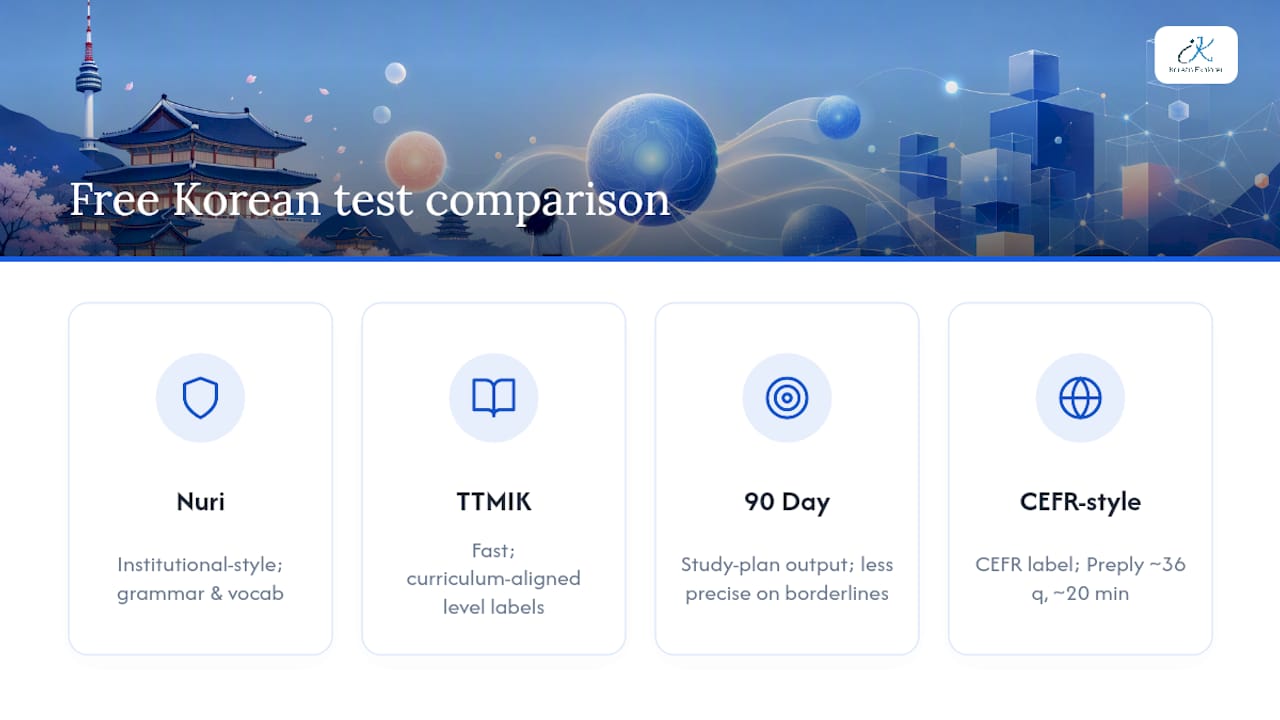
A placement result reflects performance on the questions and skills included in that assessment. Providers use their own level systems. A label from one course or study platform does not automatically assign you to a Korean Explorer class.
The school’s placement-test page says learners can take the test and the team will contact them with suitable course recommendations. If you have studied before, tell the school which materials and levels you completed. Ask what the current assessment covers and whether additional checks or fees apply; this guide does not promise a live speaking or writing assessment.
What Do These Tests Actually Measure?
Check whether the assessment includes reading, listening, grammar, vocabulary, speaking or writing. Describe skills that were not tested when discussing a level with the school. Do not infer a specific speaking weakness or readiness to skip a level from a score alone.
The official NIIED overview distinguishes TOPIK I, TOPIK II and TOPIK Speaking. Use its current descriptions rather than an unofficial exact CEFR conversion.
Which Test Should You Take for Your Goal?
- Choosing a course: use the school’s placement route and discuss your previous study.
- Checking a self-study resource: use its own level information and ask what the result means.
- Applying to an institution: obtain its current accepted tests, score requirements and validity rules.
- Preparing for TOPIK: distinguish the preparation course from registration for the official test.
How to Take a Placement Test the Right Way
Follow the provider’s instructions, including time limits, permitted aids and any single-attempt rule. Save the result and note the date, test name and skills assessed. Tell the school if you used help or did not complete a section; do not assume rules from another university apply.
When should you ask for further assessment?
If a written result does not reflect what you can do in conversation, explain that to the school. Ask whether a further assessment is appropriate and what it covers. Korean Explorer’s published route does not establish a promised live speaking check or its fee.
Discuss placement and choose a suitable course
The school’s placement-test page says learners can take the test and the team will contact them with suitable course recommendations. If you have studied before, tell the school which materials and levels you completed. Ask what the current assessment covers and whether additional checks or fees apply; this guide does not promise a live speaking or writing assessment.
Compare group courses, private lessons and live online classes by the timetable, teaching support and taught hours. Live online classes run on Singapore time. Online delivery does not mean any-time attendance, and a private format does not guarantee faster proficiency.
The published city address is 10 Anson Road #22-07E, International Plaza, Singapore 079903. The beginner timetable also lists Jurong classes. Confirm the campus for your level and intake.
Ask about the next level and your intended use before paying. A course recommendation is not a guarantee of an exam score, admission, employment or visa outcome.
Sources
- Korean Explorer placement route
- TOPIK preparation course
- NIIED TOPIK overview
- Study in Korea: verify institution-specific requirements
FAQ
How hard is the TOPIK exam?
Choose the test and preparation based on its published skills and your target. TOPIK I covers levels 1-2 and TOPIK II levels 3-6; check current format details with NIIED and the test organiser.
How much does TOPIK cost?
Official exam registration and Korean Explorer’s preparation course are different purchases. Confirm the exam fee with the local organiser and the preparation-package fee with the school.
Can I take the TOPIK test online?
An internet-based test format does not establish that you may sit an official exam remotely from home. Check the current authorised venue, format and registration instructions with the organiser.
Which TOPIK level is roughly equal to CEFR B2?
This guide does not establish an official TOPIK-to-CEFR conversion. Ask the receiving institution which test and result it accepts.
Do free placement tests replace TOPIK certification?
No. An informal placement result is used for course or study planning. The receiving institution decides which formal proficiency evidence it accepts; do not substitute a quiz result without its confirmation.