Group Korean classes in Singapore typically run S$18 to S$25 per hour, private lessons cost S$28 to S$60+ per hour, online subscriptions start around S$60 a month, and corporate training gets quoted per employee or as a flat package rate. The gap between those numbers comes down to instructor type, class size, lesson length, and how the course is delivered. The next sections break down real per-term totals and show you how to budget for the outcome you actually want.
TL;DR:
- Group classes cost S$18 to S$25 per hour and typically include 8 to 12 lessons of 1.5 hours, totaling a few hundred SGD per term.
- Private lessons start at S$28 per hour, with experienced instructors charging over S$60, and can cost up to S$1,200 for 20 sessions.
- Online subscriptions are available from S$60 monthly, but total costs depend on lesson length, frequency, and whether textbooks are included.
- Full course costs often include platform access and recorded lessons, while textbooks and make-up classes usually incur extra fees.
- Achieving basic conversational Korean takes 18 to 24 hours and costs a few hundred SGD; reaching fluency may require 250+ hours over a year or more.
Table of Contents
- How Much Do Korean Classes Cost in Singapore?
- What’s Included in Korean Course Fees, and What Costs Extra?
- How Long Does It Take to Learn Korean, and What Does That Cost?
- How to Choose a Korean Class in Singapore Without Overpaying
- What Should You Look for in a Korean Language Provider?
- Where to Find Subsidized or Credit-Offset Korean Courses in Singapore
- Comparing Korean School Fees Across Singapore
- Refund and Cancellation Policies to Check Before You Pay
- How to Get Discounts on Multi-Term Korean Courses
- What Most Budgeting Advice Gets Wrong About Korean Classes
- Ready to Start Learning Korean in Singapore?
- Sources
- FAQ
How Much Do Korean Classes Cost in Singapore?
Pricing splits cleanly by format, and each one carries a different total cost once you factor in term length.
Group classes are the most budget-friendly entry point. Small-group sessions commonly land around S$18 to S$20 per hour, and most schools bundle lessons into terms rather than selling single sessions. A typical structure runs 8 to 12 lessons of 1.5 hours each, a format several established schools in Singapore, including Sejong Korean Language School, use as their standard term. Do the math on 12 lessons at 1.5 hours and you’re looking at 18 total hours, which puts a full term somewhere in the few hundreds of SGD depending on the school and level.
Private lessons move faster but cost more per hour. Independent tutor listings show rates starting around S$28 per hour and climbing well past S$60 for experienced native instructors or business-focused coaching. Book 10 sessions and you’re paying roughly S$280 to S$600; book 20 and the total can reach S$1,200 or more, though the pace of progress is usually faster than group learning.
Online programs offer the lowest commitment. Some platforms advertise subscription pricing from around S$60 a month for basic access, while structured online group or private classes via Zoom mirror in-person pricing since they still involve a live instructor.
Corporate training doesn’t follow an hourly script. Employers typically negotiate a package rate covering a set number of employees or sessions, and per-hour trainer rates for on-site or custom corporate workshops usually exceed standard private-lesson pricing. If you’re weighing whether language training justifies the spend at a company level, the business case for language proficiency in cross-border teams is worth reading before you approach HR.
- Group classes: S$18 to S$25/hour, S$320 to S$450 per 12-lesson term
- Private lessons: S$28 to S$60+/hour, S$280 to S$1,200+ for 10 to 20 sessions
- Online subscriptions: from S$60/month
- Corporate: custom package or per-employee pricing
What’s Included in Korean Course Fees, and What Costs Extra?
Course fees rarely tell the whole story. Some schools bundle materials into the headline price; others list them as add-ons you only discover at checkout.
Most established programs include access to the course platform and, increasingly, recorded lesson videos for review. What often costs extra: printed textbooks and workbooks (typically S$10 to S$60 depending on level), registration or admin fees for new students, and make-up lesson charges if you miss a scheduled class. Lesson length also quietly changes your effective hourly rate. A 60-minute class and a 90-minute class priced at the same “per session” fee are not the same value. Always divide the total term fee by total lesson hours, not by number of sessions, to get an apples-to-apples comparison.
- Usually included: platform access, sometimes recorded lessons
- Usually extra: textbooks (S$10 to S$60), admin/registration fees, make-up lessons
- Watch for: fees quoted per “session” without stating session length
Pro Tip: When a school quotes you a term fee, ask for the total lesson hours, not just the lesson count. A 10 session, 60 minute term and a 10 session, 90 minute term at the same price are not the same deal.
How Long Does It Take to Learn Korean, and What Does That Cost?
Timing questions come up constantly, and the honest answer depends heavily on how many hours you actually put in each week, not the calendar.
- Basic conversational phrases (survival Korean): Achievable within a single term of group classes, roughly 18 to 24 hours of instruction. At group rates, total costs tend to fall in the few hundreds of SGD range.
- Comfortable everyday conversation: Generally needs 100 to 150 cumulative hours, spread across several terms or a faster private-lesson schedule. Group route: total cost can accumulate to several thousand SGD over a year. Private route: costs are higher and vary widely depending on frequency and instructor.
- Intermediate fluency for business or academic use: Usually requires 250+ hours, which for most working adults in Singapore means a year or more of consistent, weekly study.
Twice-weekly classes roughly double your cost per month compared to once-weekly, but they can cut your total timeline nearly in half, which often makes the higher monthly spend worth it if you have a deadline like relocation or a work assignment.
How to Choose a Korean Class in Singapore Without Overpaying
Price alone tells you almost nothing about whether a course will actually get you speaking Korean. Class size matters more than most people expect. A “small group” advertised as 12 students behaves very differently from one capped at 6, even if the per-hour rate looks identical on paper.
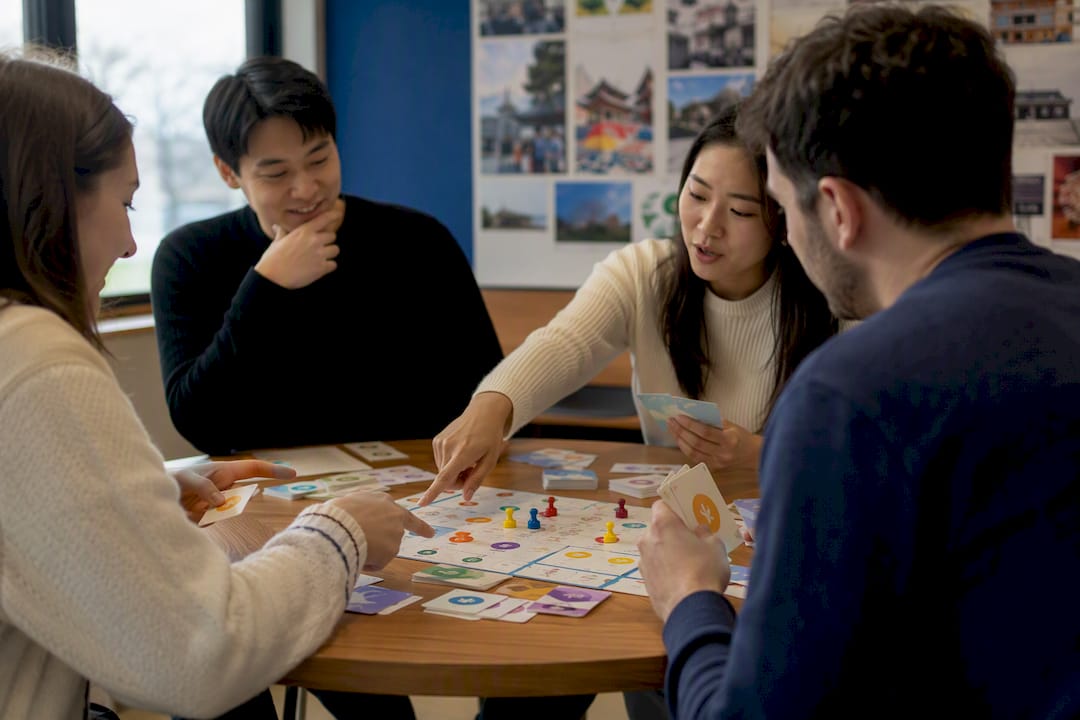
Before enrolling, ask direct questions: What’s the maximum class size? Are lessons recorded for review? What happens if I miss a session, is there a make-up option or a fee? Is the quoted price per session or per term, and what’s included? A school that hesitates on any of these, or gives you a vague answer about “it depends,” is worth a second look elsewhere.
Red flags worth taking seriously: no clear published pricing anywhere on the website, no trial or sample class offered, and instructors who aren’t native speakers for a program marketed on immersion. If your goal is conversational fluency for travel or personal interest, prioritize class atmosphere and native-speaker access over speed. If you need business Korean for work, weigh the higher cost of private lessons or corporate training against how quickly you need results.
- Ask about class size caps, recorded lessons, and make-up policies upfront
- Confirm whether pricing is per session or per term before comparing schools
- Treat vague pricing or no trial class as a warning sign
Pro Tip: Sit in on or request a sample lesson before committing to a full term. A 30-minute trial tells you more about teaching quality than any price list.
What Should You Look for in a Korean Language Provider?
The decision criteria above only work if the school behind them actually delivers. Curriculum grounding matters here: Korean Explorer structures its courses around a curriculum developed by Seoul National University, giving learners a proficiency pathway rather than a loosely assembled set of conversation topics.
Every instructor is a native Korean speaker fluent in English, which solves the common problem of grammar explanations that make sense in Korean but fall apart in translation. Course formats span group classes, private lessons, and online Zoom sessions, so the flexibility criteria from the previous section, schedule fit and modality, are built into the offering rather than bolted on. Locations include the central Singapore campus, plus Jurong and Tampines, giving learners across the island a nearby option instead of a single downtown-only campus. Recorded lessons are available for review, directly addressing the “what happens if I miss a class” question every learner should be asking before they enroll.
Where to Find Subsidized or Credit-Offset Korean Courses in Singapore
Government-linked training portals list a wide range of language courses, including Korean, with fees that vary by provider, level, and duration. Searching a national course portal for Korean language programs turns up listings where full course fees commonly fall in the low hundreds of SGD for shorter introductory terms, with published examples ranging from around S$200 to S$654 depending on the course length and level.
These portals let you filter by fee range, course duration, and provider before you commit, which is useful if you’re comparing multiple schools side by side rather than calling each one individually. Some employers also maintain internal training budgets or credit schemes for staff development, so it’s worth checking with your HR department about what’s available before assuming you’ll pay full price out of pocket.
A practical approach: search the portal for “Korean language,” sort by fee, and cross-reference the course length against the per-hour math covered earlier. A course that looks cheap on the surface but only offers 8 short hours of instruction may cost more per hour than a full 12-lesson term at a dedicated language school. Total value, not headline price, is what should drive the comparison. If your employer is exploring team-wide language training, corporate packages typically offer better per-employee value than enrolling staff individually through a public portal.
Comparing Korean School Fees Across Singapore
Fee structures vary more between schools than most first-time learners expect, even when the advertised per-hour rate looks similar on the surface.
Some schools price by the term with a fixed lesson count, commonly 8 to 12 sessions, and publish the total term fee upfront rather than an hourly rate you have to calculate yourself. Others price per lesson or per hour and let you build a custom package, which suits learners who want flexibility but makes comparison shopping harder without doing the math on total hours yourself.
A rough snapshot of what’s out there:
The lesson worth taking from this table: a low per-hour rate doesn’t automatically mean a lower total cost once you account for term length, class size, and whether materials are bundled in. Two schools quoting “S$20 an hour” can land S$150 apart on the same 12-lesson term depending on what else gets tacked on. Comparing full course listings side by side, rather than relying on the headline hourly figure alone, is the only way to know what you’re actually paying.
Refund and Cancellation Policies to Check Before You Pay
Refund terms differ significantly from school to school, and this is one area where a five-minute question before enrolling can save you real money later. Most language schools in Singapore require payment upfront for the full term, which means your cancellation rights matter more than they would with a pay-as-you-go arrangement.

Common structures include a partial refund if you withdraw before the course starts, a prorated refund based on lessons attended if you withdraw mid-term, and no refund at all once a certain number of sessions have passed, often the third or fourth lesson. Some schools charge a separate administrative fee on top of any refund deduction, which can eat into what you get back even under a generous-sounding policy.
Before paying any deposit or full-term fee, ask specifically: What’s the deadline for a full refund? Is there a prorated option mid-term? Are there deferral options if a personal emergency comes up, rather than an outright cancellation? A school with a clear, written policy on all three is generally more trustworthy than one that only discusses refunds when pressed. If a provider is vague or dismissive about cancellation terms during enrollment, that vagueness usually carries over into how they handle disputes later. Get the policy in writing, or at minimum in an email, before you transfer any payment.
How to Get Discounts on Multi-Term Korean Courses
Long-term enrollment is where the real savings show up, and most schools have some flexibility here even if it isn’t advertised prominently on the pricing page.
Booking multiple terms upfront often unlocks a bundled rate lower than paying term by term, since it reduces the school’s own administrative overhead for repeat enrollment. It’s worth simply asking whether a multi-term discount exists, since not every school lists it publicly. Referral discounts are common too. Bringing a friend or colleague into the same class can shave a meaningful percentage off both enrollment fees, and group sign-ups from the same workplace sometimes qualify for informal corporate rates even outside a formal training package.
Timing matters as well. Enrolling right after a term ends, rather than mid-cycle, avoids prorated fees and often lines up with promotional pricing schools run between terms to fill new class cohorts. If you’re committing to the intermediate or advanced level after finishing a beginner term, ask about loyalty pricing for returning students. Many schools would rather retain an existing learner at a small discount than spend money recruiting a brand-new one.
What Most Budgeting Advice Gets Wrong About Korean Classes
Most cost guides treat the cheapest per-hour rate as the smartest choice, and that’s backward. The real question isn’t which class costs less per hour, it’s which class gets you to your goal in the fewest total hours, because time is the cost that never shows up on a fee schedule.
A learner chasing conversational fluency for a trip to Seoul in four months should not be shopping for the cheapest S$18 group class. They need private lessons or a hybrid approach, even at S$40 an hour, because the group class simply won’t move fast enough. Conversely, someone with no deadline and a genuine interest in the language is often better served by the slower, cheaper group format, since immersion and repetition matter more than speed.
The other blind spot: nobody budgets for attrition. People quit language courses constantly, and a school with generous make-up policies and recorded lessons for missed classes protects your investment far better than a marginally cheaper program with a rigid no-makeup rule. Price the flexibility, not just the lesson.
— Paul
Ready to Start Learning Korean in Singapore?
If the numbers above told you anything, it’s that the right format for your budget depends entirely on your timeline and goals, not just the lowest sticker price. Korean Explorer serves adult learners and working professionals across Singapore who want conversational or business Korean, with group classes, private lessons, online Zoom sessions, and corporate training all built around a curriculum developed by Seoul National University.
Three easy next steps: browse the full course catalogue and fee breakdown to compare formats side by side, book a trial class to see the teaching style before committing to a term, or reach out directly about private or corporate training if you need a faster, tailored pace. The main training center is at 10 Anson Road, Level 22, International Plaza, Singapore 079903, right above Tanjong Pagar MRT, with additional locations in Jurong and Tampines for learners closer to those neighborhoods. Visit the course overview page to view current schedules and get started.
Sources
FAQ
Can I learn Korean in 2 months?
You can pick up basic survival phrases and simple greetings in 2 months with consistent weekly classes, but real conversational ability generally takes several months longer. Two months is realistic for a solid foundation, not fluency.
Can I learn Korean in 2 years?
Yes, 2 years of consistent study, roughly once or twice weekly, is typically enough to reach comfortable intermediate conversation and handle everyday business situations. The exact pace depends on whether you’re in group or private lessons and how much you practice outside class.
Which Korean language school is considered the best in Singapore?
The strongest options combine native instructors, a structured curriculum tied to recognized proficiency levels, and flexible formats like group, private, and online Zoom classes. Korean Explorer meets that criteria with courses based on Seoul National University’s curriculum and campuses across Singapore.
How much Korean can I learn in a month?
In a month of weekly group classes, most beginners cover basic Hangeul reading, greetings, and simple present-tense sentences. Twice-weekly private lessons can cover roughly double that ground in the same timeframe, though retention still depends on practice between sessions.