TL;DR:
- Learning Korean in Singapore is affordable, with various courses supported by funding options like SkillsFuture.
- Different lesson formats suit diverse goals, from group classes for beginners to private tutoring and online courses for flexibility.
- Success relies on active speaking practice and real-world immersion rather than passive study alone.
Learning Korean in Singapore is far more affordable and accessible than most people assume. Whether you’re drawn in by K-dramas, planning a trip to Seoul, eyeing a career with a Korean multinational, or preparing for the TOPIK exam, there’s a structured path waiting for you. This guide cuts through the noise and gives you a clear, practical look at lesson formats, real costs, funding options like SkillsFuture, and how to pick the right fit for your goals. By the end, you’ll know exactly where to start and how to move forward with confidence.
Table of Contents
- Why learn Korean in Singapore?
- Types of Korean lessons available in Singapore
- Costs, funding, and value: What to expect from Korean lessons
- How to choose the right Korean lesson for your goal
- Tips to succeed in your Korean language journey
- Why most people miss out on fast Korean fluency (and how you can avoid it)
- Ready to start your Korean learning journey?
- Frequently asked questions
Key Takeaways
| Point | Details |
|---|---|
| Many affordable options | Korean lessons in Singapore cater to a range of budgets and needs. |
| Classes for every goal | Group, private, and online lessons fit travelers, professionals, and students alike. |
| Funding support available | Eligible courses can be paid for with SkillsFuture credits at select schools like ITE. |
| Match lessons to your goals | Consider your timeframe and objectives before choosing a lesson format. |
| Practice is key | Real progress comes from daily use, not just class attendance. |
Why learn Korean in Singapore?
Korean is one of the fastest-growing languages in Singapore right now, and the reasons go far beyond K-pop. That said, pop culture is absolutely a valid and powerful motivator. Millions of Singaporeans stream Korean content every week, and many naturally want to understand what their favorite artists and actors are actually saying. That spark of curiosity is a surprisingly effective way to learn Korean language and sustain long-term motivation.
But the value of Korean extends well beyond entertainment. Here are some of the most compelling reasons people in Singapore are choosing to study the language:
- Career advantages. Singapore is home to dozens of Korean companies, including Samsung, LG, Hyundai, and Lotte. Speaking Korean sets you apart in competitive job markets, especially in finance, logistics, and tech.
- Travel. South Korea consistently ranks among the top travel destinations for Singaporeans. Knowing even conversational Korean transforms the experience, from navigating menus to bargaining at Namdaemun Market.
- Academic opportunities. Several South Korean universities offer scholarships through programs like the Korean Government Scholarship Program (KGSP). Proficiency in Korean is often a key requirement or a significant advantage.
- Cultural depth. Understanding Korean unlocks literature, film, food culture, and social customs that subtranslation simply cannot capture.
- Community connection. Singapore has a growing Korean community centered around areas like Tanjong Pagar, and language skills help you connect authentically.
The local environment genuinely supports Korean learners. Korean cultural centers, language exchange meetups, and Korean-owned restaurants and businesses are all accessible resources that reinforce your learning outside the classroom.
“Learning Korean in Singapore is uniquely advantageous because you’re surrounded by Korean culture, businesses, and media without even needing to travel. The immersion opportunities are closer than most learners realize.”
The TOPIK exam, which stands for Test of Proficiency in Korean, is also administered in Singapore and widely recognized by Korean universities and employers. Having a TOPIK qualification on your resume signals a serious commitment to the language and opens doors internationally. For professional learners especially, that credential carries real weight.
Types of Korean lessons available in Singapore
Understanding your reason for learning Korean will help you choose the right lesson format. Singapore offers a wide range of options, and each one suits a different type of learner, schedule, and budget.
Group classes are the most popular choice for beginners. They’re affordable, structured, and create a community environment where you learn alongside others at a similar level. The social accountability factor matters more than people expect. When you know your classmates will notice if you show up unprepared, you’re more likely to study consistently.
Private lessons offer a completely personalized experience. Your instructor focuses entirely on your weaknesses, moves at your pace, and tailors every session to your specific goals. This format is ideal if you have a tight deadline, a niche objective like business Korean, or a schedule that doesn’t fit regular class times. You can explore private tutoring options if flexibility and personalized attention are your top priorities.
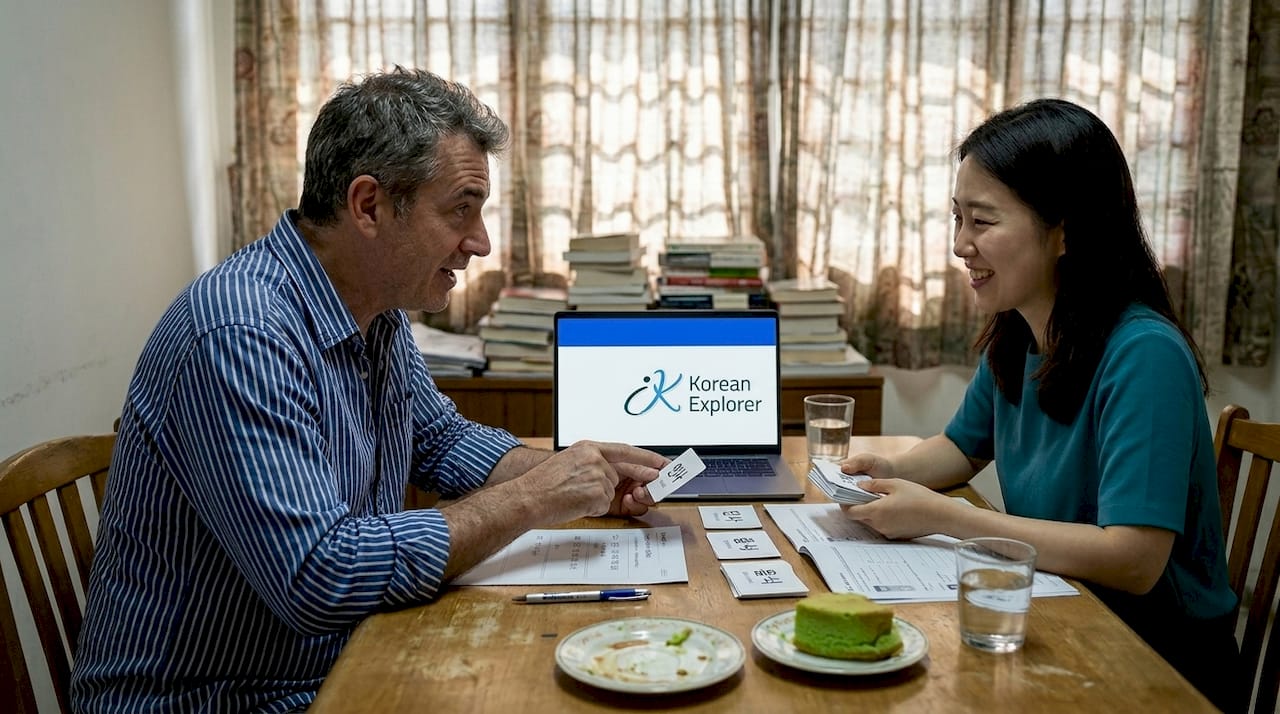
Online classes have become a strong and legitimate alternative. Quality schools now deliver full curriculums via video conferencing, complete with interactive exercises and live instructor feedback. If you’re based outside central Singapore or have irregular working hours, the study Korean online guide can help you find a format that fits your lifestyle without sacrificing structure.
Specialist formats include conversational classes, business Korean courses, and TOPIK preparation programs. These are designed for learners who already have some foundation and want to focus their skills in a specific direction.
Here’s a quick comparison to help you evaluate your options:
| Format | Cost range | Best for | Flexibility |
|---|---|---|---|
| Group classes | S$240–400 per term | Beginners, social learners | Moderate |
| Private lessons | S$60–120+ per hour | Fast progress, specific goals | High |
| Online classes | S$200–380 per term | Busy schedules, remote learners | Very high |
| Specialist courses | Varies | TOPIK prep, business Korean | Low to moderate |
Institutions like ITE offer beginner Korean courses, such as 10 hours of Korean conversations designed specifically for beginners, and these are payable with SkillsFuture credits, making them an extremely accessible entry point for adult learners.
Pro Tip: Before committing to any format, sit in on a trial class if the school offers one. Even one session tells you a lot about teaching style, class energy, and whether the pace suits you.
Costs, funding, and value: What to expect from Korean lessons
Once you’ve chosen the format, it’s important to know what you’ll actually pay and what funding you can tap. Korean lesson fees in Singapore vary based on the school’s reputation, class size, lesson duration, and instructor qualifications.
For most group classes, you can expect to pay within a clear range based on the term structure. Here’s a practical breakdown:
| Lesson type | Typical fee | Term length | Notes |
|---|---|---|---|
| Group class | S$240–S$400 | 8–12 weeks | Most affordable per hour |
| Private tutor | S$60–S$120/hr | Flexible | Higher cost, fully personalized |
| Online group | S$200–S$380 | 8–12 weeks | Similar to in-person group |
| SkillsFuture eligible | Varies | Varies | Subsidy reduces out-of-pocket cost |
The ITE beginner Korean course is a concrete example of an affordable, SkillsFuture-eligible option where fees for group Korean lessons typically run S$240–400 per 8–12 week term. Private instruction runs significantly higher per hour, but many learners find that a hybrid approach, starting with group classes and supplementing with occasional private sessions, gives the best value.
SkillsFuture credits are a practical funding tool that many Singaporean learners overlook for language courses. Singaporean citizens aged 25 and above receive credits they can apply toward eligible courses, including certain Korean language programs. This can meaningfully reduce your out-of-pocket cost, especially if you’re taking a course for professional development.
Pro Tip: When comparing schools, don’t just compare price per term. Calculate the cost per contact hour. A cheaper term with fewer class hours may actually cost more per hour of real instruction than a slightly pricier, more intensive option.
Beyond cost, think about value in terms of outcomes. A well-structured course at a recognized Korean language school uses a proven curriculum, provides qualified native instructors, and offers clear progression from one level to the next. Those factors make a far bigger difference to your actual fluency than a slightly lower price tag.
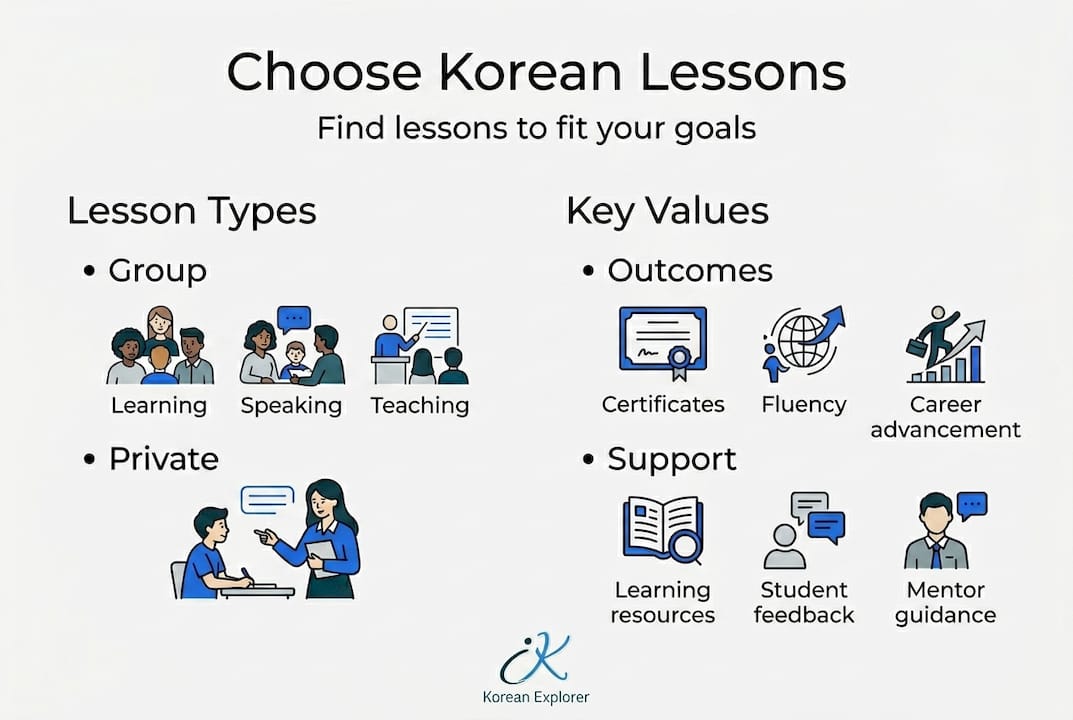
Also consider what’s included. Does the fee cover learning materials? Are there practice exercises outside class? Is there a WhatsApp or online group where students can practice between lessons? These extras signal that a school is invested in your results, not just your enrollment.
How to choose the right Korean lesson for your goal
With costs and options now clear, let’s walk through choosing the lesson that’s truly right for you. This doesn’t have to be complicated, but skipping this thinking step is exactly why many learners end up in the wrong class and lose momentum early.
Follow this process:
Define your goal clearly. Are you learning for fun and travel? Do you want to pass TOPIK Level 2 by the end of the year? Are you preparing for a job interview with a Korean company? Your answer shapes everything else.
Set your non-negotiables. Think about timing, location, group size, pace, and budget. If you can only study on weekends, that eliminates most weeknight classes immediately. If you live in the west of Singapore, classes near Tanjong Pagar may not suit your commute.
Match the format to the goal. Conversational goals suit group classes with speaking-focused methods. TOPIK prep requires structured grammar instruction and past paper practice. Business Korean needs vocabulary and formality training that casual classes won’t provide.
Shortlist three to five schools or tutors. Look at their curriculum, instructor backgrounds, student reviews, and whether they offer a placement test to put you in the right level from day one. Find out where to take Korean classes to compare credible options in Singapore.
Try before you commit. Many reputable schools offer trial classes or free consultations. This is your best quality check. A curriculum can look impressive on paper, but you need to feel that the teaching style actually works for you.
Plan your progression. A single term won’t make you fluent. Ask schools how their levels connect, and what a realistic learning roadmap looks like over 12 to 18 months. The schools with clear answers here are the ones with real systems. A structured Korean learning guide can help you understand what to expect at each level.
Pro Tip: Don’t be embarrassed to take a placement test even if you’ve studied a little on your own. Self-taught learners often have gaps in grammar or pronunciation that a proper placement can identify early, saving you from boredom in a class that’s too easy or frustration in one that’s too hard.
Tips to succeed in your Korean language journey
Once your learning plan is set, there are plenty of ways to boost your results and stay on track. The classroom is just the starting point. What you do outside of scheduled lessons determines how fast you actually progress.
Here are practical strategies that work:
- Practice daily, even for just 15 minutes. Short, consistent sessions build neural pathways far more effectively than three-hour cramming sessions on weekends. Use flashcard apps like Anki to review vocabulary every morning.
- Watch K-dramas with Korean subtitles, not English ones. Once you’re past the beginner stage, switching to Korean subtitles forces your brain to connect spoken and written Korean simultaneously. This accelerates reading speed and listening comprehension together.
- Listen to Korean music actively. Don’t just enjoy it. Look up the lyrics, understand what the words mean, and try singing along. This is one of the most enjoyable ways to internalize pronunciation and vocabulary patterns.
- Find a language exchange partner. Many Korean nationals in Singapore are learning English and are happy to exchange conversation practice. Apps like Tandem or HelloTalk connect you with native speakers. One hour of real conversation teaches things no textbook can.
- Attend Korean cultural events. Singapore hosts Korean film festivals, food fairs, and community events throughout the year. These create natural opportunities to hear and use the language in authentic contexts.
- Track your progress deliberately. Take practice TOPIK tests every few months, even if you’re not officially sitting for the exam. Seeing measurable improvement keeps you motivated and reveals exactly which areas need more focus.
The expert Korean learning guide covers several of these strategies in more depth, including how to build immersive routines that fit a busy Singaporean lifestyle.
Pro Tip: Celebrate milestones, not just endpoints. Completing your first full Korean conversation, understanding a drama scene without subtitles, or passing a level exam are all worth acknowledging. Positive reinforcement keeps motivation high over the long journey to fluency.
Why most people miss out on fast Korean fluency (and how you can avoid it)
Here’s something we see constantly at Korean Explorer and rarely hear discussed honestly: the biggest obstacle to Korean fluency in Singapore isn’t access to lessons or lack of time. It’s over-reliance on passive study and a fear of speaking early.
Many learners spend months perfecting Hangul (the Korean alphabet), memorizing vocabulary lists, and completing grammar exercises. Then they freeze the moment a native speaker says something unexpected. The problem is that they treated Korean as a subject to study rather than a language to use.
Experienced learners do things differently. They start speaking in the first week, accept that their sentences will be wrong, and treat every mistake as information. They watch Korean content not as entertainment but as live exposure to natural rhythm and expression. They seek out native speakers, not to show off, but to get comfortable with real-world unpredictability.
The learners who plateau are usually those who optimize for test scores and shy away from real conversation. The ones who accelerate are those who walk into a Korean restaurant near Tanjong Pagar and order in Korean from day one. Read more about what holds learners back at the Korean learning myths page. Fluency lives in your mouth, not your notebook.
Ready to start your Korean learning journey?
You now have a clear picture of what Korean lessons in Singapore look like, what they cost, and how to choose the right one for your goals.
At Korean Explorer, we offer Korean language courses for every level, from complete beginners to advanced learners preparing for professional or academic goals. Not sure where you stand? Take our Korean placement test to find the class level that fits you best. If you’re looking to reduce costs, verify any government training credit eligibility for the exact course on MySkillsFuture before enrolling. Our native Korean instructors, structured curriculum, and flexible class formats are ready to meet you where you are.
Frequently asked questions
How much do Korean lessons typically cost in Singapore?
Most group lessons range from S$240–400 per term covering 8–12 weeks, while private classes are priced higher depending on the instructor and session length.
Can I use SkillsFuture to pay for Korean classes?
Yes, several institutions accept SkillsFuture credits for eligible Korean courses, including ITE’s beginner Korean program which covers 10 hours of conversational Korean for beginners.
What’s the best way to choose a Korean lesson for my goals?
Start by defining your purpose clearly, whether it’s travel, career, or exam prep, then compare formats, costs, and provider strengths to find the option that matches your schedule and learning style.
Do I need any background in Korean before joining?
No prior knowledge is required. Most beginner classes are designed for complete newcomers, starting from the Korean alphabet (Hangul) and building practical communication skills from the very first lesson.