TL;DR:
- Korean has a logical structure with an easy-to-learn alphabet, Hangul, recognized for its scientific design.
- Many Singaporeans achieve conversational fluency within months through structured classes, practice, and cultural immersion.
- Official proficiency tests like TOPIK help learners measure progress and enhance career or academic opportunities.
Korean is not the impossible language many Singaporeans assume it to be. While the script looks unfamiliar at first glance, thousands of learners across Singapore have reached conversational fluency within months by following structured, proven methods. This guide covers everything you need to know: how Korean is built, which schools and class formats suit different goals, how top schools teach the language, and how to track your progress with internationally recognized proficiency standards. Whether you are drawn by K-dramas, career ambitions, or plans to study in Korea, you will find a clear, practical roadmap here.
Table of Contents
- Understanding the Korean language: Structure, uniqueness, and why it matters
- Korean language classes in Singapore: Options, costs, and school comparison
- How Korean is taught: Methodologies, materials, and what to expect
- Levels, placement, and the TOPIK test: Mapping your Korean proficiency
- Why most Singaporean learners underestimate their Korean journey
- Start your Korean journey with the right partners
- Frequently asked questions
Key Takeaways
| Point | Details |
|---|---|
| Hangul is approachable | Hangul, with only 24 letters, is simple to learn and gives learners a head-start in Korean. |
| Class choice impacts progress | Opt for small, interactive classes for better speaking confidence and actual use. |
| Official levels matter | Placement and TOPIK tests help set, measure, and prove your Korean proficiency. |
| Cultural integration boosts results | Using K-media and etiquette in class enhances retention and real-world skills. |
Understanding the Korean language: Structure, uniqueness, and why it matters
Before you sign up for a class, it helps to understand what you are actually learning. Korean is not just a collection of sounds and words. It has a logical, well-organized structure that, once understood, makes the whole learning process feel far less overwhelming.
The Korean alphabet, Hangul, is one of the most accessible writing systems in the world. Unlike Chinese characters, which require years to master, Hangul consists of 24 letters and was deliberately designed for ease of use. UNESCO has recognized its scientific design. Most learners can read and write basic Hangul within a few days of focused study.
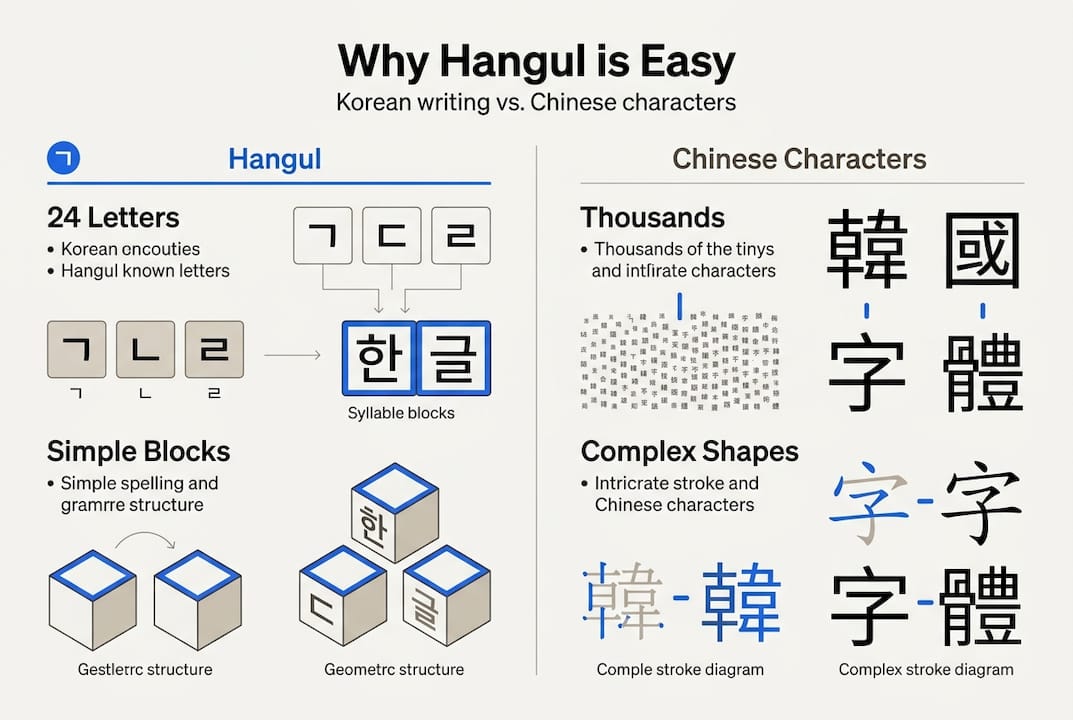
Korean grammar follows a Subject-Object-Verb (SOV) order, which is different from English but consistent and predictable. Think of it like building with LEGO blocks: once you know where each piece goes, the structure clicks into place. Korean grammar uses SOV structure and a system of honorifics that shift based on the relationship between speakers. These speech levels are not a burden. They are a window into Korean culture and social dynamics.
Here is a quick look at what makes Korean worth learning:
- Phonetic alphabet: Hangul is fully phonetic, so you always know how a word sounds from its spelling.
- Consistent grammar rules: Unlike English, Korean has very few irregular verb forms at the beginner level.
- Cultural relevance: K-pop, K-dramas, and Korean cuisine are deeply embedded in Singapore’s cultural fabric.
- Career value: Korean companies like Samsung and LG have a strong presence in Asia, and Korean language skills are a professional asset.
- TOPIK alignment: Structured learning maps directly to the Test of Proficiency in Korean, giving your skills formal recognition.
Understanding the history of the Korean language also gives you context for why certain grammar patterns and vocabulary exist, which makes them easier to retain.
“Hangul is one of the few writing systems in the world created with a clear, documented scientific rationale. Its design makes it uniquely learnable for adults.”
Pro Tip: Spend your first week doing nothing but Hangul. Do not rush into vocabulary or grammar until you can read and write the alphabet confidently. This single step prevents confusion for months afterward.
Korean language classes in Singapore: Options, costs, and school comparison
Singapore has a well-developed ecosystem of Korean language schools, each with its own strengths. Choosing the right one depends on your goals, schedule, and budget. Here is a side-by-side look at the major options.
| School | Class size | Duration | Fee (approx.) | Mode | Highlights |
|---|---|---|---|---|---|
| Korean Explorer | 6-12 | 8-10 weeks | S$280-380/term | Onsite/Online | SNU curriculum, TOPIK-aligned, native teachers |
| Hana Korean | 6-10 | 8-12 weeks | S$260-380/term | Onsite | Conversational focus, flexible schedules |
| ONLYOU Korean | 6-12 | 8-12 weeks | S$240-400/term | Onsite/Online | CEFR-aligned, progressive immersion |
| Sejong | 6-12 | 8-12 weeks | S$240-400/term | Onsite | Government-affiliated, cultural programs |
| ITE | Varies | Short courses | Subsidized | Onsite | SkillsFuture-eligible, beginner-friendly |
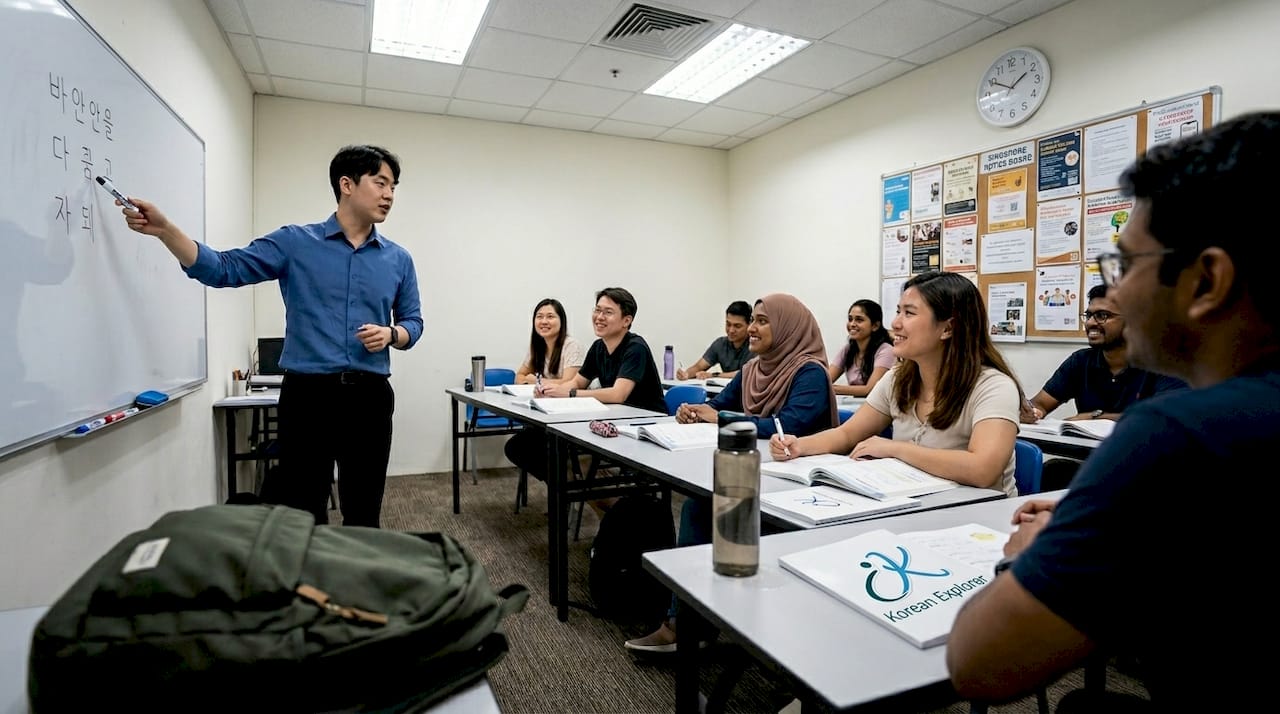
Major schools in Singapore include Hana Korean, ONLYOU, Sejong, Seoul Korean Language Centre, and ITE, each offering tailored formats for different learner profiles. Small class sizes of 6 to 12 students, terms of 8 to 12 weeks, and fees ranging from S$240 to S$400 per term are standard across most established providers.
Most top-rated schools hold 4.7 to 5-star Google ratings, reflecting strong learner satisfaction. When choosing a school, prioritize these factors:
- Native Korean instructors who are fluent in English for clear explanations
- SNU or TOPIK-aligned curriculum for structured, recognized progression
- Small class sizes that allow for actual speaking practice
- SkillsFuture eligibility if you want to offset costs as a Singaporean
- Location and schedule flexibility to ensure you can attend consistently
For a broader comparison of Korean language schools in Singapore, it is worth reviewing multiple options before committing. If you are still deciding where to take Korean classes, consider starting with a trial lesson. Many schools offer introductory sessions so you can experience the teaching style before enrolling. You can also explore a wider directory of Singapore Korean language centers to find the best fit for your lifestyle.
How Korean is taught: Methodologies, materials, and what to expect
Knowing what happens inside a Korean class helps you prepare mentally and get more out of every session. The best schools do not just lecture. They create structured environments where speaking, listening, reading, and writing all develop together.
Here is a typical lesson breakdown at an established Korean school:
| Lesson component | Time allocation | Purpose |
|---|---|---|
| Vocabulary review | 10-15 min | Reinforce previous terms |
| Grammar explanation | 15-20 min | Introduce new structures |
| Speaking drills | 20-25 min | Practice in pairs or groups |
| Listening/reading activity | 10-15 min | Build comprehension |
| Culture/media element | 5-10 min | Contextualize language use |
Schools use interactive, small-group tutorials with progressive immersion, SNU curriculum materials, and CEFR-aligned level structures. Cultural media like K-dramas and games are integrated into lessons to improve retention and make vocabulary stick in real contexts.
Here is the order in which skills are typically developed from beginner to advanced:
- A1: Hangul reading and writing, greetings, numbers, basic phrases
- A2: Simple conversations, daily routines, shopping and dining vocabulary
- B1: Expressing opinions, past and future tenses, workplace language
- B2: Nuanced grammar, formal writing, extended conversations
- C1: Debate, essay writing, professional and academic Korean
Online and hybrid classes have become a strong alternative to onsite learning. They offer the same curriculum and teacher quality, with added flexibility for learners with busy schedules. The trade-off is less spontaneous conversation practice, which you can offset by joining study groups or language exchange meetups.
If you are curious about learning through K-dramas, it is a genuinely useful supplement, though not a replacement for structured classes. For those aiming at formal credentials, TOPIK preparation classes provide targeted practice for the exam’s specific format.
Pro Tip: Ask your school whether lessons include speaking drills in every session. If grammar explanation takes up most of the class, you will struggle to hold a real conversation even after months of study.
Levels, placement, and the TOPIK test: Mapping your Korean proficiency
Progress in Korean is not just a feeling. It is measurable, and knowing where you stand helps you study smarter. Most schools use placement tests to direct new students into the right level, which saves time and prevents frustration.
Here is what you can expect at each proficiency level:
- A1 (Beginner): Read Hangul, introduce yourself, handle basic transactions
- A2 (Elementary): Describe your daily life, ask simple questions, understand slow speech
- B1 (Intermediate): Express opinions, navigate workplace situations, follow conversations
- B2 (Upper Intermediate): Discuss complex topics, write formal messages, watch dramas without subtitles
- C1 (Advanced): Write essays, debate, and operate in fully Korean professional environments
TOPIK is the official proficiency standard, with scores divided into levels and certificates valid for two years. TOPIK I covers levels 1 and 2, while TOPIK II covers levels 3 through 6. The exam tests listening, reading, and writing skills.
Placement tests are required for non-beginners, and the writing section is consistently the most challenging part of the TOPIK exam. Focus your preparation on grammar accuracy and essay structure if you are aiming for level 3 and above.
Here are practical tips for approaching TOPIK:
- Practice listening with native-speed audio daily in the weeks before the exam
- Read Korean news articles to build reading speed and vocabulary range
- Write short paragraphs daily and get them corrected by a teacher
TOPIK results carry real weight. Universities in Korea require specific levels for admission. Employers in Korean companies often list TOPIK as a preferred qualification. For Singaporeans, it adds a credible, internationally recognized credential to any resume. You can learn more about taking Korean placement tests and get a full breakdown of the TOPIK exam in Singapore, including registration details and test dates. If you want a deeper look at the exam structure, the guide on understanding the TOPIK test covers everything from scoring to preparation strategies.
Pro Tip: If you have studied any Korean before, even casually through apps or dramas, take a placement test before enrolling. Joining a class below your actual level wastes months of potential progress.
Why most Singaporean learners underestimate their Korean journey
Here is something most Korean learning guides will not tell you: the first week is the easiest part. Hangul genuinely can be learned in a matter of days. That early win feels great, and it should. But it also creates a false sense of how the rest of the journey will go.
The real challenge is not the alphabet. It is the honorific system and the way context shapes meaning. Many learners skip over these layers early on because they feel complicated. Then they hit a plateau at B1 where they can read and write but cannot hold a natural conversation. The fix is simple: embrace honorifics and speech levels from day one, not as grammar rules, but as cultural tools.
Small group classes and cultural media are not optional extras. They are where real fluency is built. A student who watches Korean content and speaks in class every week will outperform someone who studies alone with textbooks, every time. Check out these success tips for your first Korean test to build good habits from the start. If you are on the fence, a SkillsFuture-funded intro class or a single trial lesson costs very little and tells you everything you need to know about whether a school is the right fit.
Start your Korean journey with the right partners
You now have a clear picture of how Korean works, what your options are in Singapore, and how structured learning leads to real, measurable results. The next step is finding a school that matches your goals and getting started.
Korean Explorer offers structured learning Korean in Singapore for all levels, from complete beginners to advanced learners preparing for TOPIK. Browse the full range of Korean courses to find a class that fits your schedule, whether you prefer onsite, online, or private sessions. Not sure where you stand? Take a Korean placement test to get placed in the right level from day one. With native instructors, an SNU-based curriculum, and centers at Tanjong Pagar, Jurong, and Tampines, Korean Explorer makes structured learning genuinely accessible.
Frequently asked questions
How long does it take to learn basic Korean in Singapore?
Most learners reach basic conversational level (A1 to A2) within one 8 to 12 week term when attending classes consistently and completing homework. Regular practice outside class significantly speeds up the process.
What is the TOPIK test and is it needed?
TOPIK is Korea’s official proficiency exam, recognized for university admissions, professional applications, and visa requirements. It is not mandatory for casual learners but adds strong value for academic or career goals.
Can I use SkillsFuture credits for Korean classes?
Yes. ITE beginner courses are SkillsFuture-eligible for Singaporeans aged 16 and above, making them a cost-effective entry point for structured Korean learning.
Do classes teach Korean culture along with language?
Leading schools integrate K-drama and media elements into lessons, helping learners understand cultural context alongside grammar and vocabulary for more practical, real-world communication.
Is Hangul hard to learn for English speakers?
Hangul’s 24-letter phonetic system is recognized by UNESCO for its logical design and can be learned by most English speakers within a few hours to a few days of focused study.