Start speaking Korean today with three moves: shadow a native speaker for 10 minutes, record a 30-second voice message and send it to a native speaker for corrections, then join a live audio room or app-based conversation. That’s it. No grammar drills required before you open your mouth.
Your 5-minute quick-start checklist:
- Open Hilokal on your phone and join a beginner audio room (free, no signup required to listen)
- Record yourself saying: “안녕하세요. 저는 [name]이에요. 한국어를 공부하고 있어요.” (“Hello. I’m [name]. I’m studying Korean.”)
- Send that voice message to a language partner and ask: “Please correct my pronunciation and tell me if the sentence sounds natural.”
- Pull up one YouTube video of a native speaker and shadow one sentence, three times in a row
- Write down one filler phrase to use today: “그러니까…” (“So…” / “I mean…”) — fillers like this keep a conversation moving while you search for words
If you have 30–60 minutes right now:
- Learn Hangul basics (the Korean alphabet is phonetic and most learners can read it within a few hours of focused study)
- Memorize three polite sentence-ending patterns: -이에요/예요 (to be), -아요/어요 (present action), -고 싶어요 (want to)
- Book one 30-minute tutor session on a platform like Preply focused entirely on pronunciation and basic introductions
- Practice one full dialogue from the scripts section below, out loud, at least five times
Beginners who focus on everyday expressions and a single polite sentence form get speaking faster than those who try to master grammar before opening their mouths. The alphabet is the only prerequisite. Everything else you learn by talking.
Key Takeaways
Speaking Korean fluently comes down to one habit: speak every day, request specific corrections, and log what you fix.
| Point | Details |
|---|---|
| Start speaking immediately | Shadow for 10 minutes and send a voice message on Day 1; don’t wait until you feel ready. |
| Request specific corrections | Ask for pronunciation, register, and phrasing feedback; vague encouragement produces no measurable improvement. |
| Use free platforms first | Hilokal audio rooms and HelloTalk voice exchange cost nothing and deliver native-speaker feedback daily. |
| Expect 8–12 weeks to notice change | Consistent 30-minute daily practice typically produces conversational improvement within 8–12 weeks. |
| Korean Explorer for structured learning | Korean Explorer’s online Zoom classes with native instructors suit adult learners who want curriculum-backed speaking practice. |
Table of Contents
- What are the best methods for Korean language speaking practice?
- Where can U.S.-based learners find native Korean speakers and tutors?
- Sample Korean conversation scripts you can practice right now
- How to get corrections that actually improve your speaking
- A daily drill routine and weekly plan that builds real fluency
- How long does improvement take, and what does it cost?
- Recommended platforms and apps to start speaking Korean
- Korean Explorer: structured speaking practice for adult learners
- Sources
- FAQ
What are the best methods for Korean language speaking practice?
Every method below works. The question is which one fits your current level, schedule, and anxiety level.
Live tutors give you real-time correction and can adapt to your exact weaknesses. Best for learners who want targeted feedback and are willing to pay for it. The feedback-per-hour ratio is hard to beat.
Language exchange partners cost nothing and give you authentic conversation, but feedback quality varies. You get what you negotiate upfront. If your partner doesn’t know how to give corrections, you’ll just chat without improving.
Live audio conversation rooms (like Hilokal) let you listen before you speak, which lowers anxiety dramatically. Drop in, hear how natives talk, then try a sentence. No pressure to perform.
Speech-recognition apps like Mondly use pronunciation feedback to flag when your sounds are off. They’re self-paced, available at 2 AM, and good for drilling specific sounds repeatedly without embarrassment.
Shadowing is the fastest method for closing the gap between how Korean sounds in your head and how it comes out of your mouth. You play a native audio clip, pause it, and repeat the exact rhythm, pitch, and speed. Do it daily for 10 minutes and your pronunciation shifts noticeably within two weeks.
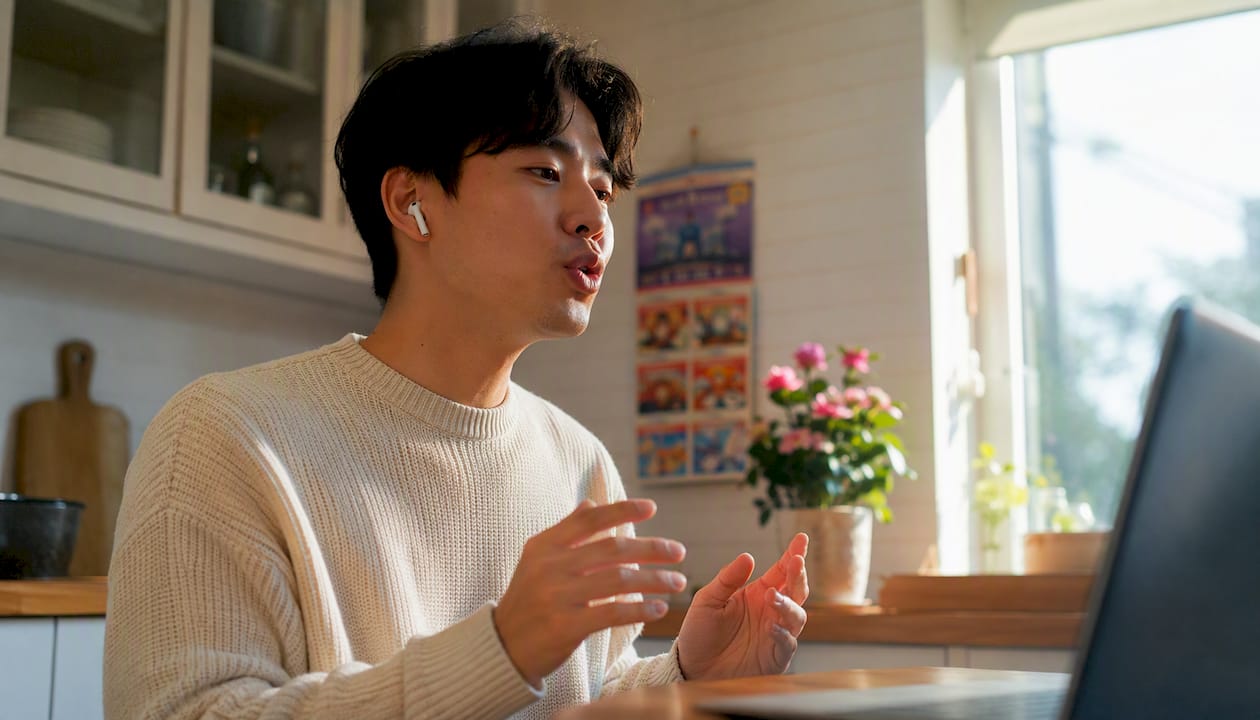
Voice-message exchange is underrated. You record a message, send it to a native speaker, and they send back a corrected version. You can replay both and compare. That comparison is where the learning actually happens.
Scripted roleplay works well for beginners who freeze in open conversation. You practice a fixed script (ordering food, asking directions) until it’s automatic, then improvise from there.
| Method | Best for | Cost | Feedback quality | Anxiety level |
|---|---|---|---|---|
| Live tutor | Targeted correction | $10–$40/hr | High | Medium |
| Language exchange | Authentic conversation | Free | Variable | Low–Medium |
| Audio rooms (Hilokal) | Low-anxiety listening-to-speaking | Free | Peer-level | Very low |
| Speech-recognition app | Pronunciation drills | Free–$10/mo | Automated | Very low |
| Shadowing | Rhythm and intonation | Free | Self-assessed | Very low |
| Voice-message exchange | Replayable corrections | Free | High (native) | Low |
| Scripted roleplay | Beginner confidence | Free | Self/partner | Low |
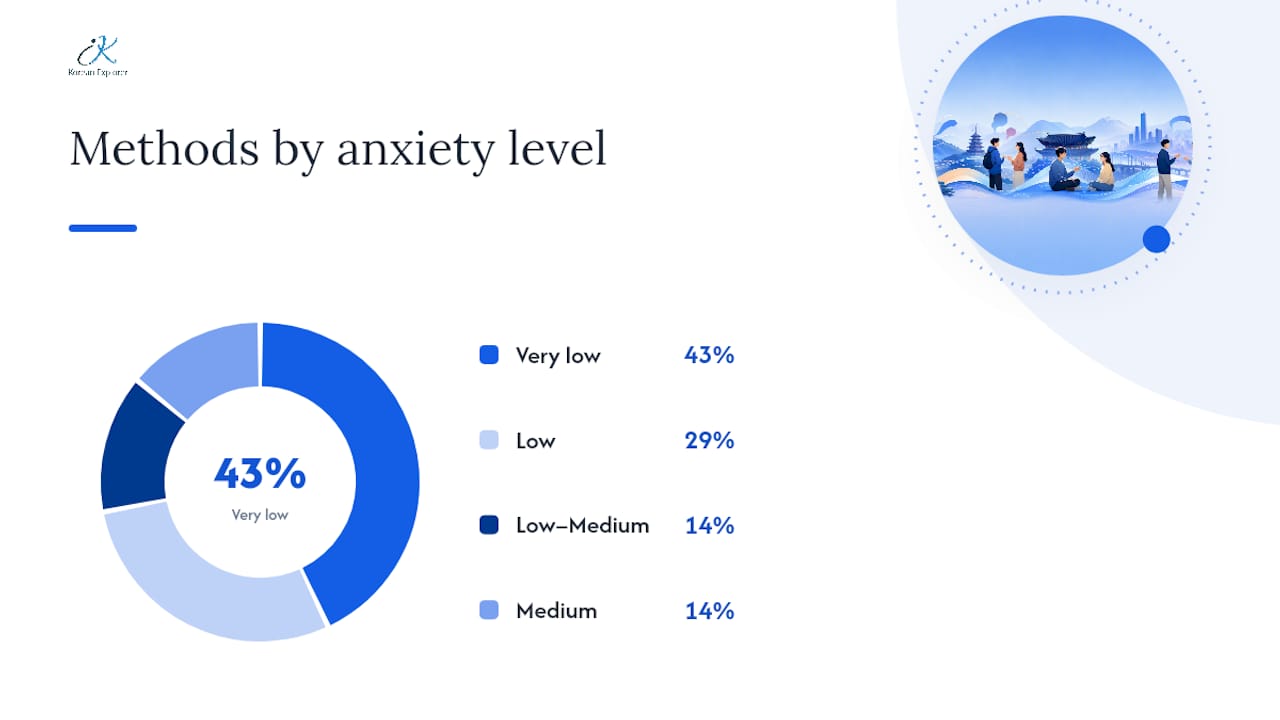
For safety-first learners: start with audio rooms and voice messages. For rapid feedback: book a tutor and ask for corrections on specific sounds. For fluency under pressure: do weekly unscripted exchanges and track how long you can speak without pausing.
Where can U.S.-based learners find native Korean speakers and tutors?
The platforms below are accessible from the U.S. and each serves a different practice need.
Preply is a private-tutor marketplace where you filter by price, availability, and teaching style. Most tutors offer a trial lesson. For Korean speaking practice, look for tutors who explicitly offer conversation-focused sessions rather than grammar-heavy ones. Rates typically run $10–$40 per hour depending on the tutor’s experience.
Talk To Me In Korean (TTMIK) is a structured curriculum provider with free podcast lessons, paid PDF workbooks, and video courses. It’s not a tutor platform, but its speaking-focused lessons and dialogues are among the most practical free resources available. Use it to build vocabulary and sentence patterns before your live sessions.
Hilokal runs free live audio conversation rooms at staged levels. Beginners can listen first, then speak when ready. Verified trainers moderate sessions, and the drop-in format means no scheduling required. It’s the lowest-friction way to hear real Korean conversation and start participating. Hilokal’s Korean-speaking rooms cover beginner through proficient levels.
Mondly focuses on speech-recognition guided practice. Short modules, pronunciation feedback, and conversational scenarios make it a good daily warm-up tool. Use it for 10 minutes before a live session to get your mouth moving.
Coursera’s “Learn to Speak Korean 1” is a module-based course covering real-life speaking scenarios like introductions, ordering food, and asking directions. It’s structured, free to audit, and gives you a clear progression path.
HelloTalk connects you with native Korean speakers for text and voice exchange. The correction feature lets partners annotate your messages directly.
Pro Tip: When you message a new language partner for the first time, include this line: “I’m focusing on spoken Korean. Could you correct my pronunciation and tell me when a phrase sounds unnatural? I’ll do the same for your English.” Partners who know what you want give much better corrections than those who just chat.
For scheduling: block your tutor sessions at the same time each week. Consistency beats intensity for language learning.
Sample Korean conversation scripts you can practice right now
These dialogues are leveled. Read them aloud, then record yourself, then compare to a native speaker’s version.
Beginner: Ordering food
A: 안녕하세요. 뭐 드릴까요? (Hello. What can I get you?)
B: 비빔밥 하나 주세요. (One bibimbap, please.)
A: 네, 알겠습니다. (Yes, understood.)
B: 감사합니다. (Thank you.)
Key phrases: 주세요 (please give me), 하나/둘/셋 (one/two/three), 얼마예요? (How much is it?)
Register note: Use -세요 endings with staff and strangers. Dropping to casual speech (-줘) with someone you just met is considered rude.
Intermediate: Making plans
A: 이번 주말에 뭐 해요? (What are you doing this weekend?)
B: 아직 계획 없어요. 같이 뭐 할까요? (No plans yet. Want to do something together?)
A: 영화 보러 갈까요? (Shall we go see a movie?)
B: 좋아요! 몇 시에 만날까요? (Sounds good! What time should we meet?)
Key phrases: 이번 주말 (this weekend), 같이 (together), -ㄹ까요? (Shall we…?), 몇 시 (what time)
Asking directions (beginner-intermediate)
A: 실례합니다. 지하철역이 어디예요? (Excuse me. Where is the subway station?)
B: 저기 오른쪽으로 가세요. (Go to the right over there.)
A: 감사합니다! (Thank you!)
Key phrases: 실례합니다 (excuse me), 어디예요? (where is?), 오른쪽/왼쪽 (right/left), 직진 (go straight)
Numbered practice routine:
- Read the dialogue silently once for meaning
- Read it aloud slowly, focusing on each syllable
- Shadow the audio version (find it on Forvo or Naver Dictionary for individual words)
- Record yourself doing the full dialogue
- Send the recording to a partner with: “Does this sound natural? Please correct any awkward phrasing.”
Practicing connectors and fillers like 그러니까 (so/I mean), 음… (um), and 아, 맞다! (oh right!) makes your speech sound far more natural than memorizing vocabulary lists alone.
How to get corrections that actually improve your speaking
Ask for specific corrections and you’ll improve faster than with general encouragement. Vague feedback (“that sounded good!”) gives you nothing to work with. Specific feedback (“your ㄹ sounds like an English R, try curling your tongue less”) gives you something to drill.
Step-by-step correction request process:
- Record a 30–60 second voice message on a topic you care about (your job, a hobby, your weekend plans)
- Send it with this message: “안녕하세요! 제 발음이랑 표현이 자연스러운지 봐 주세요. 어색한 부분 있으면 고쳐 주세요.” (“Hello! Please check if my pronunciation and expressions sound natural. If anything sounds awkward, please correct it.”)
- Ask specifically: “Which sounds did I mispronounce? Was my formality level appropriate? Is there a more natural way to say [specific phrase]?”
- When you receive the correction, replay your original message and the corrected version back-to-back
- Record yourself saying the corrected version three times
- Log the correction in a notebook: original phrase, corrected phrase, what changed
Sample correction-request phrases:
- “제 발음 어때요?” (How is my pronunciation?)
- “이 표현이 자연스러워요?” (Does this expression sound natural?)
- “더 자연스러운 표현이 있어요?” (Is there a more natural way to say this?)
- “격식체로 말했나요, 아니면 반말이에요?” (Did I use formal or informal speech?)
Pro Tip: Ask your partner to timestamp corrections on voice messages (“at 0:12, you said X, but natives say Y”). Timestamped corrections let you replay the exact moment and compare, which builds context-specific improvement much faster than a written note alone.
Voice-message corrections are particularly effective because you can replay the exact sentence with the correction and compare directly. That comparison is where the improvement sticks.
A daily drill routine and weekly plan that builds real fluency
Short, daily practice beats long, infrequent sessions. Fifteen minutes every day produces more spoken fluency than two hours on Saturday.
Core daily drills:
- Shadow-and-record (10 min): Pick one 30-second clip from a Korean drama, podcast, or YouTube video. Shadow it three times, then record yourself doing it once. Compare.
- Phrase recycling (5 min): Take three phrases from your correction log and use each in a new sentence out loud.
- Pronunciation drill (5 min): Focus on one sound pair that trips you up. Common trouble spots: ㅂ vs. ㅍ, ㄷ vs. ㅌ, and the tensed consonants ㄲ, ㄸ, ㅃ. Say each in five different words. Check your Korean pronunciation technique against a native speaker’s version.
Sample weekly plan:
Measuring progress: Count the number of corrections you receive each week. As your accuracy improves, corrections should shift from basic pronunciation errors to nuance and register. That shift is a clear signal you’re advancing. Also track your longest unscripted speaking stretch: if you could hold a conversation for 2 minutes in week one and 6 minutes in week four, that’s real data.
For daily speaking exercises that build fluency fast, repetition and immediate production are the two levers that matter most.
How long does improvement take, and what does it cost?
Consistent practice of 30 minutes per day typically produces noticeable conversational improvement within 8–12 weeks for beginners. “Noticeable” means you can order food, introduce yourself, and handle basic small talk without freezing. Full conversational fluency at a comfortable level takes longer, usually 12–18 months of regular practice.
Timeline benchmarks (based on consistent daily practice):
- Weeks 1–2: Can introduce yourself, count, and use basic polite phrases
- Weeks 3–6: Can handle scripted scenarios (ordering, directions, making plans)
- Months 2–4: Can hold short unscripted conversations on familiar topics
- Months 6–12: Can discuss opinions, tell stories, and navigate most daily situations
- Months 12–18+: Comfortable conversational fluency with natural rhythm and register
For faster progress toward fluency, the key variable is speaking time, not study time. Learners who speak from day one consistently outpace those who wait until they feel “ready.”
Typical costs for U.S.-based learners:
- Language exchange (HelloTalk, Hilokal): free
- Speech-recognition apps (Mondly): free tier available; paid plans around $10/month
- Structured online courses (Coursera audit): free to audit; certificate fees vary
- Private tutors (Preply): typically $10–$40 per hour depending on tutor experience
- Structured group courses (Korean Explorer online): varies by program; online Zoom classes available for international learners
Best value for improvement: Targeted private lessons with a tutor who gives specific pronunciation and register corrections deliver the highest feedback-per-dollar. Pair one weekly 30-minute tutor session with daily free practice (shadowing, voice messages, audio rooms) and you get structured correction without a large weekly spend.
To keep costs low: use free platforms for daily practice, reserve paid tutors for focused correction sessions, and join group classes when you want structured curriculum at a lower per-session cost.
Recommended platforms and apps to start speaking Korean
These are the resources worth your time, each for a specific reason.
- Talk To Me In Korean (TTMIK): Best structured free curriculum for building speaking patterns. Podcast lessons are conversation-focused and organized by level. Good for beginners and intermediates who want a clear progression.
- Hilokal: Best for low-anxiety live practice. Drop-in audio rooms, staged levels, verified trainers. Free. Start here if you’re nervous about speaking with strangers.
- Preply: Best for private tutors with targeted correction. Filter by price and teaching style. Book a trial lesson before committing.
- Mondly: Best for pronunciation drills on your own schedule. Speech-recognition feedback flags mispronounced sounds immediately. Good for daily warm-ups.
- HelloTalk: Best free voice-message exchange platform. Native speakers can annotate your messages directly. Use it for daily correction practice.
- Coursera “Learn to Speak Korean 1”: Best structured course for situational speaking. Six modules covering real-life scenarios. Free to audit.
- Korean Explorer (online classes): Best for adult learners who want a structured curriculum with live native instructors. Online Korean classes via Zoom are available for learners outside Singapore, with both group and private options.
- Korean Explorer fluency tips: The free apps guide covers mobile tools for pronunciation and quick speaking practice on the go.
For beginners: start with TTMIK for structure and Hilokal for live practice. For intermediates: add a weekly Preply tutor session and daily HelloTalk exchanges. For busy adults: Mondly for daily micro-practice plus one structured group class per week.
What I’d actually do if I needed to improve my spoken Korean right now
If I were starting from scratch today, Day 1 would look like this: learn Hangul to a reading level (not fluency, just recognition), then immediately record a 30-second introduction and send it to a native speaker on HelloTalk. Not after a week of study. That same day.
Week 1 would be entirely about getting comfortable with the sound of my own voice in Korean. Shadowing 10 minutes every morning, one voice-message exchange per day, and one Hilokal audio room session to hear how real conversations flow. No grammar textbooks yet.
By Month 1, I’d add one weekly private tutor session on Preply, specifically requesting pronunciation correction and register feedback. I’d keep a correction log and review it every Sunday. The goal isn’t to eliminate mistakes; it’s to stop making the same mistake twice.
The thing most learners underestimate is formality. Korean has distinct speech levels, and using casual speech (반말) with someone you’ve just met is genuinely jarring to native speakers. Stick to polite endings (-요 form) until a native speaker explicitly invites you to speak casually. That one habit saves a lot of awkward moments.
Korean Explorer’s conversation-focused teaching approach with native instructors is the model I’d follow for structured learning: interactive, correction-rich, and grounded in real communication rather than rote grammar.
Korean Explorer: structured speaking practice for adult learners
Most self-study routes give you tools but no feedback loop. You shadow, you record, you send voice messages — and then you wait for a stranger on an app to tell you whether you sound natural. That works, but it’s slow and inconsistent.
Korean Explorer takes a different route. Native Korean instructors lead every session, and the curriculum is built around real conversation from the first class. Group and private Korean language courses are available online via Zoom, which means adult learners in the U.S. can join live, correction-rich sessions without relocating. You get a structured progression, a real instructor who knows your specific errors, and classmates to practice with. The difference between this and app-based practice is the quality of the correction: a trained native instructor catches register mistakes, unnatural phrasing, and pronunciation patterns that automated tools miss entirely. Check the course options and book a spot in the next intake.
Sources
- How to Become Conversational in Korean – Rocket Languages
- ▷ The best Korean course for beginners | Free
- Learn to Speak Korean 1 | Coursera
FAQ
How do you say “hi” in Korean?
The standard polite greeting is 안녕하세요 (annyeonghaseyo). In casual speech with close friends, Koreans shorten it to 안녕 (annyeong).
What is the Korean language called?
The Korean language is called 한국어 (Hangugeo) in South Korea and 조선어 (Joseoneo) in North Korea. In English, it is simply called Korean.
What language is mostly spoken in Korea?
Korean is the official and dominant language of both South Korea and North Korea, spoken by millions worldwide.
What are the numbers 1 through 10 in Korean?
Korean has two number systems. The Sino-Korean set (used for dates, money, and minutes) runs: 일, 이, 삼, 사, 오, 육, 칠, 팔, 구, 십. The native Korean set (used for counting objects and hours) runs: 하나, 둘, 셋, 넷, 다섯, 여섯, 일곱, 여덟, 아홉, 열.
How long does it take to speak Korean conversationally?
With consistent daily practice of around 30 minutes, many adult learners reach basic conversational ability within a few months and comfortable conversational fluency within a year or more.