The strongest hanakorean.com.sg alternatives for adult learners in Singapore are Korean Explorer, Talk To Me In Korean (TTMIK), KoreanClass101, italki, Preply, and the King Sejong Institute. Korean Explorer is the recommended pick for structured adult and corporate learners who want in-person or Zoom classes with native instructors. TTMIK suits self-directed adults who prefer a rich content library. italki and Preply work best when scheduling flexibility and budget control matter most.
- Best for conversational learners: Korean Explorer (native instructors, conversation-focused curriculum, Zoom and in-person)
- Best for flexible online private lessons: italki or Preply (marketplace tutors, trial lessons, hourly booking)
- Best for structured curriculum with in-person options: Korean Explorer or King Sejong Institute (semester-style progression, cohort learning)
Compare the quick table below to filter by format and price before reading the full profiles.
Table of Contents
- How do the top HanaKorean alternatives compare at a glance?
- 1. Korean Explorer gives you structured classes with real instructor support
- 2. Talk To Me In Korean suits self-motivated adults who love content
- 3. KoreanClass101 works well for busy commuters learning on the go
- 4. italki gives you the most scheduling flexibility of any platform
- 5. Preply offers curated tutors with more structure than a raw marketplace
- 6. King Sejong Institute suits learners who want semester-style immersion
- How to choose the right alternative to HanaKorean
- Which alternative fits your learner profile?
- What are the trial, refund, and cancellation policies?
- How does customer support and community compare across providers?
- Key Takeaways
- What adult learners in Singapore actually need
- Korean Explorer: structured adult Korean classes in Singapore
- Further reading and sources
- FAQ
How do the top HanaKorean alternatives compare at a glance?
| Provider | Best for | Format | Price model | Teacher type | Structured curriculum | Trial / free resources | Flexibility |
|---|---|---|---|---|---|---|---|
| Korean Explorer | Adult conversational and corporate | In-person + Zoom | Per-course / per-lesson | Native Korean, bilingual | Yes (university-developed) | Contact for trial info | Group and private, flexible scheduling |
| Talk To Me In Korean | Self-directed grammar and vocab | Online self-study | Monthly / yearly subscription | Professional curriculum team | Yes (graded levels) | Free lesson library | Fully asynchronous |
| KoreanClass101 | Commuters, bite-sized learners | On-demand audio/video | Subscription tiers | Curriculum team + recordings | Roadmap-based | Free trial tier | Fully asynchronous |
| italki | Budget-flexible 1:1 lessons | Online 1:1 | Hourly rate (varies widely) | Community + professional tutors | Tutor-dependent | Trial lessons available | Maximum flexibility |
| Preply | Structured 1:1 with lesson plans | Online 1:1 | Subscription packages | Curated tutors | Tutor-dependent | Trial lesson available | High, subscription-based |
| King Sejong Institute | Long-term immersive classroom | In-person (select locations) | Semester-based fees | Institutional instructors | Yes (government-aligned) | Cultural events and workshops | Lower (semester schedule) |
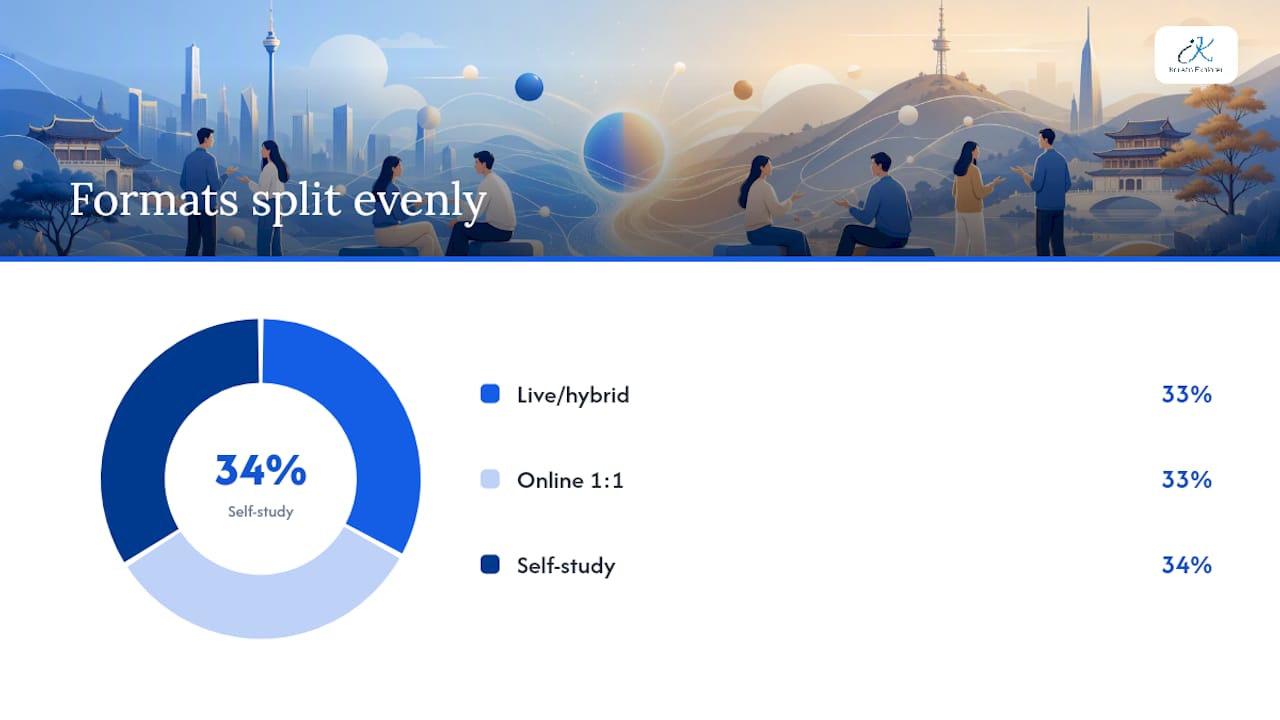
For most working adults in Singapore who want live instruction and accountability, Korean Explorer or a curated tutor platform will outperform pure self-study subscriptions.
1. Korean Explorer gives you structured classes with real instructor support
At a glance: Korean Explorer offers in-person and Zoom Korean courses for adults at all levels, including group classes, private lessons, and corporate training. The school operates from 10 Anson Road, Level 22, International Plaza, Singapore 079903, directly above Tanjong Pagar MRT.
Core features:
- Native Korean instructors who are bilingual in Korean and English, so grammar explanations actually land
- Recorded class access so you can revisit lessons after a long workday
- Curriculum developed with university input, structured for progressive adult learning
- Conversation-focused teaching that builds real-world confidence, not just textbook recall
- Corporate training delivered via Zoom or in-person for teams
The conversation-focused teaching methods and recorded lesson access are what separate Korean Explorer from most self-study platforms. You get a teacher who can correct your pronunciation live, answer cultural questions, and adjust the pace to your group.
Pros:
- Structured curriculum with clear level progression
- Bilingual support removes the frustration of monolingual instruction
- Both Zoom and in-person options from a central Singapore location
- Corporate training available for teams
Cons:
- Per-course pricing is higher than a self-study app subscription
- Group class schedules require some calendar commitment
Who it’s for: Working professionals, corporate training buyers, and adults who want accountability and a clear learning path, whether they commute to Tanjong Pagar or prefer Zoom from home.
Pricing: Korean Explorer uses a per-course or per-lesson model. Visit the Korean language schools guide for current course fees and schedules, as pricing varies by level and format.
Pro Tip: Korean Explorer is the publisher of this article and our recommended pick for adults who want structured, locally supported Korean learning in Singapore. Contact the school directly to ask about current intake dates and Zoom class availability.
2. Talk To Me In Korean suits self-motivated adults who love content
At a glance: Talk To Me In Korean (TTMIK) is one of the most content-rich Korean learning platforms available. It publishes graded lessons, podcasts, grammar guides, and workbooks that cover beginner through advanced levels.
Core features: A large free lesson library, structured grammar podcasts, community Q&A forums, and paid workbooks that complement the audio lessons. The graded system means you can pick up at your actual level rather than starting from scratch.
TTMIK works best when you already have the discipline to study without a teacher pushing you. The platform’s strength is breadth: hundreds of lessons organized by topic and level, all accessible on demand. The gap is live speaking practice. You can absorb a lot of Korean through TTMIK, but without someone correcting your pronunciation in real time, bad habits can quietly take root.
Pros: Excellent free content, clear level structure, strong community forums.
Cons: No live instruction, no corporate training, limited speaking feedback.
Who it’s for: Self-directed adults who want a structured syllabus and are comfortable studying independently between live classes.
Pricing: TTMIK offers a free content tier plus paid monthly and yearly subscriptions for premium materials. It’s a low-cost complement to formal classes rather than a full replacement.
3. KoreanClass101 works well for busy commuters learning on the go
At a glance: KoreanClass101, part of the Innovative Language network, delivers Korean through audio and video lessons organized into roadmaps by level. The mobile-first design makes it genuinely usable during a commute.
Core features:
- Large on-demand lesson library organized by proficiency level
- Printable vocabulary lists and grammar notes
- Mobile app with offline access
- Add-on private lessons via partner tutors (at extra cost)
The audio-first format is the real differentiator here. If you spend 45 minutes on the MRT each day, KoreanClass101 turns that dead time into study time. The trade-off is that listening and vocabulary exposure don’t automatically translate into speaking ability. Learners who rely on it exclusively tend to plateau at an intermediate reading and listening level without ever getting comfortable in conversation.
Pros: Flexible, asynchronous, mobile-friendly, affordable subscription tiers.
Cons: Limited live speaking practice; tutor add-ons cost extra and vary in quality.
Who it’s for: Commuters and professionals who need bite-sized, asynchronous lessons they can fit around an unpredictable schedule.
Pricing: Subscription tiers range from a free basic account to paid monthly and yearly plans. Private lesson add-ons are priced separately per session.
4. italki gives you the most scheduling flexibility of any platform
At a glance: italki is a tutor marketplace where you book one-to-one lessons directly with individual teachers or community tutors. You set the schedule, the budget, and the focus of each lesson.
Core features: Tutor profiles with reviews, hourly rates, video samples, and the option to book a trial lesson before committing. You can filter by price, teaching style, and availability.
The marketplace model is genuinely powerful for learners who know what they want. If you need business Korean on Tuesday evenings at 9 PM, you can find a tutor who fits that slot. The downside is that “flexible” also means “inconsistent.” Two tutors on italki can have wildly different approaches to curriculum, pacing, and feedback quality. Without a school’s structure behind them, some tutors are excellent and some are just conversational partners with no real teaching method.
Pros: Maximum scheduling flexibility, wide price range, trial lessons available from most tutors.
Cons: No centralized curriculum, quality varies significantly between tutors, no corporate training packages.
Who it’s for: Learners who prioritize convenience and cost control, and who can self-direct their learning goals between sessions.
Pricing: Hourly rates vary widely depending on the tutor’s experience and credentials. Budget accordingly per hour rather than per course, and factor in the cost of trial lessons when comparing to per-course school fees.
5. Preply offers curated tutors with more structure than a raw marketplace
At a glance: Preply is a tutor platform that sits between a pure marketplace and a school. It vets tutors more carefully than most marketplaces and provides lesson-plan templates that tutors can follow.
Core features:
- Trial lessons at a reduced rate before committing to a tutor
- Subscription packages that lock in a weekly lesson cadence
- Tutor skill badges and verified reviews
- Lesson plan templates that give sessions more structure than ad-hoc tutoring
The trial lesson policy is one of Preply’s strongest practical features. You can test a tutor’s teaching style, pacing, and communication before spending on a full package. That matters because teaching style fit is one of the most underrated factors in language learning progress.
Pros: Trial lessons, subscription packages with multi-lesson discounts, more structured tutor onboarding than most marketplaces.
Cons: Still less centralized than a school; curriculum consistency depends on the individual tutor.
Who it’s for: Adults who want flexible 1:1 instruction with a firmer lesson plan than purely ad-hoc tutoring, and who appreciate the safety net of a trial lesson.
Pricing: Preply uses subscription packages with discounts for multi-lesson bundles. Single-lesson bookings are available but cost more per session than a package rate.
6. King Sejong Institute suits learners who want semester-style immersion
At a glance: The King Sejong Institute is a government-backed network of Korean language and culture centers. Classes follow a structured semester schedule with cohort progression and cultural programming built in.
Core features: Institutional syllabus aligned with Korean government language standards, cohort-based classes that progress together, and cultural events like film screenings, cooking workshops, and holiday celebrations.
The cultural programming is what makes King Sejong genuinely different from a tutor platform. You’re not just learning grammar; you’re learning it alongside a community of people who share your interest in Korean culture. That social dimension accelerates motivation in a way that solo app study rarely does.
Pros: Strong institutional structure, cultural immersion activities, cohort community.
Cons: Less scheduling flexibility than online platforms; semester commitments mean you can’t easily pause or reschedule.
Who it’s for: Adult learners who want a steady semester rhythm, cultural context, and a community of fellow learners. Less suited to professionals who need to reschedule frequently.
Pricing: Semester-based fees with additional costs for workshops and cultural events. Commitment timelines typically follow academic semester lengths.
How to choose the right alternative to HanaKorean
The right choice depends on four things: your learning goal, your schedule, how much live instruction you need, and what you’re willing to spend per month.
Selection criteria to weigh:
- Learning goal match: Conversational fluency, business Korean, and exam preparation each need different formats. A podcast library won’t prepare you for a boardroom presentation.
- Teacher type: Native instructors with bilingual support catch errors that non-native tutors often miss.
- Lesson format: Group classes build speaking confidence faster than solo study; private lessons let you move at your own pace.
- Scheduling flexibility: Zoom classes and asynchronous platforms suit shift workers; semester programs suit learners with stable schedules.
- Pricing model: Per-course fees are predictable; hourly marketplace rates can add up faster than expected.
- Trial policy: Any school or tutor worth your time offers a way to test fit before you commit.
- Curriculum clarity: Ask for a syllabus or level map. Vague answers about “customized lessons” often mean no real structure.
- Recorded class access: Especially valuable for working adults who occasionally miss a session.
Questions to ask during a trial lesson:
- What is the typical pace for my level, and how is progress measured?
- Are you a native Korean speaker, and can you explain grammar in English when needed?
- How many students are in a group class?
- Can I access a recording if I miss a session?
- What is the cancellation and refund policy if my schedule changes?
- How quickly does support respond if I have a billing or scheduling issue?
Red flags to watch for:
- No published pricing or refusal to share fees before enrollment
- No trial lesson or free introductory session
- No bilingual support for adult learners who are not yet conversational
- No recorded class access for online courses
- Vague or non-existent refund and cancellation terms
Realistic timeline: Most adults reach basic conversational competence (greetings, simple exchanges, workplace introductions) within a few months of consistent weekly classes. Getting to comfortable business-level Korean typically takes a year or more when combining structured classes with regular self-study. Apps alone rarely get learners past a beginner plateau.
Pro Tip: Pair your weekly classes with two to three hours of passive immersion. Korean dramas, podcasts, and free cooking videos on Maangchi are excellent for listening exposure and vocabulary in context. Research on language immersion consistently shows that combining structured lessons with media-based practice accelerates conversational gains faster than class time alone. Korean Explorer’s own best ways to learn Korean guide recommends exactly this combination.
Which alternative fits your learner profile?
| Learner profile | Recommended option | Why |
|---|---|---|
| Busy professional, needs Zoom flexibility | Korean Explorer | Structured curriculum, Zoom classes, bilingual instructors, recorded access |
| Corporate training buyer | Korean Explorer | Group and private corporate training, in-person or Zoom, native instructors |
| Independent self-learner | TTMIK or KoreanClass101 | Rich content libraries, asynchronous, low cost per month |
| Immersive classroom seeker | King Sejong Institute | Semester structure, cohort community, cultural programming |
If you’re unsure, book a trial lesson with your top two options and compare the teaching pace and style directly. The comparison table at the top of this article lets you filter by format and price in under a minute.
What are the trial, refund, and cancellation policies?
Policies vary significantly across these platforms, and checking them before you pay is one of the most practical things you can do.
Korean Explorer encourages prospective students to contact the school directly for current intake dates and to ask about trial class availability. Refund and cancellation terms are discussed at enrollment. The school’s course and schedule pages are the best starting point.
TTMIK operates on a subscription model. Most subscription platforms allow cancellation before the next billing cycle, but you should confirm the current terms on their site before subscribing, as policies can change.
KoreanClass101 similarly uses a subscription model with a free basic tier. Paid subscriptions are typically cancellable, but auto-renewal is common. Read the billing terms carefully before entering payment details.
italki handles refunds through its credit system. If a tutor cancels or a lesson doesn’t proceed, credits are returned to your account. Refund policies for purchased credits vary, so review the platform’s current terms.
Preply offers a trial lesson policy where you can request a replacement tutor if the first session doesn’t meet your expectations. Subscription packages have their own cancellation terms, which Preply publishes on its help pages.
King Sejong Institute follows semester-based enrollment. Withdrawal policies depend on the specific center and how far into the semester you are. Cultural event fees are generally non-refundable. Contact your local center before enrolling to confirm the exact terms.
The consistent advice from community guides comparing Singapore Korean schools is to attend a trial lesson before committing to any school, and to ask about cancellation terms in writing before paying a deposit.
How does customer support and community compare across providers?
Korean Explorer provides direct support through its Singapore center. Because it’s a local school with bilingual staff, you can reach someone who understands both your language question and your scheduling situation. The school also maintains an active online presence for course inquiries.
TTMIK has a community forum and a comment section on lessons where the team responds to grammar questions. Support is primarily asynchronous and community-driven rather than one-to-one.
KoreanClass101 offers a help center and email support. The platform’s community features include flashcard sharing and forum discussions, but live support is limited to paid tiers.
italki support is platform-level rather than tutor-level. If you have a dispute with a tutor or a billing issue, you contact italki’s support team. Response times vary. The community aspect comes from the language exchange feature, where you can connect with native Korean speakers for informal practice.
Preply has a help center and live chat support for subscription holders. The platform also provides a learning dashboard where you can track lesson history and communicate with your tutor between sessions.
King Sejong Institute community engagement is its strongest suit. Cultural events, group classes, and cohort progression create a genuine social learning environment. Support is handled at the individual center level, so quality depends on the specific location.
For adult learners who want responsive, bilingual support and a local point of contact, a Singapore-based school like Korean Explorer has a practical edge over global platforms where support is handled by a remote team.
Key Takeaways
For most adult learners in Singapore, the best alternative to HanaKorean is a structured school with live instruction, bilingual support, and flexible Zoom options rather than a self-study app alone.
| Point | Details |
|---|---|
| Try a trial lesson first | Testing teaching pace and style before committing saves time and money. |
| Match format to your schedule | Zoom classes and asynchronous platforms suit shift workers; semester programs need a stable calendar. |
| Pair classes with immersion content | Combining weekly lessons with dramas, podcasts, or cooking videos accelerates conversational gains. |
| Check trial and refund terms | Always confirm cancellation policies in writing before paying a deposit or subscription fee. |
| Korean Explorer for structured adult learning | Korean Explorer offers in-person and Zoom classes for adults in Singapore, with native bilingual instructors and recorded class access. |
What adult learners in Singapore actually need
Most adults searching for a HanaKorean alternative are not looking for another app. They’ve usually already tried an app and found it doesn’t move them past basic phrases. What they actually need is live speaking practice with a teacher who can correct them in real time, a curriculum that builds logically from one level to the next, and enough scheduling flexibility to fit Korean into a working week.
The mistake I see most often is over-relying on self-study platforms for too long before booking a real class. Apps are useful supplements, but they can’t replicate the accountability of a scheduled lesson or the feedback of a native speaker who notices your pronunciation drift. The second mistake is committing to a school without attending a trial lesson first. Teaching style fit matters more than most learners expect, and a single trial session tells you more than any website description.
Korean Explorer: structured adult Korean classes in Singapore
Korean Explorer is the recommended choice for adults in Singapore who want more than a subscription library. The school runs in-person and Zoom group classes, private lessons, and corporate training from its center at 10 Anson Road, Level 22, International Plaza, directly above Tanjong Pagar MRT. Native Korean instructors with bilingual support teach every class, and recorded lesson access means a missed session doesn’t mean missed progress.
Whether you’re starting from zero or picking up from an intermediate level, Korean Explorer’s structured curriculum gives you a clear path forward. Corporate teams can arrange dedicated training sessions in-person or via Zoom. Start your Korean learning journey with Korean Explorer or browse the intermediate Korean course options to find the right level for where you are now.
Further reading and sources
- Language immersion: What it is and why it works — TEFL
- Where to Learn Korean with Language Schools in Singapore | Korean Explorer
- Learn a Korean Language in Singapore | Korean Explorer
- How language schools boost Korean fluency in Singapore
- BEST WAYS TO LEARN KOREAN
- Maangchi — Korean recipes, videos, and cookbooks
- Discover the Best Korean Language Schools in Singapore: A Detailed Guide to Daehan and Sejeong
To book a trial lesson or ask about current class schedules, contact Korean Explorer at 10 Anson Road, Level 22, International Plaza, Singapore 079903, above Tanjong Pagar MRT.
FAQ
What is the best Korean language learning program?
For adult learners in Singapore who want live instruction, Korean Explorer offers structured in-person and Zoom classes with native bilingual instructors. For self-study, Talk To Me In Korean provides one of the most organized free and paid content libraries available.
Can Duolingo actually teach you Korean?
Duolingo builds basic vocabulary and script recognition, but it doesn’t develop real conversational ability on its own. Most learners plateau quickly without live speaking practice and structured grammar instruction.
Is Hangul harder than Japanese?
Hangul is generally considered easier to learn than Japanese scripts. Most adult learners can read Hangul within a few days of focused study, whereas Japanese requires mastering multiple writing systems over months.
Can I be fluent in Korean in one year?
Reaching comfortable conversational fluency in one year is realistic if you combine weekly structured classes with consistent daily self-study and immersion practice. Business-level fluency typically takes longer, depending on your starting point and study intensity.